

A new study has found that Turkey’s consulate in Jerusalem operates from a property owned not by Turkey, but by the Syriac church, a community whose members were among the victims of Ottoman-era massacres more than a century ago.
The finding, published by the Jerusalem Center for Applied Policy, emerged just after the Israeli government recognized the Armenian genocide. The center said the property arrangement creates a sharp moral contradiction, given the Syriac church’s historic link to communities targeted under Ottoman rule.
“This is a moral contradiction against the backdrop of the Israeli government’s recognition of the Armenian genocide,” said Chaim Silberstein, chairman of the Jerusalem Center for Applied Policy.
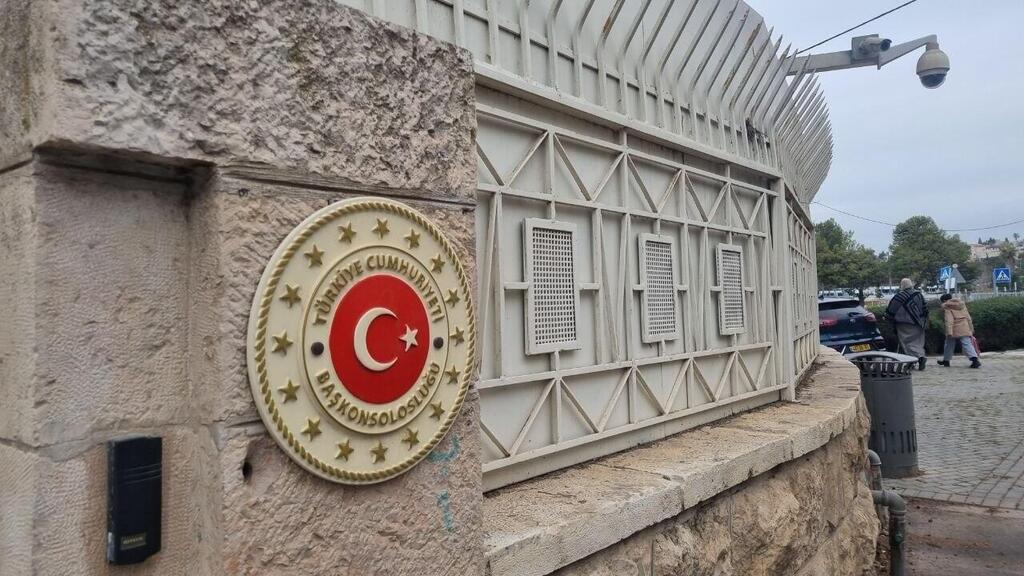
The Turkish consulate is located on the government compound hill in northern Jerusalem, where several foreign missions operate. Ankara defines the mission as the “Turkish Embassy to Palestine,” and it provides most of its services to the Palestinian Authority.
According to the study, however, the building from which the consulate operates is not Turkish-owned, but belongs to the Syriac church.
Alongside thousands of Armenians, thousands of Syriac-Aramean Christians, also known as Assyrian or Syriac Orthodox Christians, were killed in the genocide more than 100 years ago. The Syriac church represents a community descended from those victims. Both the Armenian and Syriac communities have long campaigned for international recognition of the crimes committed against them.

Aerial view of the Turkish consulate, marked in red
That is where the paradox emerges. A church institution that has sought recognition of the genocide committed against its own Syriac people, and expressed solidarity with its Armenian neighbors, is at the same time enabling a Turkish diplomatic presence and influence in Jerusalem.
A senior official in the Armenian Patriarchate told Ynet that the details were not previously known to them.
“We were not familiar with the details and they surprised us. The Syriacs are connected to us,” the official said. “Unfortunately, this is what happens when money replaces values.”
According to the center, the operation of a Turkish diplomatic mission in Jerusalem from a property owned by a Syriac Christian institution cannot be viewed as a neutral administrative or financial arrangement.
The center argues that Turkey’s presence in Jerusalem goes beyond routine diplomacy, describing the consulate as a platform for cultural, historical and ideological soft power, including the promotion of Ottoman heritage and symbols.
The issue comes after the Israeli government unanimously approved a proposal by Foreign Minister Gideon Sa’ar to recognize the Armenian genocide. The historic decision is expected to further intensify already strained relations between Israel and Turkey.
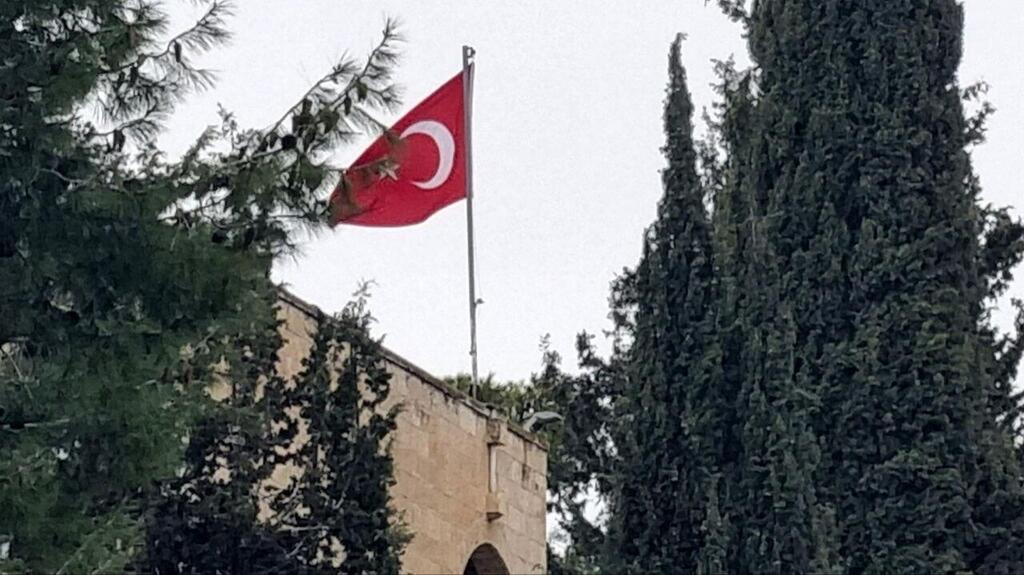
(Photo: Gilad Cohen)
The government proposal states that “on the basis of moral and historical duty, Israel will recognize the genocide committed against the Armenian people at the end of the Ottoman Empire.” It also says Israel should condemn the denial, minimization or distortion of the historical truth of those events.
Ran Yishai, head of research at the Jerusalem Center for Applied Policy, said the case illustrates how Turkey continues to exploit the weakness of Christian communities in the Middle East, especially Christians from Syria and Turkey.
“While in many countries in the region Christian communities are severely harmed, in Israel they enjoy freedom and protection of holy sites and their right to live in security,” Yishai said.
Yishai, a former ambassador at Israel’s Foreign Ministry and former director general of the Jerusalem Affairs Ministry, said Israel should reconsider the very existence of the Turkish consulate in Jerusalem.
“It is time to reexamine the very existence of the Turkish consulate in Jerusalem, which defines itself as the Turkish Embassy to Palestine, or more accurately, to saving Hamas, while denying and harming Israeli sovereignty in Jerusalem,” he said.