


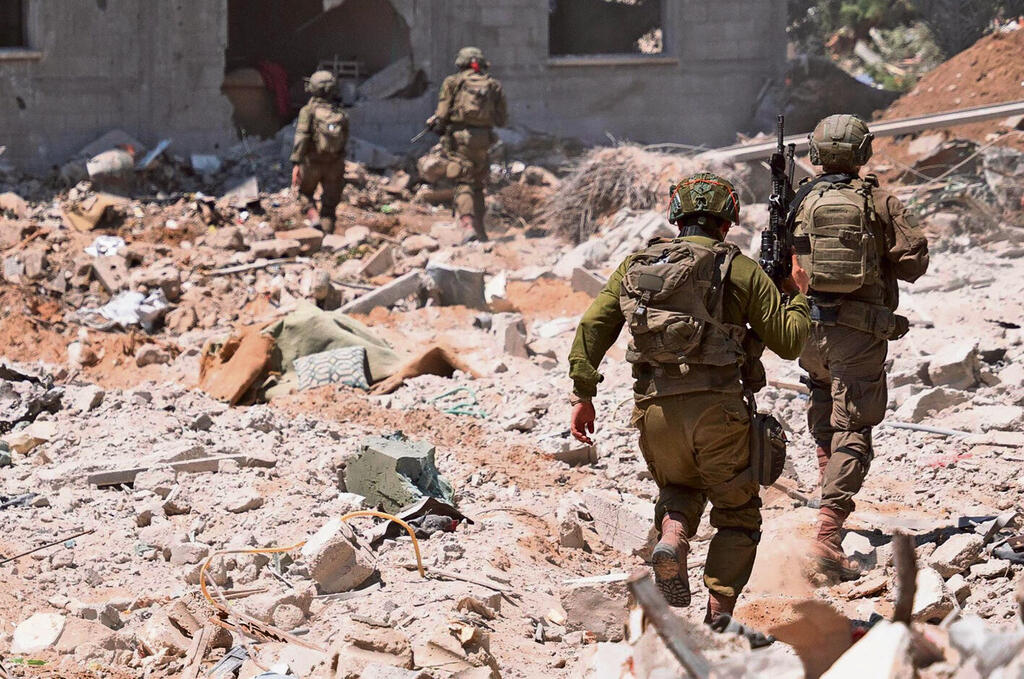
In the southern Gaza city of Khan Younis, the last standing regular IDF troops are spending their days less in close combat with Hamas terrorists and more in reshaping the battlefield itself. Their mission is to secure and expand the military corridors that cut through the city, connecting fortified outposts that are becoming permanent fixtures on the ground. Soon, these regular soldiers will rotate out, to be replaced by reservists who are already preparing for the next phase: an offensive on Gaza City.
The City Leveled, Block by Block
Over the course of several months, the paratroopers reduced 2,137 buildings to rubble in the Abbasan neighborhoods of eastern Khan Younis, not far from the Israeli border. The demolitions were systematic and massive, part of a larger IDF strategy to erase urban cover where Hamas fighters could conceal tunnel shafts and explosives.
IDF forces operating in Khan Younis
(Video: IDF)


Instead of clearing houses room by room, a painstaking and dangerous process, the IDF now prefers to tear them down. “If no buildings are standing,” one officer explained, “Hamas cannot return, dig new tunnels under cover or set ambushes above ground.”
This approach reflects both operational necessity and political pressure. After months of grinding combat, the government wants results quickly. The paratroopers’ new mission profile became less about chasing gunmen from house to house and more about ensuring that Hamas cannot rebuild.
A drone-led revolution
One of the brigade’s deputy commanders, a major from the Paratrooper Reconnaissance Battalion, devised a technique that perfectly embodies this shift. Using small drones armed with miniature explosives, soldiers punch a hole into a roof. Then, a larger drone swoops in, dropping dozens of kilograms of explosives straight into the heart of the building.
The entire process takes minutes, not hours. What used to require dangerous, painstaking work by sappers can now be achieved in as little as three minutes. Inside the brigade, the tactic quickly earned a nickname: “ceiling-to-floor”—a blunt but effective description of how a home is collapsed in one swoop.
Beyond efficiency, the method saves lives. Many of the targeted houses were already weakened by shelling or airstrikes, making them dangerous to enter. Now, the risk to soldiers is dramatically reduced.
Fighting an enemy gone to ground
By the IDF’s count, the paratroopers killed about 160 Hamas fighters during their operation, most of them through long-range strikes rather than face-to-face battles. The enemy, once organized into battalions and brigades with heavy weapons, has reverted to guerrilla tactics: small cells, snipers, drones and sudden ambushes.
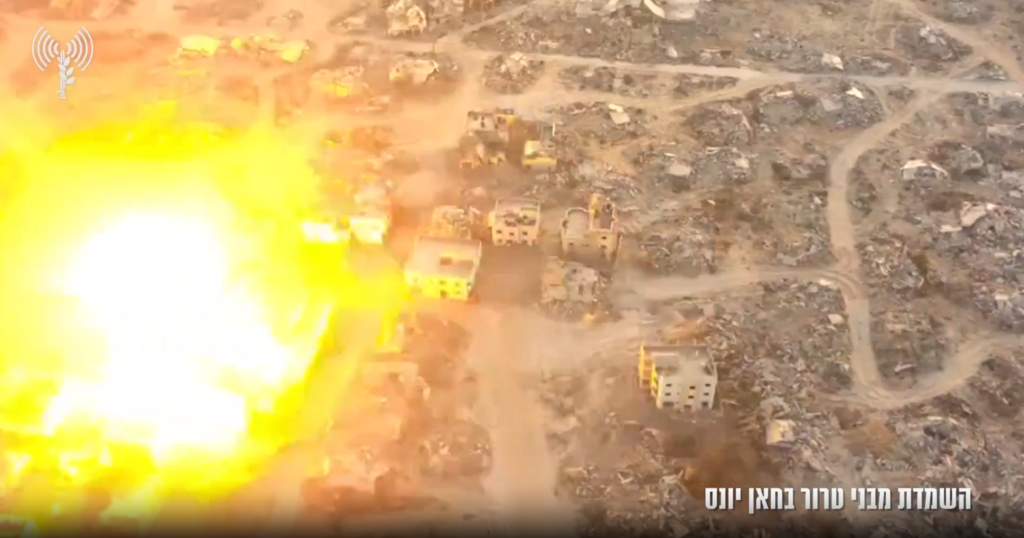
(Photo: IDF)
A chilling example occurred when a Hamas fighter burst from a tunnel beneath Khan Younis, attaching an explosive to an armored personnel carrier. The blast killed one soldier and injured nine others, stark evidence that Hamas has abandoned conventional warfare in favor of hit-and-run insurgency.
Lessons for the next battle
As preparations intensify for the Gaza City maneuver, the army is learning from the costly lessons of Khan Younis. Ammunition shortages, breakdowns of aging tanks and armored vehicles and the strain on exhausted regular forces have forced new protocols: stricter management of artillery shells, systematic maintenance schedules and fresh combat training at bases like Tze’elim.
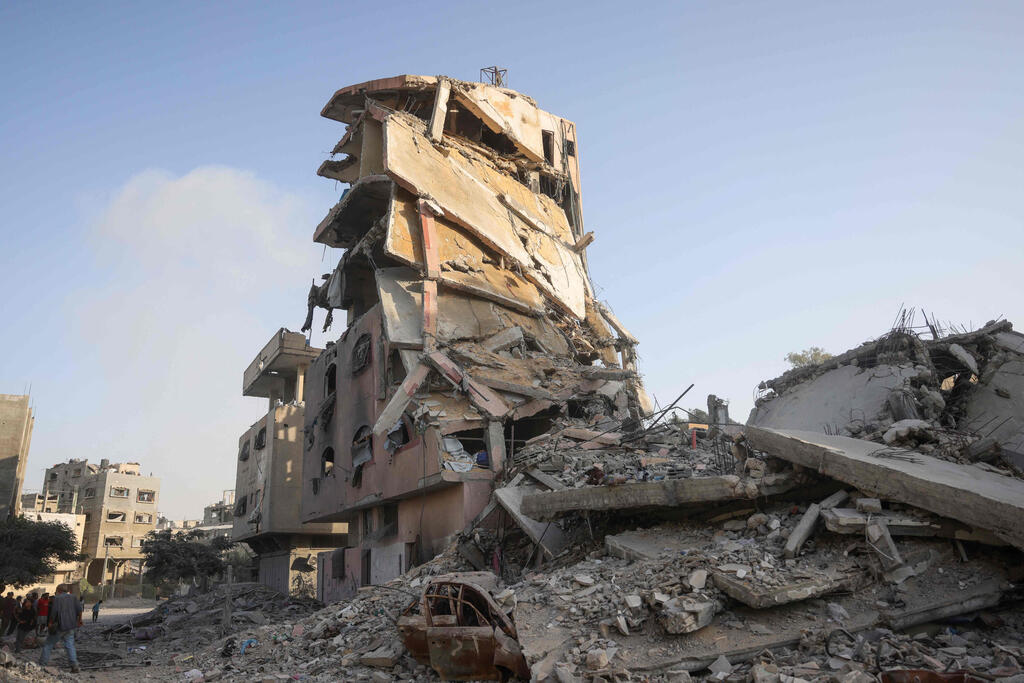
A demolished building in Gaza
(Photo: Bashar Taleb / AFP)
In the paratroopers’ case, many officers—between 40% and 60%—have yet to see combat inside Gaza. Fresh from command courses or tours on the northern front, they will lead units into one of the most complex urban battlefields in the world. For many young soldiers, the streets of Abbasan marked their first taste of war; Gaza City will be their second.
A military stretched thin
Yet there is unease within the army. The long war has delayed what was supposed to be the IDF’s “Year of Stabilization” in 2025, now pushed back to 2026—or beyond. Chief of Staff Lt. Gen. Eyal Zamir has warned that without a return to full-scale training, the IDF risks losing essential skills for large-scale, regional conflicts. The brief refreshers between operations in Gaza are not enough. “We need battalions and brigades training for wars in Lebanon or Syria,” one officer said. “You can’t relearn that in a week.”
Still, the machine grinds forward. With Gaza City looming, the paratroopers prepare once more for an operation where demolition, not occupation, may define success. As one officer summed it up bluntly: “Every building we destroyed was implicated in terror. Some were homes to the men who stormed Israel on October 7. We’re not leaving Hamas anything to rebuild with.”