

Dockworkers in several European countries and on other continents went on strike Friday, with one of their main demands being an end to weapons shipments to Israel through their ports.
Dockworkers' unions in France, Italy, Spain, Greece, Turkey and Morocco issued a joint call opposing arms shipments and demanding an end to what they described as "the militarization of ports." They also called for an end to the war in Gaza.
Protest in Greece against weapons shipments to Israel
(Video: Reuters )


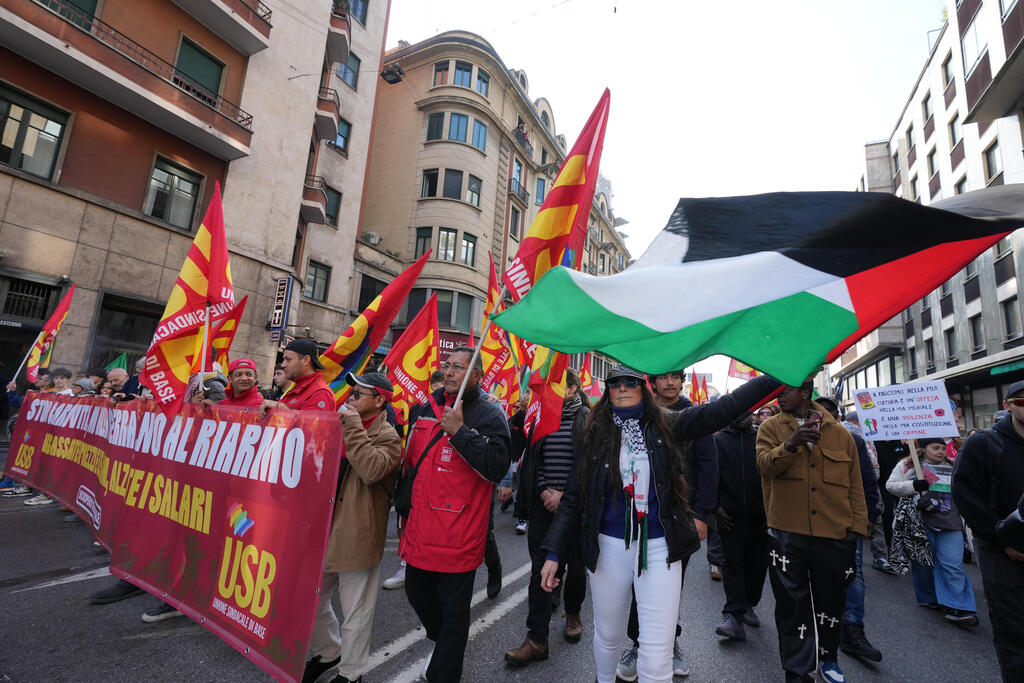

Protest in Rome
(Photo: AP Photo/Alessandra Tarantino)
The joint statement also declared: "Ports must not be used to transport weapons, ammunition, military equipment or troops. Dockworkers do not work for war!" According to the unions, more than 100 ports in several countries joined the protest, and the actions could disrupt maritime traffic in Europe, the Mediterranean region and North America. During the demonstrations, workers also raised demands concerning social rights, but the main focus was stopping the movement of weapons through ports. Palestinian flags could be seen in some of the photographs circulated from the protests.
In Greece, dockworkers' unions declared a strike at Piraeus, the country's largest port. Giorgos Gogos, president of the local dockworkers' union, said: "We do not want to take part in any war, anywhere in the world. We do not want our ports to serve as transit hubs for military equipment intended to kill people."
In Turkey, protesters gathered outside Haydarpasa port in Istanbul, carrying a banner reading: "No to war, no to armament!" In Italy, demonstrations were planned at major ports, including Genoa, Trieste and Gioia Tauro.
Meanwhile, the French dockworkers' union called a one-day strike at major ports, including Le Havre, Marseille, Dunkirk and Rouen. The union said it opposed what it described as "the militarization of port facilities." Earlier this month, pro-Palestinian workers at an airport in France attempted to prevent a shipment intended for Israeli defense company Elbit from being flown out.
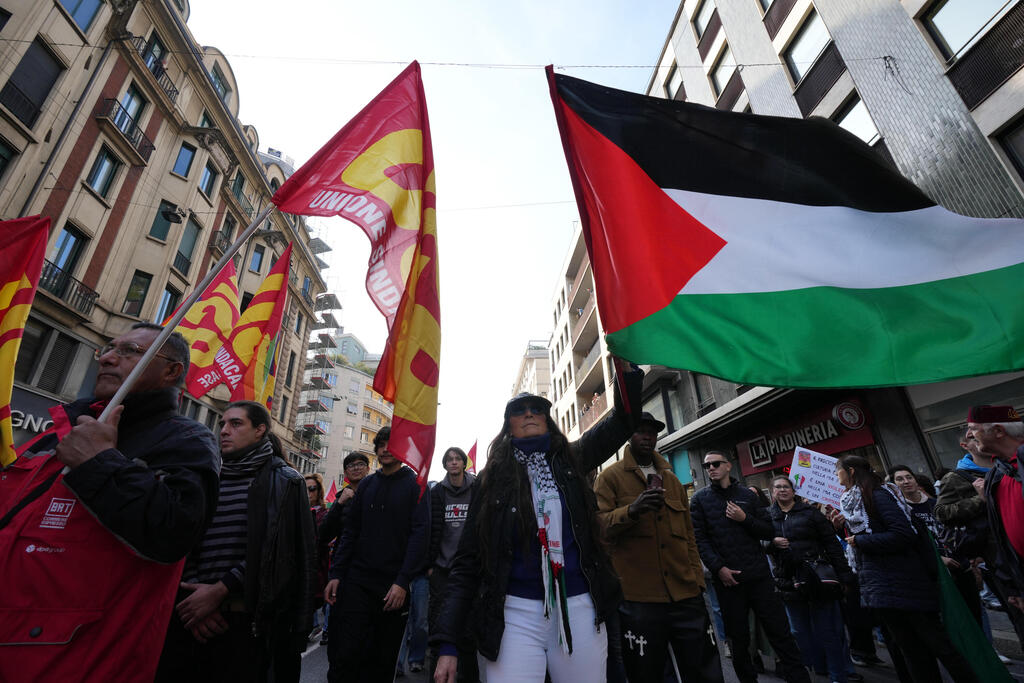
Italy
(Photo: AP Photo/Antonio Calanni)
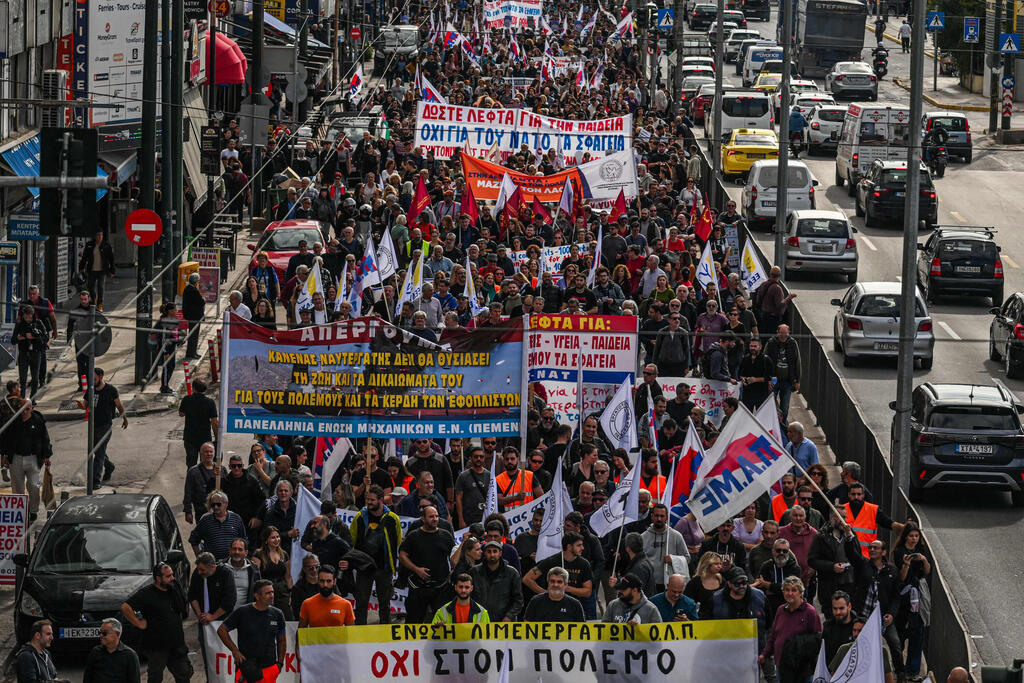
Dockworkers protest in Athens, Greece
(Photo: Aris MESSINIS / AFP)
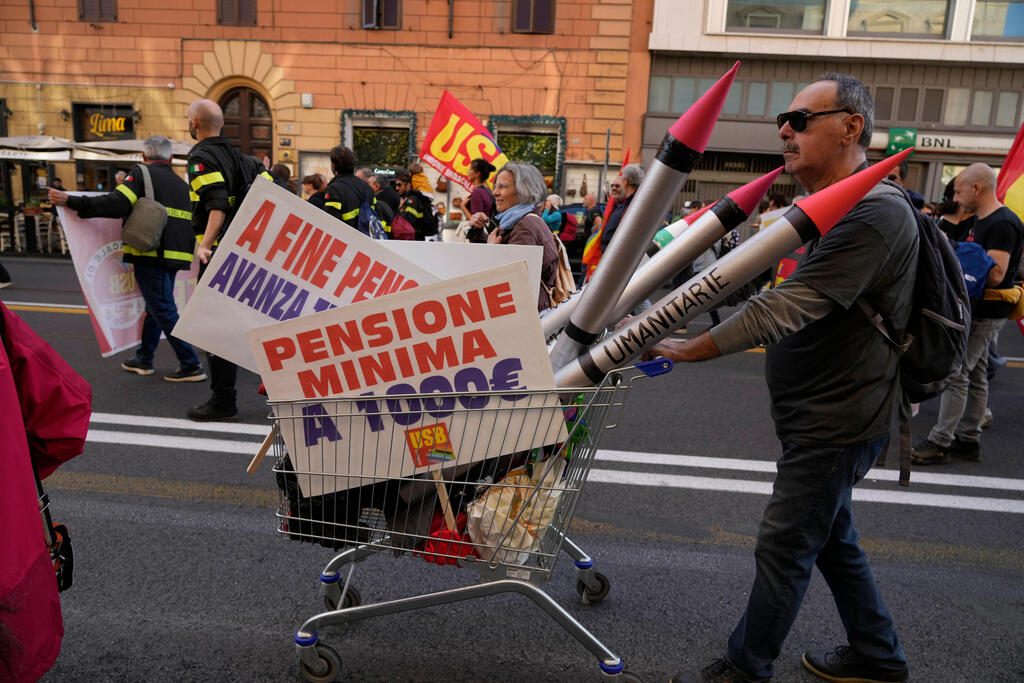
(Photo: AP Photo/Gregorio Borgia)
Despite the large number of ports involved in Friday's protests, experts estimated that the impact on maritime operations would be limited. Marcus Baker, global head of marine, cargo and logistics at insurance and risk advisory firm Marsh, told the Associated Press that the one-day strike was unlikely to significantly disrupt global trade, although it could affect perishable goods and time-sensitive shipments.
He said Friday's strike and similar actions would further complicate supply chains already under pressure from tensions in the Middle East, climate-related events such as El Niño storms, restrictions affecting the Rhine River and Panama Canal, and changes in tariffs imposed by various countries.
Since the beginning of the Swords of Iron war, several countries have imposed restrictions on the transit of weapons bound for Israel through their territory. Spain, for example, announced an official policy barring ships carrying weapons for Israel from docking at its ports.
The first measure of this kind was implemented in 2024, when Madrid refused to allow the Marianne Danica, a vessel arriving from India carrying dozens of tons of explosives, to dock at the port of Cartagena. Other vessels were subsequently denied permission to dock, including ships from the United States suspected of transporting weapons to Israel.
In March, U.S. President Donald Trump said France had barred American aircraft carrying supplies for Israel from passing through its territory, against the backdrop of French opposition to Israeli military operations in Gaza and Lebanon.