

A record 230 migrants reached England aboard a single small inflatable boat after crossing the English Channel from France, British media reported Monday, setting a new high for the number of people carried on one vessel along the dangerous route.
The previous record had been set only last month, when a boat carrying 165 migrants made the crossing from France to England.
Gallery
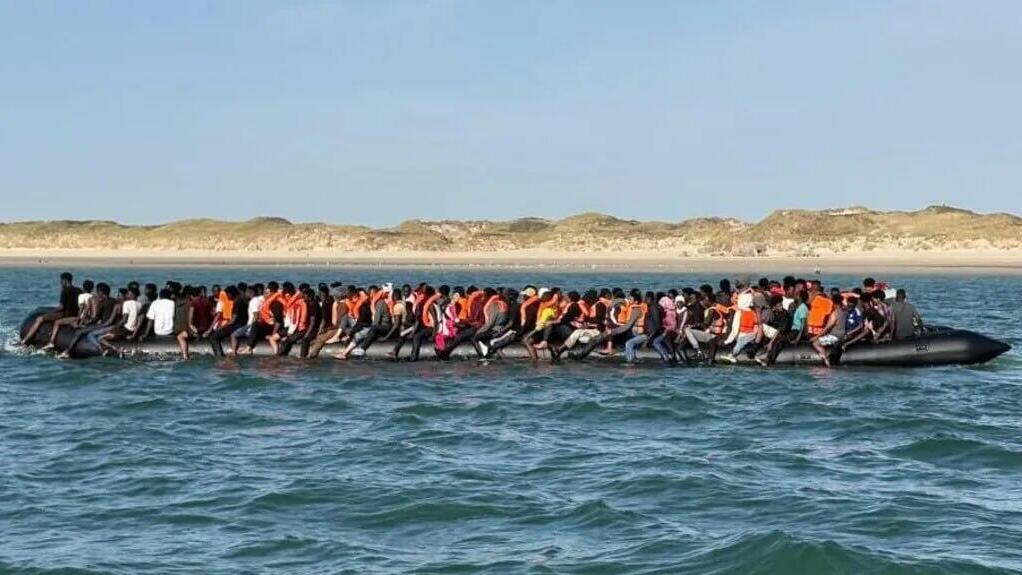
Migrant boat that crossed the English Channel from France to Britain with a record 230 people aboard
The latest vessel reached the English coast before dawn. When it departed from northwestern France, it was so overcrowded that many passengers were photographed sitting on the edge of the boat with their legs in the water.
Britain’s Home Office said the incident highlighted “the reckless and dangerous tactics used by criminal gangs, who continue to put lives at risk by cramming increasing numbers of people into unseaworthy boats.”
The record crossing came after 173 migrants were rescued last Tuesday from another vessel that caught fire while unsuccessfully attempting to cross the Channel.
The BBC noted that migrant-smuggling networks have increasingly packed more people onto each boat in recent years. In 2018, an average of just seven people were aboard each vessel that reached England. Last year, that figure had risen to 62.
Despite Monday’s record, Britain’s Labour government has pointed to a sharp decline in the overall number of small-boat arrivals.
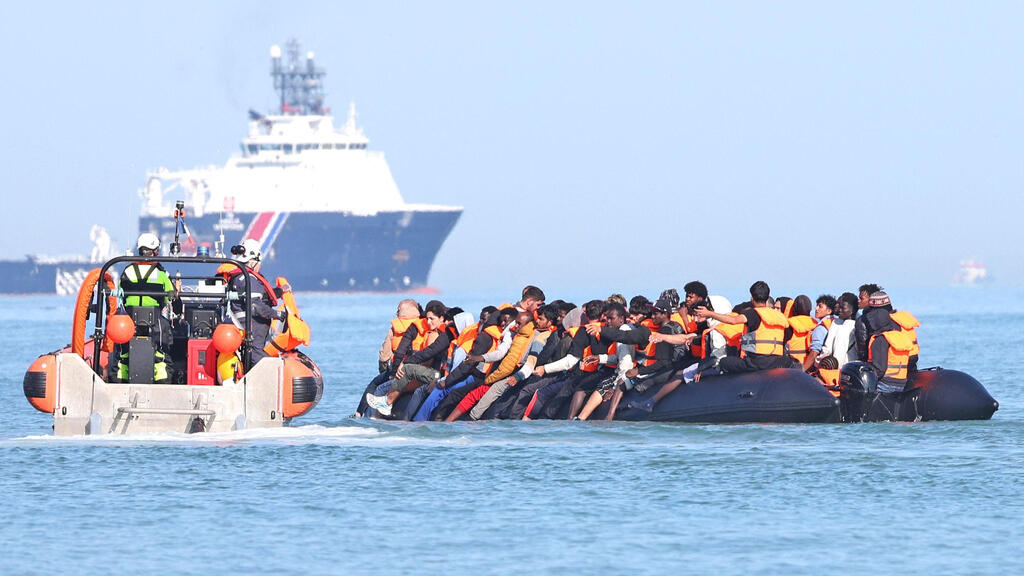
Migrants aboard a boat near the French coast in the English Channel en route to Britain, July 29
(Photo: Francois LO PRESTI / AFP)
From the beginning of the year through Aug. 8, 14,819 people crossed the Channel, down 43% from the same period last year. According to the Home Office, July recorded the lowest number of crossings since July 2020.
The government attributes that decline to efforts against smuggling supply networks used to obtain small boats and engines. More than 1,100 boats and engines have been seized in the two years since Labour came to power in 2024.
Former prime minister Keir Starmer stepped down last month after an internal Labour revolt and amid polling that showed a sharp decline in the party’s popularity under his leadership.
One of the main sources of public frustration was continued illegal migration across the Channel. Last year, protests erupted after it emerged that migrants were being housed in hotels at taxpayers’ expense.
Polls also showed a dramatic rise in support for the right-wing Reform UK party, which has made opposition to illegal immigration one of its defining issues. Starmer subsequently tightened his government’s migration policy, though the shift was not enough to save his position within Labour.
His successor, Andy Burnham, who has so far enjoyed significantly stronger approval ratings, has also adopted a relatively tough message on immigration.
Earlier this month, Burnham visited Dover, on the English side of the Channel, and promised an “uncompromising fight” against migrant boats.

British Prime Minister Andy Burnham inspects a migrant boat seized near the Channel this month, promising an ‘uncompromising fight’
(Photo: REUTERS/Jack Taylor/Pool)
Burnham said his new government was “changing the entire approach” and would increase the number of enforcement personnel targeting the smuggling organizations that help migrants cross the Channel.
“People want to see this issue dealt with,” he said, while stressing that legal migration routes must also remain available.
“We also need to build a system that offers safe routes for people, because that also takes away the main reason they turn to the gangs,” he said.
Nigel Farage, leader of Reform UK, has promised a much tougher response.
Reacting to the arrival of the vessel carrying 230 migrants, Farage wrote on X: “This is further proof that this illegal invasion is a national emergency.”
This month, Farage unveiled a plan he calls “Operation Fortress,” under which Britain’s Royal Navy would be deployed to turn migrant boats back toward the French coast.
Such a move would likely provoke a major confrontation with Paris and accusations from human rights groups that Britain was violating international law.
Reform UK also unveiled another proposal Sunday under which all foreign nationals serving sentences in British prisons would be deported, freeing space for British prisoners and reducing pressure on the country’s overcrowded prison system.
Zia Yusuf, who leads Reform UK’s immigration policy, said foreign prisoners would be returned to their countries of origin. If those governments refused to accept them, he said, they could instead be sent to prisons in countries such as El Salvador or Kosovo.
The proposal mirrors, in part, the approach used by the Trump administration in the United States, which paid El Salvador to receive deported migrants.
“Incredibly, there are more than 10,000 foreign nationals in British prisons,” Yusuf said. “We will deport every foreign national from our prisons. If their home countries refuse to take them back, we will send them to serve their sentences in countries like El Salvador and Kosovo.”
“We will use the space freed up to make sure serious offenders stay where they belong: behind bars,” he added.