

U.S. President Donald Trump sparked uncertainty and concern in Venezuela on Saturday after declaring that the airspace over and around the country should be treated as "completely closed". His brief message offered no clarification, leaving officials in both Washington and Caracas scrambling to interpret its meaning at a moment of heightened tensions.
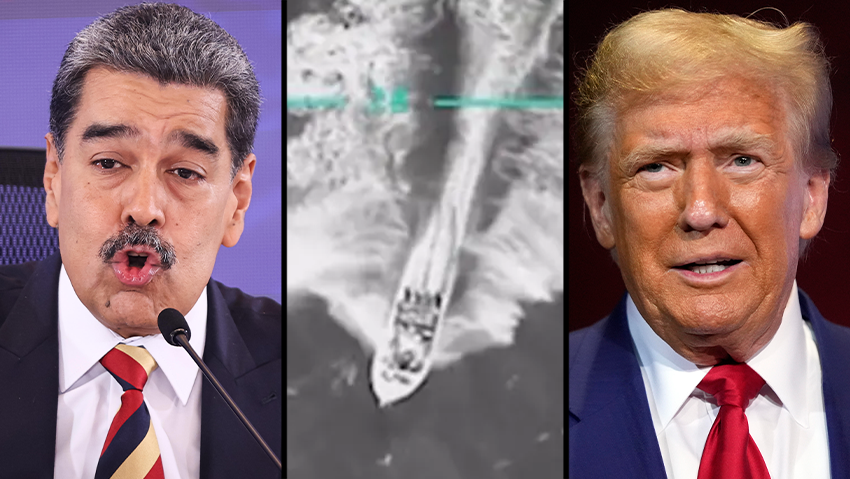
Tensions rising. Nicolás Maduro and Donald Trump
(photo: AP/Alex Brandon, Jesus Vargas/Getty Images)
Posting on Truth Social, Trump addressed "airlines, pilots, drug traffickers and human traffickers", urging them to regard Venezuelan airspace as entirely off-limits.
According to U.S. officials contacted by Reuters, Trump’s statement came as a surprise; none were aware of any American military plans to enforce a no-fly zone, and the Pentagon declined to comment. The White House also did not elaborate on the president’s remarks.
Venezuela's government quickly denounced Trump's message, calling it a "colonialist threat" incompatible with international law and an affront to the nation's sovereignty. The statement labeled the post "hostile, unilateral, and arbitrary".
Military Pressure Mounts in the Caribbean
Retired Lieutenant General David Deptula, who oversaw the no-fly zone in northern Iraq in the late 1990s, said Trump's pronouncement lacked essential details. Establishing any kind of airspace restriction over Venezuela, he noted, would depend on the underlying objective and require considerable military resources. "The details are what matter", he emphasized.
Trump's statement comes as his administration weighs various options aimed at increasing pressure on President Nicolás Maduro. U.S. officials accuse Maduro of enabling drug trafficking that harms Americans - a charge the Venezuelan leader rejects.
Reuters has reported that Washington is considering scenarios ranging up to the possible removal of Maduro from power. The U.S. military has recently expanded its presence in the Caribbean, following nearly three months of strikes targeting vessels suspected of carrying drugs near Venezuelan waters. Trump has also approved covert CIA operations in the country.
Maduro, in power since 2013, has repeatedly argued that Trump is attempting to depose him and insists that Venezuela's armed forces and citizens will resist any foreign intervention. Earlier in the week, Trump told U.S. service members that land operations aimed at stopping Venezuelan drug trafficking networks would begin "very soon".
Several residents of Caracas criticized Trump’s declaration. Manuel Romero, who works as a kitchen assistant, argued that everyday people would bear the consequences: "We need to travel for work, business, or to see our families. Venezuelans aren't the ones causing these problems".
Carmen Castillo, an attorney, said she feared many would be unable to visit loved ones abroad for the holiday season. "We're isolated here in Caracas, in Venezuela. Of course it affects us", she said.
The Venezuelan government accused Washington of reviving "colonial ambitions" in Latin America and urged the global community to condemn what it described as an immoral act of aggression. Iran - an ally of Caracas that was targeted in U.S. strikes earlier this year - also condemned Trump's declaration, calling it "a major violation of international law and a threat to global aviation safety", according to IRNA.
The Venezuelan statement added that the announcement effectively halts U.S. deportation flights, through which nearly 14,000 Venezuelans have recently returned home. These flights, operating twice per week, were part of the Trump administration's intensified immigration enforcement.
Muted Official Response Inside Venezuela
Although Maduro and senior officials frequently appear on state television to denounce U.S. imperialism, they have avoided naming Trump directly in recent weeks - possibly an attempt to prevent further escalation, according to diplomatic and security sources.
U.S. Secretary of State Marco Rubio had previously been singled out as a target of Venezuelan criticism, though mentions of him have also diminished.
Meanwhile, U.S. naval strikes near Venezuelan waters have prompted a surge in security operations in the remote northeastern state of Sucre. Residents reported increased patrols by security forces and pro-government groups, creating an atmosphere of fear. GPS disruptions have also been noted amid the growing U.S. presence in the region.
Trump’s announcement followed a recent alert from the U.S. Federal Aviation Administration, which warned airlines of a "potentially hazardous situation" when flying over Venezuela due to the deteriorating security climate and rising military activity nearby.
In response to the FAA bulletin, Venezuela revoked the operating licenses of six major international carriers that had suspended their flights to the country.