

After one of the worst olive harvests in recent memory, Israeli farmers are finally seeing signs of recovery. Last year, the country's olive oil production reached an estimated 8,000 tons, far below the anticipated 15,000 tons. This season, however, the outlook is considerably brighter, with production expected to rebound to approximately 15,000 tons of olive oil and another 10,000 tons of table olives. But beneath the encouraging figures lies an unexpected problem: Israel's olive trees are bearing plenty of fruit, yet the olives contain unusually little oil.
According to the Agriculture and Food Security Ministry, Israel has between 310,000 and 350,000 dunams of olive groves, more than 75% of them in Arab communities. Most groves in the Arab sector are rain-fed, including those growing the traditional Syrian olive variety. In the Jewish agricultural sector, groves are generally irrigated, largely using treated wastewater and recycled water. Approximately 15,000 dunams are devoted to table olives, while 120 olive presses operate across the country.
The 2026 olive harvest season begins in Israel
(Video: Raviv Avshalom)


Agronomist Ayala Neubauer, a resident of Moshav Tzipori in northern Israel, previously headed the Agriculture Ministry's olive oil tasting panel and now manages her family's Rish Lakish olive grove. She has recently focused on restoring ancient orchard trees and established an organization dedicated to saving agricultural produce and promoting Israeli farming.
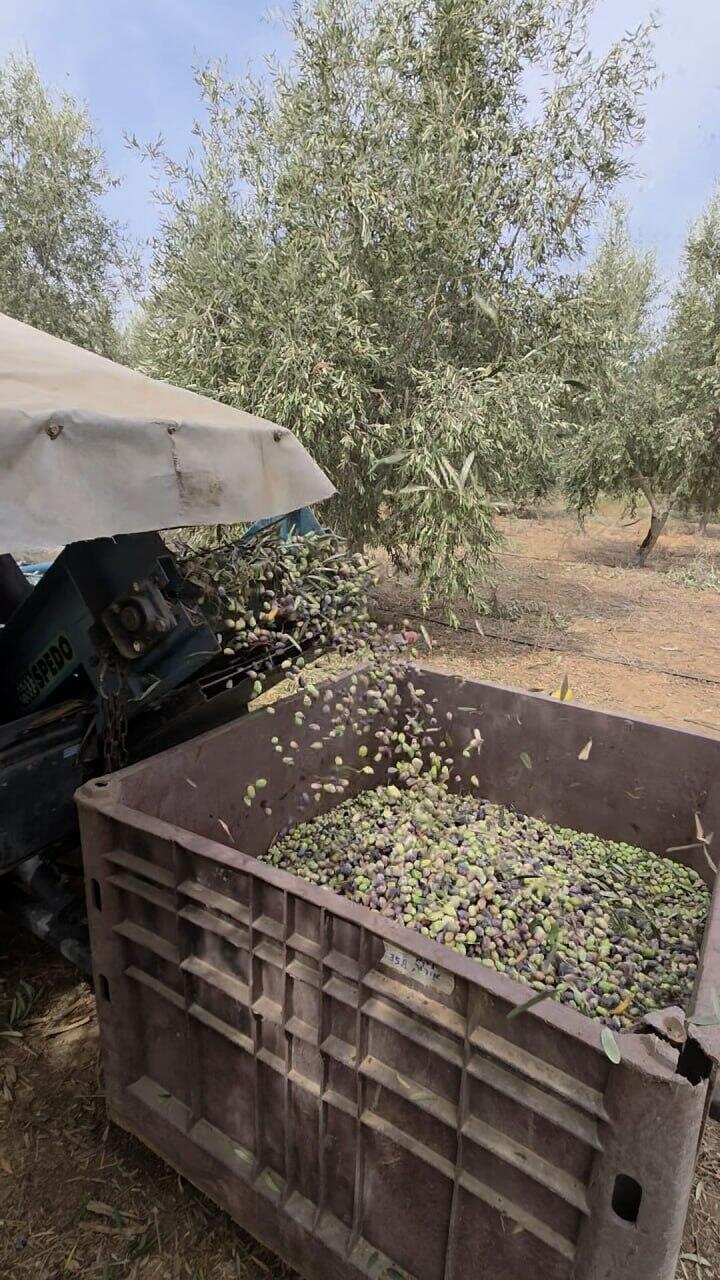
"Unlike last year, which was particularly bad, this season we're seeing an abundance of fruit," she explained. "However, the oil content of the olives is very low."
According to Neubauer, climate change and extreme summer temperatures have placed olive trees under considerable stress. Although the trees have produced fruit, they have not accumulated oil efficiently. Many growers, including farmers in Arab communities, are waiting for substantial rainfall and lower temperatures, hoping the change will help the fruit develop more oil and make extraction easier.
The situation has been complicated by delayed ripening, a problem also affecting Israel's wine industry. Growers are concerned that heavy rainfall during November and December, particularly if unusually strong El Niño conditions develop, could make it difficult to enter groves with heavy harvesting equipment. Stormy weather could also cause more sensitive olive varieties, including Italy's Coratina, to shed their fruit before harvesting.
Last year's harvest was so disappointing that producers remain reluctant to discuss the figures. Neubauer says one difficulty is that olive oil production is difficult to measure accurately because much of the oil is sold directly at olive presses rather than through supermarket chains. As a result, industry estimates can sometimes be inflated.
She believes farmers should consider delaying the harvest until conditions improve. When olives yield only 10% oil, production becomes significantly more expensive, making it harder for growers to remain profitable.
"I really recommend that farmers wait a little before harvesting," she said. "Consumers should also wait. Everyone would benefit from waiting a little."
For Raviv Avshalom, 55, from Moshav Sde Moshe near Kiryat Gat, this year's harvest represents a welcome turnaround after the difficulties of 2025. His family's agricultural story began in 1956, when his wife's grandparents established their farm. The property later passed to her parents but was abandoned following the death of her father. Several years ago, when agricultural land in the moshav was redistributed, Avshalom and his wife, Mor, received their first olive grove.
Neither had previously worked in agriculture, but they returned to the moshav and began growing olives. Avshalom quickly discovered that growing fruit alone was not enough to make a living.
"In the olive industry, you can make a living only if you grow the olives, produce the oil and sell the finished product directly to consumers," he explained.
Their experience has been shaped by both weather and war. In October 2023, the couple began harvesting on a Thursday, just two days before the Hamas-led October 7 attack and the outbreak of war. Overnight, their agricultural workforce disappeared. With the help of friends, relatives and volunteers, they managed to complete the season.
Today, Avshalom relies mainly on Israeli workers, occasionally employing Bedouin laborers from nearby communities. He remembers 2023 as an exceptionally productive season, when the groves yielded large quantities of olives with oil content reaching 20%.
"Last year, many plots weren't harvested because there simply wasn't any fruit," he said. "This year, many trees needed support because of the enormous weight of the olives."
The contrast between seasons is particularly striking in northern Israel, where farmers are returning to groves that have suffered years of neglect and damage from nearby fighting.
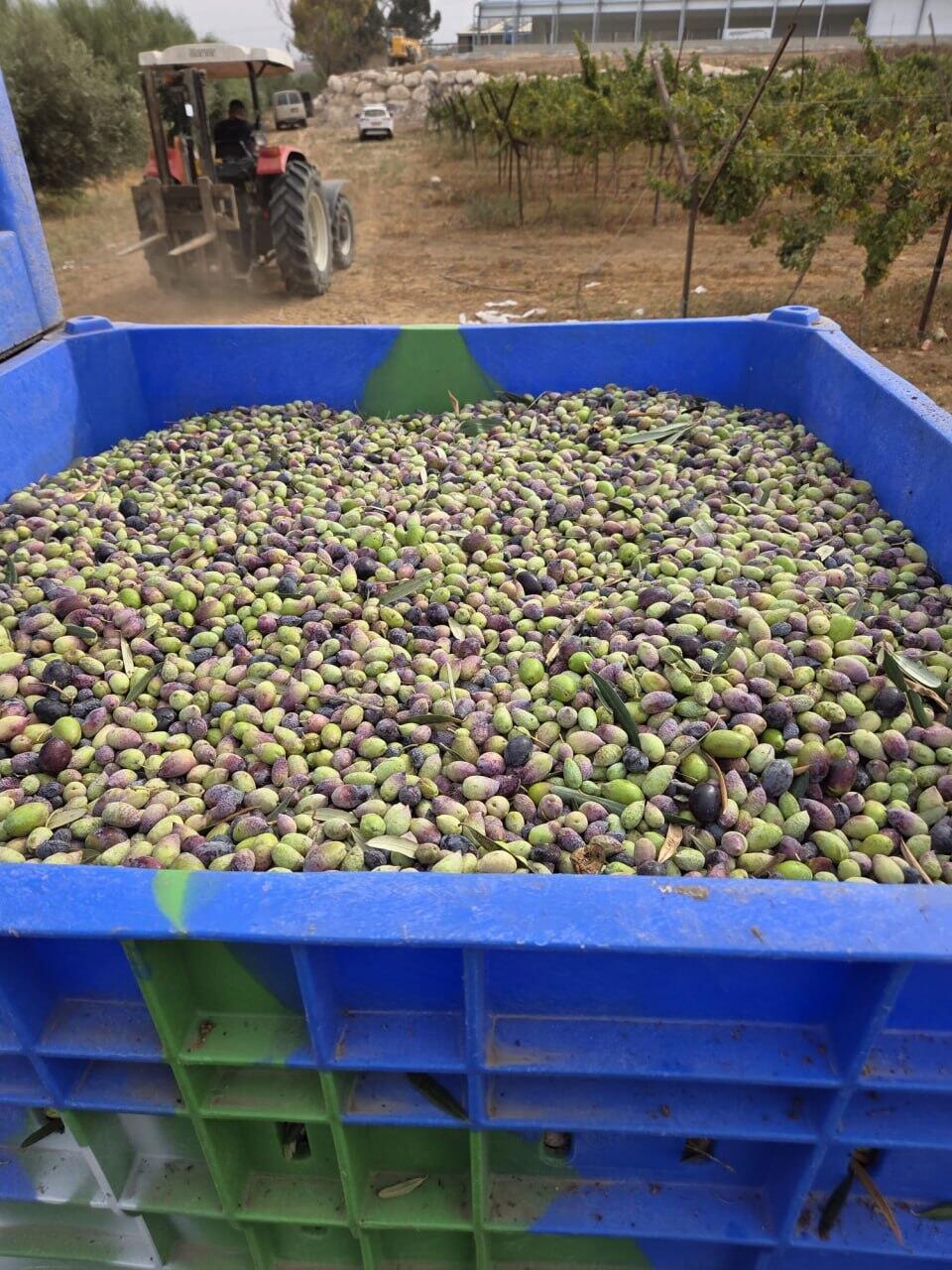
(Photo: Raviv Avshalom)
In Metula, just 180 meters from the Lebanese border, 79-year-old olive grower Roni Bakhmotsky returned to harvest his trees this week after three years of warfare, fallen missile fragments and interrupted agricultural work. His 18-dunam grove, described as Israel's northernmost olive orchard, stands on land his family received from Baron Rothschild. Bakhmotsky planted the trees himself in 1988, when the land was still barren.
During the fighting, maintaining the grove became both dangerous and emotionally exhausting.
"We had interceptor fragments and pieces of missiles falling around us while we worked, and we had to stop," he recalled. "A great deal of fruit was lost, and it was heartbreaking. Even during the war, I worked under fire. I came to the grove to take care of the trees because otherwise everything would have been lost."
The inability to reach his land regularly took a particularly heavy toll on the plots closest to the border fence. The October 2025 harvest produced disappointing results because years of interrupted maintenance had weakened the grove.
"Unfortunately, the grove still hadn't been properly cared for," Bakhmotsky explained. "I hadn't pruned it for two years because of the war."
The problems extended beyond the orchard. His private home was also damaged during the fighting, and dealing with property tax officials over compensation for his losses consumed time and attention that might otherwise have gone toward restoring the farm.
"This year, I hope that once the harvest is over, I'll finally be able to prune the trees and take proper care of them," he said.
Yet despite the expectation of a particularly abundant harvest, Bakhmotsky is not necessarily celebrating the quantity of olives on his trees. For him, producing high-quality extra virgin olive oil matters more than maximizing the amount of fruit.
"Personally, I don't like having too much fruit," he explained. "When there are too many olives, I thin the trees because the oil content is lower. The fruit is smaller, and the trees attract pests."
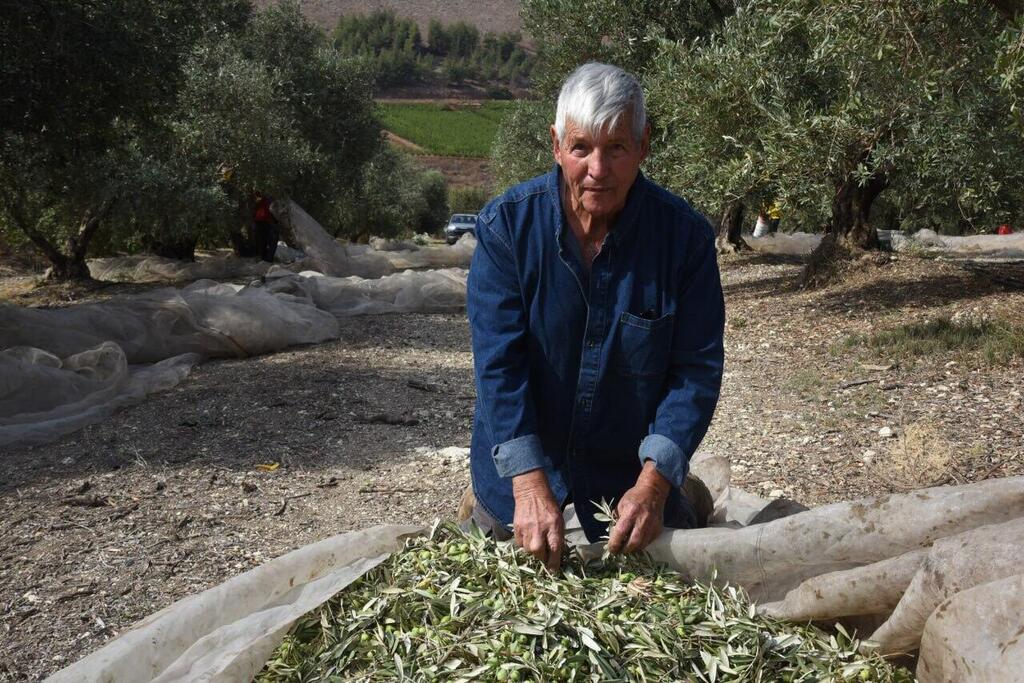
Roni Bakhmotsky harvesting olives in Metula, near the Lebanese border
(Photo: Avihu Shapira)
He estimates that his approach may cost him between 100 and 200 kilograms of olive oil, but considers that an acceptable price for maintaining the quality of his product. He also prefers to begin harvesting slightly earlier, helping preserve the characteristics required for high-quality extra virgin olive oil rather than allowing the fruit to develop further at the expense of quality.
But alongside the challenges of extreme weather and war damage, olive growers face another threat: counterfeit oil being marketed as locally produced Israeli olive oil.
The Plants Production and Marketing Board warns that consumers seeking authentic Israeli olive oil should look for the industry's official quality seal, which is backed by laboratory testing and strict supervision. The certification is intended to help distinguish genuine locally produced oil from counterfeit or adulterated products, including imported oil sold under misleading labels.
Bakhmotsky knows the problem firsthand. His family's olive oil has a recognizable label featuring an image of his late father at a threshing floor. According to the farmer, fraudsters have exploited his farm's reputation by selling products that customers believed came from him.
"I came across five families who told me they had bought my olive oil. But it was nothing of the sort," he said angrily. "I contacted the Plants Production and Marketing Board, which involved the police. These things make me very angry because there are con artists out there."
For Israeli olive growers, the promising 2026 harvest may offer a chance to recover from an exceptionally difficult year. But as farmers contend with changing weather patterns, damaged groves and fraudulent competition, the abundance of olives on the trees tells only part of the story. The real measure of recovery will be how much quality oil they can produce and whether they can earn a sustainable living from it.