


Two narratives compete for legitimacy and attention.
In one, violent Jewish extremists attack innocent Palestinians on land they claim as their own. In the other, violent Palestinians attack Jews and murder them simply for existing. Both stories are told with conviction. Both contain elements of truth. Both are used to justify policies, positions, and political pressure at the highest levels.
Gallery
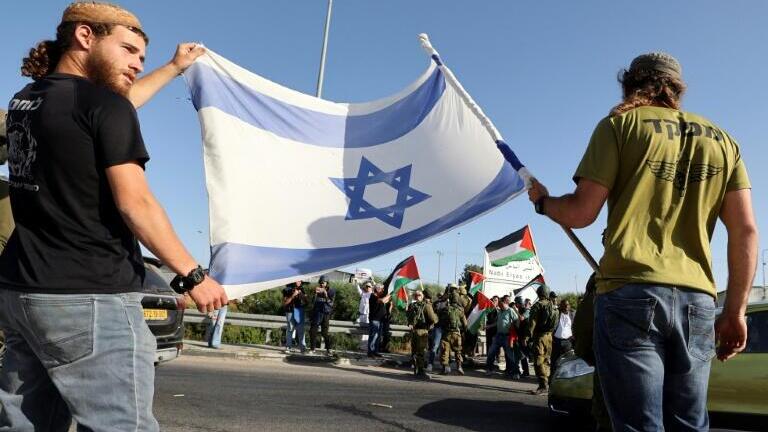
Israeli security forces stand between Jewish settlers and Palestinians, accompanied by activists's in West Bank
(Photo: Jaafar Ashtiyeh/AFP)
That tension is now playing out not only on the ground but also in the corridors of power.
In Prime Minister Benjamin Netanyahu’s government, figures including Finance Minister Bezalel Smotrich and National Security Minister Itamar Ben Gvir are pressing him to urge President Donald Trump to recognize Israeli sovereignty over Judea and Samaria. They argue that the territory is the biblical heartland of the Jewish people, promised in the Torah and essential to Israel’s security.
The territory is also widely known internationally as the West Bank. Many Israelis and supporters of Israel use “Judea and Samaria,” a biblical-historical name for the area, to emphasize Jewish historical ties and, in some cases, political claims. Many Palestinians, international bodies, and foreign governments prefer “the West Bank,” a term that became common after Jordan controlled the territory following the 1948 war, and which is widely used in diplomacy and international reporting.
For his part, President Trump has so far resisted those calls. Despite strong backing from his evangelical base, he has said he is not yet ready to support annexation of the West Bank. Last week at Mar-a-Lago, the gap between the two leaders was evident. Yet the divide between how Israelis and Palestinians view the land, the violence surrounding it, and the future it holds is far sharper and far more consequential.

West Bank settlement of Efrat
(Photo: AP)
Numbers frame the debate.
A United Nations official told The Media Line that UN records used to guide humanitarian planning show a sharp rise in violence in the West Bank. In October 2025 alone, the UN recorded more than 264 settler-related incidents that resulted in casualties, property damage, or both. That averages more than eight incidents per day and represents the highest monthly figure in nearly two decades of UN record-keeping.
Since 2006, the UN has documented more than 9,600 such incidents. Roughly 1,500 occurred in 2025 alone, about 15% of the total, as of the end of October. Beyond those figures, UN officials say there are daily reports of intimidation, trespassing, threats, and harassment that do not appear in the published data but contribute to what the organization describes as a coercive environment that pushes Palestinians off farmland and out of their homes.
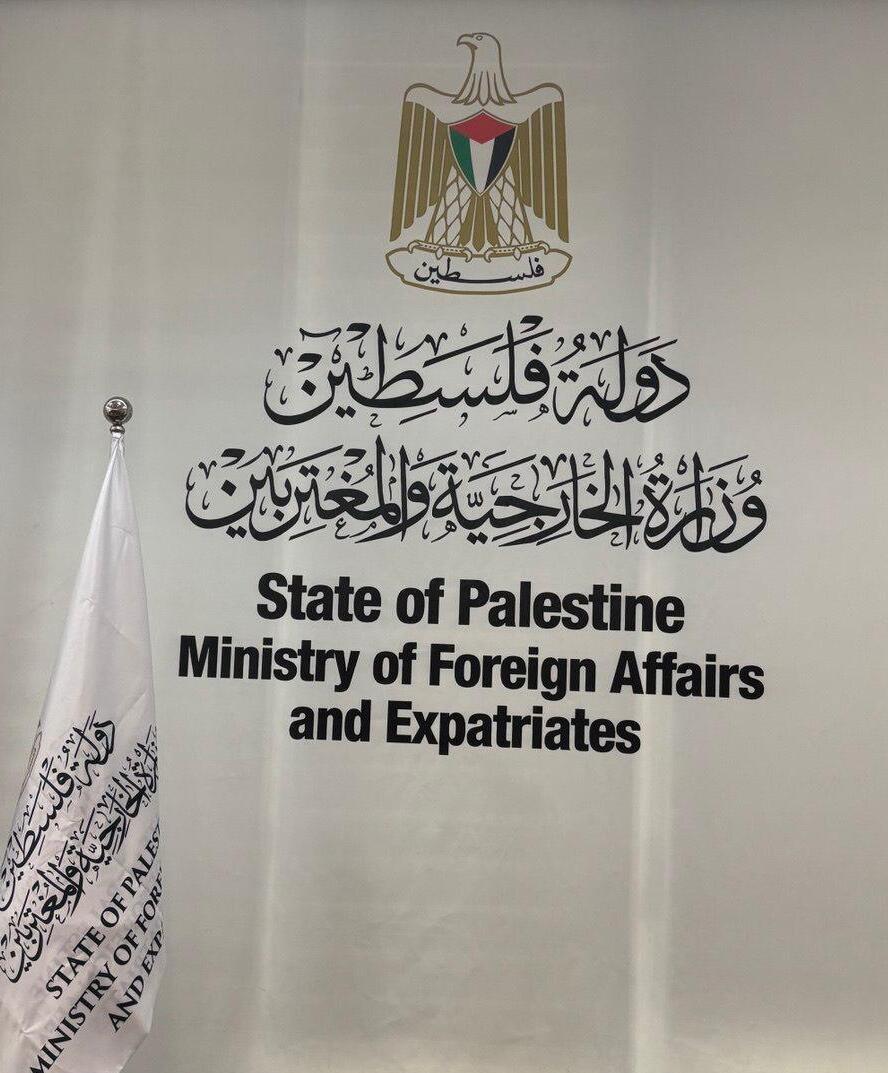
'The West Bank,'- a term that became common after Jordan controlled the territory following the 1948 war
(Photo: Maayan Hoffman)
By the UN’s account, more than 3,200 Palestinians have been displaced since October 2023 due to settler violence and related access restrictions. Entire herding communities have been abandoned, with people killed or injured, including by live fire, and many losing access to their livelihoods. The damage often includes vandalized trees, vehicles, homes, and infrastructure.
Still, the Israeli NGO Regavim argues that the UN figures paint a distorted picture. In a report published in April 2025 analyzing UN data from the previous year, Regavim said a significant portion of the incidents classified as settler violence did not take place in the West Bank at all. Of the 6,285 incidents included in the UN dataset, 1,704, or about 20%, occurred within Jerusalem or Israel proper, meaning they had no inherent connection to what is commonly defined as settler activity.
Additionally, 1,361 incidents, roughly 16%, involved Jewish visits to the Temple Mount or Muslim riots there that led to clashes with security forces, events Regavim said are unrelated to settler violence. “It should be emphasized: every ascent to the Temple Mount is counted in the list as ‘settler violence,’” the Regavim report stated.
The organization further found that 1,613 incidents, about 19% of those reported in the West Bank, were general complaints such as entry onto land during tours or hikes, with no assault or property damage. An additional 96 cases involved land use by the Israeli government or its contractors for infrastructure projects carried out on state land.
'Many use “Judea and Samaria,” a biblical-historical name for the area, to emphasize Jewish historical tie'
(Photo: Maayan Hoffman)
Another 2,039 incidents, about 24% of the West Bank total, involved claims of assault or property damage without bodily harm. Regavim argued that these cases should not appear in a database that purports to track incidents involving physical injury and said many stemmed from disputes over agricultural land near Jewish communities.
After excluding those categories, Regavim said only 833 incidents remained that could be classified as settler violence in Judea and Samaria involving bodily harm and, in some cases, property damage.
“This constitutes only 10% of the original list, which sought to reflect alarming levels of severe violence by settlers against Palestinians in the Judea and Samaria,” Regavim wrote. “Not only did this review cut 90% of the events, undermining the foundation of the UN’s arguments and their consequences, but the remaining cases suffer not only from a lack of credibility but also from a disgusting level of false accusation against the real victims.”
Lt. Col. (res.) Maurice Hirsch, director of the Initiative for Palestinian Authority Accountability and Reform at the Jerusalem Center for Security and Foreign Affairs, said only a tiny fraction of the more than 550,000 Jews living in Judea and Samaria have been involved in settler violence.
“So-called violent settlers are no more than a few hundred, yet every settler is then painted as a violent settler, which just isn’t the case,” Hirsch stressed. “Settlers are the most law-abiding population in the country. There are fewer drug offenses, fewer alcohol offenses, fewer break-ins.”
Joshua Hasten, who lives in the territories and served as the former spokesperson for the Etzion bloc of settlements south of Jerusalem, echoed Hirsch’s assessment. He estimated that roughly 0.001% of settlers are responsible for violent incidents, “usually as a result of being provoked or the increase in Arab terrorism.”
First published: 06:26, 01.08.26