

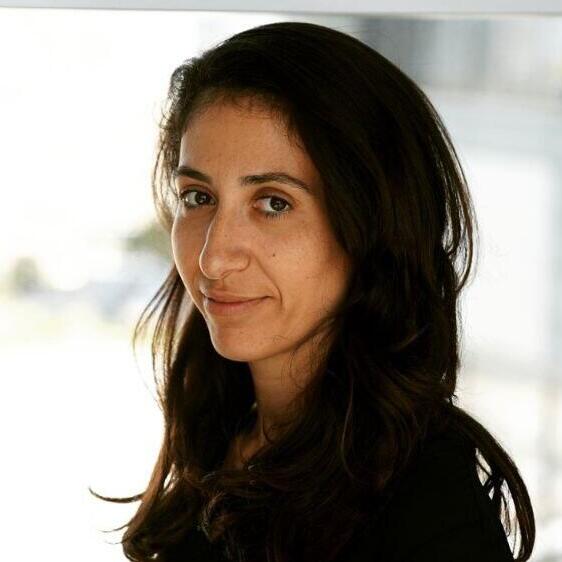
Lebanese Prime Minister Nawaf Salam sent a public message to Israel on Thursday, telling Bloomberg that Beirut is ready to open negotiations and will seek American help to push talks forward. He said President Joseph Aoun has already proposed discussing border disputes and the withdrawal of Israeli forces from areas Israel still controls after the war with Hezbollah.
“I repeat the same message of readiness to negotiate with Israel,” Salam said. He noted that a diplomatic solution is possible, pointing to the U.S.-mediated 2022 maritime border agreement. But he claimed recent Lebanese outreach has gone unanswered. “It’s a puzzle to me,” he said. “They ask for negotiations, and when we show readiness, they won’t agree to meet.”
Gallery
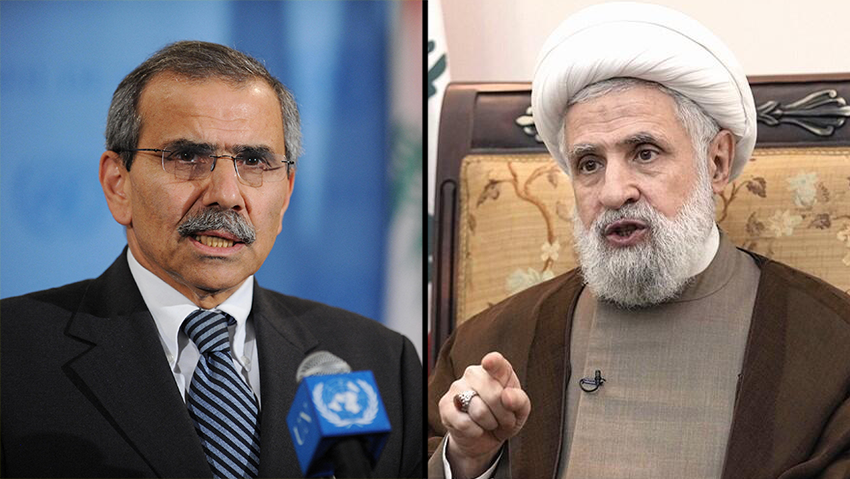
Lebanese Prime Minister Nawaf Salam, Hezbollah chief Naim Qassem
(Photo: Stan Honda/ AFP, Bilal Hussein, AP)
Tensions remain high despite a year-old cease-fire between Israel and Hezbollah. Israel argues Beirut is not doing enough to disarm Hezbollah, while Salam insisted that plans to demilitarize southern Lebanon are “advancing,” with the Lebanese army expanding its deployment. In August, the government ordered the army to develop a plan to disarm Hezbollah and other militias. Salam said the first stage, focused on the south, would be completed by the end of the month, with Beirut and the Bekaa Valley to follow.
Hezbollah blasted the proposal as a “grave sin,” vowed not to give up its weapons, and accused the government of serving Israel’s interests. The group also rejected Lebanon’s offer to enter direct negotiations with Israel.
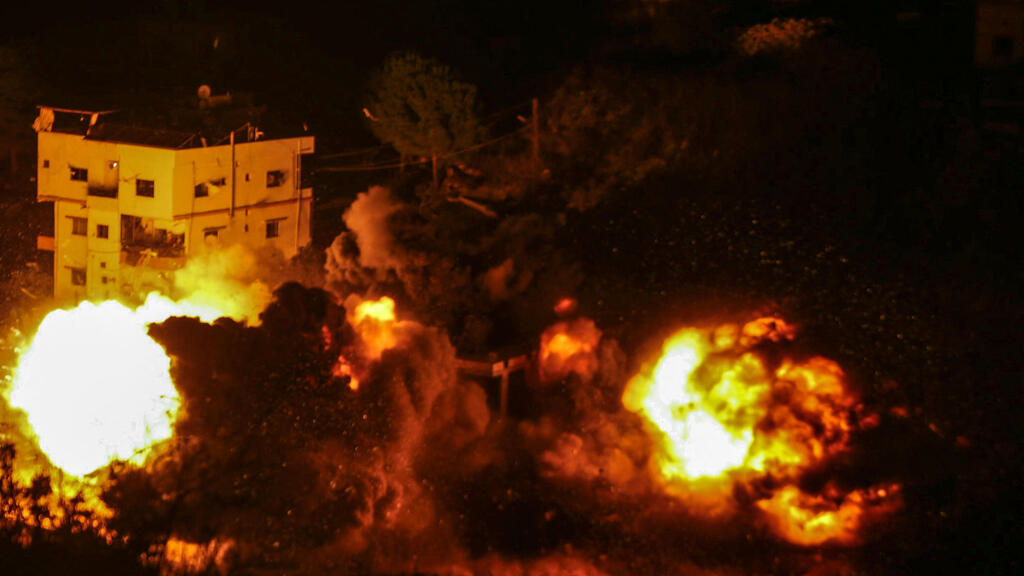
Israeli strikes against Hezbollah targets in Lebanon
(Photo: Muhammad Zanaty / AFP)
Salam countered that Israel is the side violating cease-fire terms, claiming the IDF maintains five outposts along the border that he said carry “no military or security value, only leverage over Lebanon.” Israel says the positions provide strategic depth to track Hezbollah’s attempts to rebuild its capabilities.
He added that the Lebanese government has “no evidence that Hezbollah is rearming,” but said the army is tightening control over smuggling routes, especially along the Syrian border. Western countries, including the United States, are pressuring Beirut to accelerate disarmament. U.S. diplomat Thomas Barrack harshly criticized the Lebanese government, calling it “paralyzed and run by a foreign terrorist organization.”
Salam said Lebanon’s severe economic crisis limits the army’s ability to operate. “Why can’t we move faster? First of all, we need to recruit more soldiers, equip them better and raise their salaries,” he said. Lebanon’s financial collapse, including a $30 billion bond default and a currency crash, has crippled state capacity.
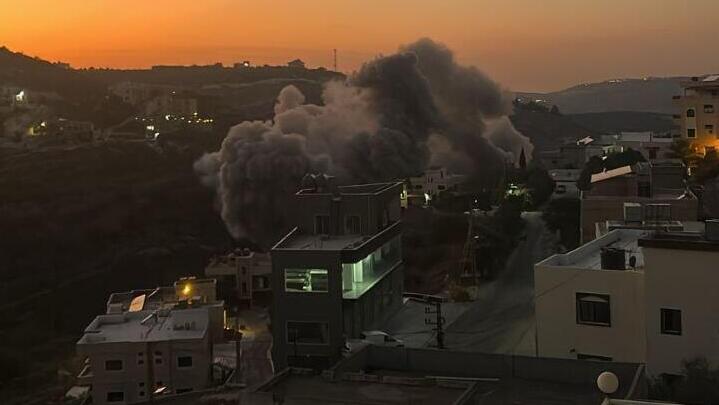
Strikes in Lebanon
He said he is working with France and Saudi Arabia to convene a donor conference and that the government is preparing legislation to address the roughly $80 billion deficit in the banking system, a move that could open the door to IMF assistance. “There is an opportunity for change in the region,” he said. “Lebanon won’t miss it this time.”
Meanwhile, regional tensions continue to mount. The pro-Hezbollah daily Al-Akhbar warned that Israel’s strike on the Ain al-Hilweh refugee camp, which killed at least 13 people, could signal similar operations elsewhere. The paper also reported contacts with the U.S. Embassy in Beirut to ease tension following the canceled visit of Lebanese Army Commander Gen. Rudolf Heikal to Washington.
An editorial in Al-Akhbar argued that Israel’s actions aim not only to pressure Hezbollah but to draw the Lebanese army into direct confrontation and destabilize the state. Another Arab daily, Asharq Al-Awsat, reported that recent Israeli strikes in southern Lebanon expanded from suspected military sites into densely populated civilian areas, suggesting Israel “has abandoned the principle of distancing attacks from civilians.”