


Prime Minister Benjamin Netanyahu insists he promised U.S. President Donald Trump nothing in return for his public endorsement ahead of Israel's October 27 election. But with Trump, political gifts rarely come without expectations. For Netanyahu, whose ultimate ambition remains the fall of Iran's Islamic Republic, the American president's support may come at a price, potentially requiring Israeli concessions on other issues, particularly Washington's 20-point plan for Gaza.
One such concession is already taking shape. Netanyahu has agreed to the establishment of an "Emirati bubble" in Gaza, where reconstruction could begin before the Strip is demilitarized and Hamas is disarmed. The arrangement suggests the prime minister may be prepared to accommodate Trump on Gaza if doing so helps secure American backing for what he considers his defining strategic objective: bringing down the regime in Tehran.

The timing of Trump's endorsement, followed by Defense Secretary Pete Hegseth's unannounced visit to Israel, has sharpened speculation about the possibility of another round of fighting with Iran. Netanyahu has repeatedly described the confrontation with Tehran as his life's work and said in recent days that he instructed Israel's defense establishment to bring down the Iranian regime.
Hegseth had been scheduled to visit Israel in July, but that trip was canceled at the last moment. His arrival now, just eight days before Israelis go to the polls, comes amid discussions about the possible resumption of major military operations against Iran. The proximity of the visit to Trump's endorsement has added to questions about Washington's intentions and Netanyahu's calculations.
Yet one senior Israeli official offers a markedly different interpretation. According to the official, Netanyahu is eager to attack Iran but cannot currently do so because Israel lacks the necessary intelligence. The Americans, the official said, are not interested in another strike at this stage, and Hegseth did not come to coordinate an operation. Rather, the purpose of his visit was to ensure Netanyahu was not preparing any surprises before the U.S. midterm elections on November 3.
That assessment illustrates the competing interests at play. Netanyahu sees regime change in Iran as the ultimate strategic prize, while the Trump administration must weigh the consequences of another confrontation against its own political timetable. For both leaders, the coming weeks carry significant military and political risks.
The danger of an Iranian preemptive strike
The increasingly heated rhetoric could itself become a trigger for war. With Israeli leaders issuing warnings, security consultations taking place late into the night and Hegseth making an unannounced visit, Iranian officials could conclude that Israel is preparing an imminent attack. Tehran might then attempt to strike first, setting off a rapid escalation that neither side had necessarily intended to initiate at that moment.
Israel's message in recent days has been consistent: If Iran makes a mistake, the Israeli response will be unprecedented. The warning appears to refer not only to the scale of a possible operation but also to the targets Israel could choose. Previous reports have indicated that Israeli planners considered striking Iranian infrastructure and energy facilities in the belief that such attacks could accelerate the collapse of the regime.
But the central assumption remains uncertain. Even another devastating military campaign would not guarantee the fall of Iran's leadership. As one Israeli source put it, nobody is promising that this time the regime in Tehran will collapse.

US Defense Secretary Pete Hegseth speaks with troops during a visit to the US Central Command area of responsibility
(Photo: US Department of Defense)
The costs of another war would also extend well beyond the battlefield. Israel would face the prospect of extensive damage to civilian infrastructure, a prolonged reconstruction effort and potentially significant casualties. During Operation Roaring Lion, 30 Israeli civilians were killed by direct Iranian missile strikes, while 12 soldiers and one civilian were killed on the Lebanese front. Another major confrontation could expose the Israeli home front to further missile attacks.
The election timetable adds another layer of complexity. IDF Chief of Staff Lt. Gen. Eyal Zamir has made clear to American officials that renewed fighting before October 27 could force Israel to postpone its election. A military confrontation in the final days of the campaign would therefore have consequences extending beyond national security, potentially disrupting the country's democratic process.
An Israeli source familiar with the situation put the chances of renewed fighting before the election at 30%, compared with a 70% likelihood that war would not resume before October 27. The figures represent that source's assessment rather than a certainty about either side's intentions.
The next deadline is November 3, when Americans vote in the midterm elections. Trump has indicated that the confrontation with Iran would be brought to a conclusion after that date, one way or another. As a result, the timing of any possible military operation is being considered against two closely spaced elections, each carrying its own political constraints.
Opposition questions Netanyahu's motives
Within Israel's opposition, the renewed discussion of war with Iran has prompted suspicion that political considerations may be influencing the timing and intensity of Netanyahu's warnings. Opposition figures believe the atmosphere of urgency surrounding the Iranian threat may serve the prime minister's interests in the final days of the campaign.
The signals have been difficult to ignore: late-night security consultations, briefings suggesting Iran could attempt to disrupt Israel's election and the unannounced arrival of Hegseth, widely regarded as one of the more hawkish members of Trump's administration. Together, they have contributed to the impression that another confrontation could be approaching.
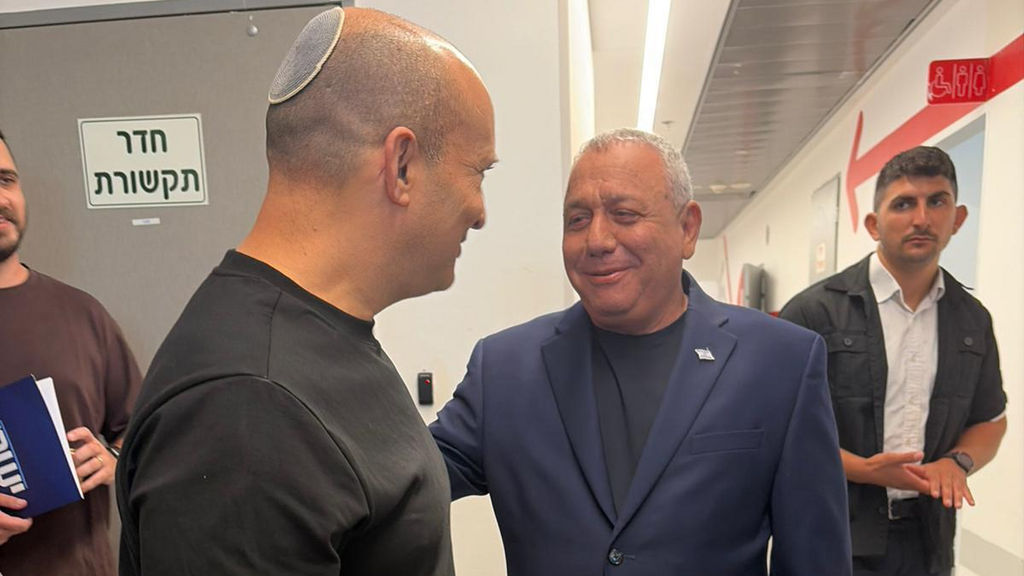
Naftali Bennett and Gadi Eisenkot
There is also the question of who within Israel's security establishment might challenge the prime minister's calculations. Zamir appears to be the senior defense official most likely to scrutinize the timing and motives behind a proposed operation. The heads of Mossad, the National Security Council and Shin Bet are all Netanyahu appointees, although their appointments do not establish how they would respond to a decision to strike.
For Israel to initiate a discretionary war against Iran, Netanyahu would need Security Cabinet approval. An Iranian preemptive attack, however, could fundamentally change the circumstances, turning the question from whether Israel should launch a new operation into how it should respond to an attack already underway.
That is where the greatest danger may lie. Netanyahu's determination to bring down the Iranian regime, Trump's political backing and the signals surrounding Hegseth's visit have created an atmosphere in which intentions can easily be misread. Even if Washington and Jerusalem ultimately decide against launching an operation before the elections, Tehran could reach a different conclusion and act first. The result could be a war triggered not by a carefully coordinated decision, but by a miscalculation at one of the most politically sensitive moments for both Israel and the United States.