

Joint Chiefs Chairman Gen. Dan Caine has privately told senior Trump administration officials that the United States needs to find an “off-ramp” from the war with Iran, warning that the military options available for escalation could backfire and that airpower alone is unlikely to achieve President Donald Trump’s stated objectives, CNN reported, citing three sources familiar with the matter.
“Caine is looking for an off-ramp,” one source said.
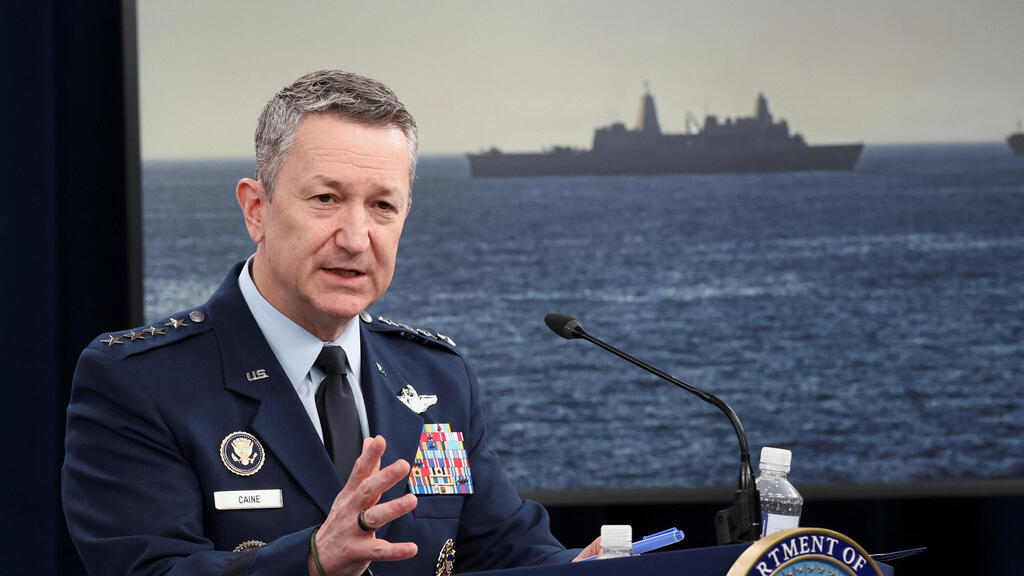
Caine has discussed the risks of further escalation with CIA Director John Ratcliffe, Secretary of State Marco Rubio and Vice President JD Vance. He has also held side discussions with senior officials in an effort to coordinate positions before meetings with Trump and ensure they are aligned on the limitations and potential consequences of the remaining military options.
“I think it is just his way of protecting the military,” one source said, referring to Caine’s conversations with other senior national security officials.
Trump has repeatedly signaled that he does not want to deploy U.S. ground forces in Iran and instead believes sustained bombing could pressure Tehran into accepting a deal on his terms. Caine and other senior officials privately see that outcome as unlikely and have been trying to develop alternatives that remain within the president’s parameters.
Nearly six months into the war, that assessment marks a significant shift from the early phase of the campaign, when U.S. officials repeatedly emphasized the damage inflicted on Iran’s military capabilities. Trump has continued to frame the conflict around preventing Tehran from obtaining a nuclear weapon, but his most senior military adviser now appears to believe there is no simple military path to ending it.
Caine’s spokesperson, Joseph Holstead, rejected anonymous characterizations of the chairman’s private discussions.
“We do not discuss the Chairman’s confidential conversations with the President, the Secretary, or other senior leaders, nor do we comment on anonymous, agenda-driven characterizations of those conversations by sources who were not privy to them,” he said.
A White House official praised Caine’s role in Trump’s national security team.
“General Caine is an incredible asset to President Trump’s national security team, and the overwhelming success of Operations Epic Fury, Midnight Hammer, and Absolute Resolve speaks for itself,” the official said.
“The General always provides accurate, unbiased information and a host of options to the Commander-in-Chief, who ultimately makes decisions based on what he feels is best for US national security,” the official added.
The State Department and CIA declined to comment.
‘Airpower has its limits’
Caine’s concerns reflect a broader view among senior U.S. national security officials that the war has reached a strategic crossroads.
During a public hearing late last month, Caine told lawmakers that “airpower has its limits,” a phrase that increasingly captures the dilemma facing the administration.
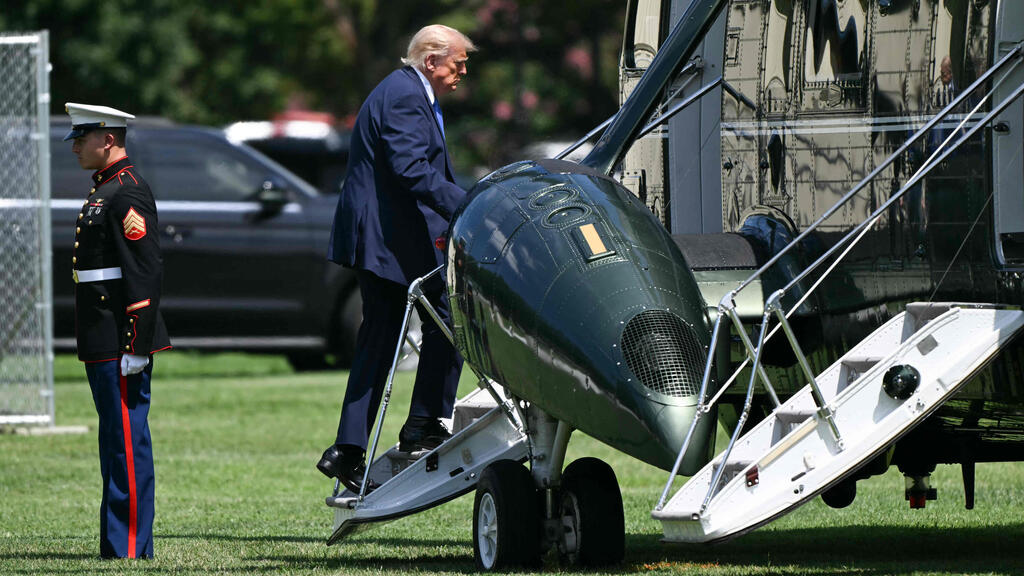
US President Donald Trump
(Photo: Alex WROBLEWSKI / AFP)
Those concerns played into discussions in late July over a more aggressive round of strikes against Iran. Caine and other officials were wary of the plan because of the risk of escalation, even as Trump initially appeared ready to approve what he described as a “massive” operation.
“The only ones in favor of the operation were elements of CENTCOM,” one source said, adding that Israel broadly supported an escalation.
Trump ultimately backed away after consulting Middle Eastern allies, who warned that Iran could retaliate against their energy infrastructure. The option, however, has not been permanently removed from consideration.
Another major constraint is the state of U.S. weapons stockpiles.
Inventories of several key munitions have been running low, and the issue has been raised not only by Caine but also by Gulf officials. They have warned that shortages of advanced U.S. air defense systems could weaken their ability to protect against Iranian retaliation if Washington escalates.
Trump has repeatedly threatened to strike Iranian energy infrastructure. But such attacks are unlikely to force Tehran to capitulate and would almost certainly increase the risk of retaliatory strikes against Gulf energy facilities, according to officials familiar with the discussions.
They could also alienate ordinary Iranians rather than turn public anger against the regime.
Trump has also considered attacks on bridges, though one source said such strikes were similarly unlikely to produce a decisive effect.
“There really isn’t much else to hit since it is whack-a-mole with drone and missile sites. Bombing powerplants would be publicly a lot more significant.”
Handling Trump carefully
Caine has become increasingly vocal in private about the risks of escalation, but he has also been careful about how he presents those concerns to Trump.
The chairman has worked to maintain direct access to the president and at one point even sought an office at the White House so he could brief Trump more regularly from a secure location.
During a White House meeting late last month, Caine raised the risks of escalation, including the depleted U.S. munitions stockpile.
At the same time, he made clear that if Trump ordered a larger operation, the military could carry it out successfully.
“We could absolutely wreck them,” one source quoted Caine as telling the president.
Privately, however, Caine has been more direct about the limits of airpower and his belief that bombing alone is unlikely to achieve Trump’s stated goals at this stage of the war.
Some officials and people familiar with his interactions with Trump have questioned whether he has been forceful enough.
“He’s definitely pulling punches,” one source said earlier this year, comparing Caine’s conversations with Trump to his more candid discussions with military leaders.
Still, Caine has become more outspoken in recent weeks about the possible second- and third-order effects of escalation, particularly the strain on U.S. munitions stocks.
That leaves him walking a narrow line: warning Trump about the risks while continuing to assure him that the U.S. military can inflict major damage if he chooses to escalate.
Warnings before the war
Caine and other military officials raised similar concerns before the war began.
They warned Trump that a prolonged campaign could drain U.S. weapons stockpiles, particularly systems needed to support Israel and Ukraine.
Those concerns have since become more acute. Senior military commanders now believe some inventories are “dangerously low,” according to a source familiar with the issue.
Trump has grown increasingly frustrated that the shortage has become public, in part because it could undermine his ability to project strength in negotiations with Iran.
The strain on stockpiles has also pushed the Pentagon and U.S. Central Command to reassess their strategy.
A senior CENTCOM official recently sent an internal email asking personnel to submit unconventional ideas for pressuring and punishing Iran.
While seeking fresh ideas is not necessarily unusual, some officials saw the timing as revealing.
“It is rough when you are looking at those options in the middle of the war instead of before it starts,” one source said.
As chairman of the Joint Chiefs, Caine is responsible for developing military options against Iran. Even before the fighting began, however, he warned senior officials about the scale, complexity and potential U.S. casualties associated with a major campaign.
Trump nevertheless cited Caine by name before the war while claiming the conflict would be “something easily won.”
Now, with the war approaching the six-month mark, criticism of Caine’s handling of the conflict is resurfacing, including questions about his experience managing a prolonged war.
“He is out of his depth on this one,” one source familiar with his role in the crisis said.
But Caine is not an outlier.
Many administration officials and outside analysts believe decisively defeating Iran would require a large-scale ground operation, a step that could cost thousands of American lives. The Pentagon has contingency plans for such scenarios, but no senior administration official is currently advocating that course.
That leaves Caine and other officials focused on a narrower objective: finding an exit that gives Trump at least a “symbolic” victory while preserving room for diplomacy.
One possible first step is an agreement to reopen the Strait of Hormuz, which could provide the administration with a tangible achievement without requiring another major escalation.