

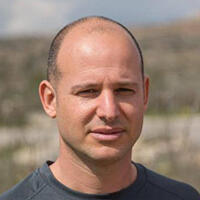
Three months of exhausting ambushes, close-range fighting and underground warfare on southern Lebanon’s Ali Taher Ridge culminated last Thursday night when Israeli commandos and combat engineers blew up what the IDF described as a major strategic Hezbollah underground complex.
Commanders from Maglan, the IDF commando unit specializing in operations deep behind enemy lines, and Yahalom, its elite combat engineering unit, told ynet how their troops gradually tightened control over the ridge, forced Hezbollah terrorists out of underground positions and destroyed the network just before the Rosh Hashanah holiday.
Footage of the destruction of underground routes on Ali Taher Ridge
(Video: IDF)


“Soldiers slept outside in the brush, spending hours in ambushes, in the cold and the heat, to hunt the terrorists,” said Lt. Col. R., commander of Maglan.
The operation followed months of fighting north of the Litani River, including at Beaufort Ridge, before Israeli forces moved toward Ali Taher.
“We reached the ridge about three months ago,” R. said. “The unit captured the village of Mazraat Ali Taher together with Egoz, and then we began taking control of the ridge. We engaged Hezbollah terrorists, began moving into the ridge through ambushes and movement in the brush, built an intelligence picture and started to ‘choke’ the area.”
Lt. Col. D., commander of a Yahalom company, said the mission was part of a series of operations known as “Merom Harim.”
“First at Beaufort Ridge, we found many strategic underground routes intended to defend the ridge, prevent the IDF from crossing the Litani and provide Hezbollah with command and control,” he said. “When we arrived at Ali Taher Ridge about three months ago, our mission was to locate, investigate and destroy the infrastructure. It was an extremely complex mission, the most complex I have carried out in my military service and probably the most significant.”
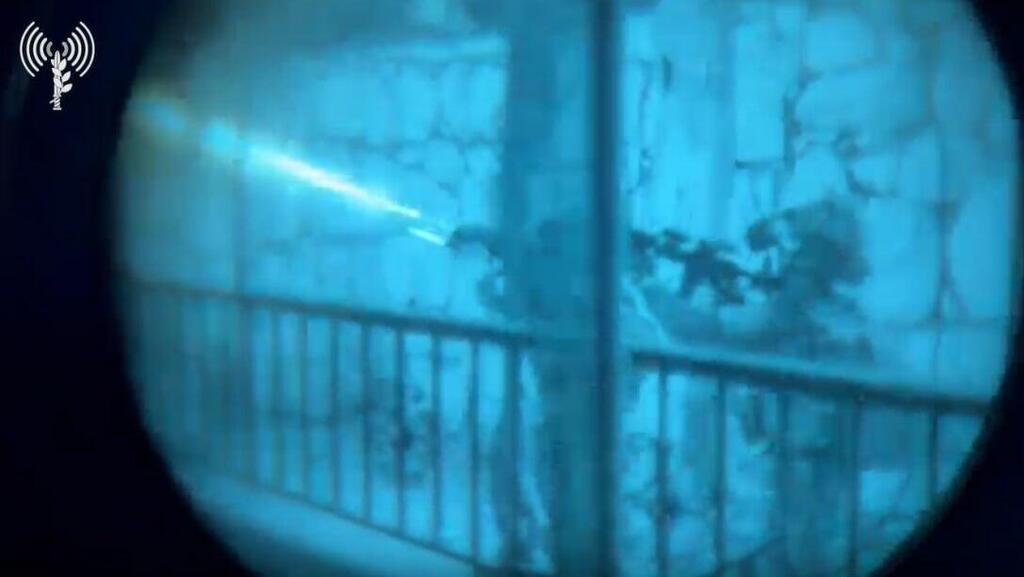
Fighting through brush, boulders and explosive drones
The terrain made the operation particularly difficult.
“It was very hard to reach the mountain and work there,” D. said, describing thick vegetation, boulders and the distance from other Israeli forces. “We were in terrain that was not operationally held, about a kilometer and a half from where the troops were positioned.”
The topography complicated casualty evacuation and logistics, he said, while dozens of Hezbollah terrorists operated in the area and repeatedly targeted Israeli troops with drones and indirect fire.
The early fighting was costly.
During the battle for the village, Sgt. First Class Nir Ben Ari was killed by a rocket and several other soldiers were wounded.
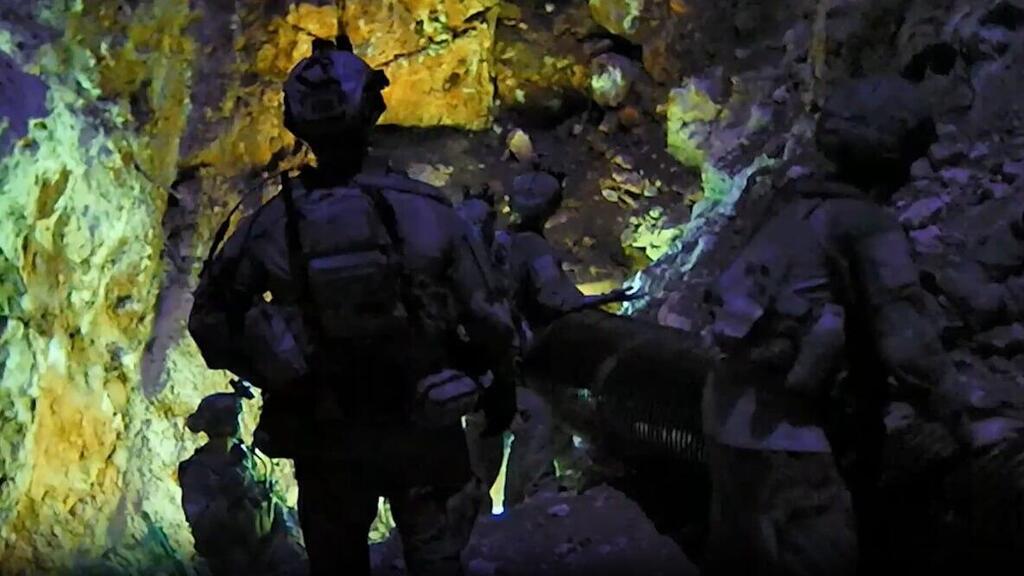
Body-camera footage from one of the underground routes
(Photo: IDF)
“I will never forget one moment,” R. said. “The incident in the village was very difficult, and you saw everyone moving forward, soldiers running into the fire to save their friends.”
One badly wounded soldier survived because of the actions of those around him, R. said.
“The doctor at the hospital told me he was one of the most seriously wounded soldiers of the war. Today he is rehabilitating. That is the fighting spirit. The next day after that incident, they got up and continued the operation to capture the same village.”
Cameras in the brush and weapons underground
As Israeli forces advanced, they began discovering the scale of Hezbollah’s preparations on the ridge.
“We put together the intelligence picture on the ground and realized there was a fortified site that had been prepared for a very long time, a strategic asset,” R. said.
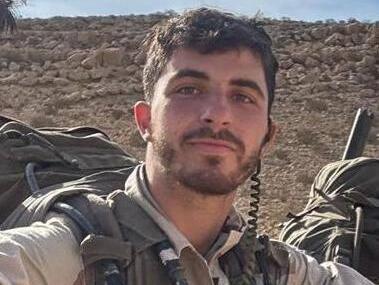
Sgt. First Class Nir Ben Ari
Troops found terrorists inside infrastructure, surveillance cameras, booby traps, explosive devices, rocket launchers, Grad rockets, drones and unmanned aircraft, he said.
“Suddenly we found cameras inside the brush. Some were closed-circuit cameras and some were intelligence-gathering cameras,” R. said. “Only when you move through the brush do you discover them and understand there is an enemy there.”
The Israeli troops settled into a routine of prolonged concealed ambushes.
“Every soldier would prepare for an ambush lasting several days, move covertly, reach the position, remain there hidden with special equipment and wait patiently,” he said.
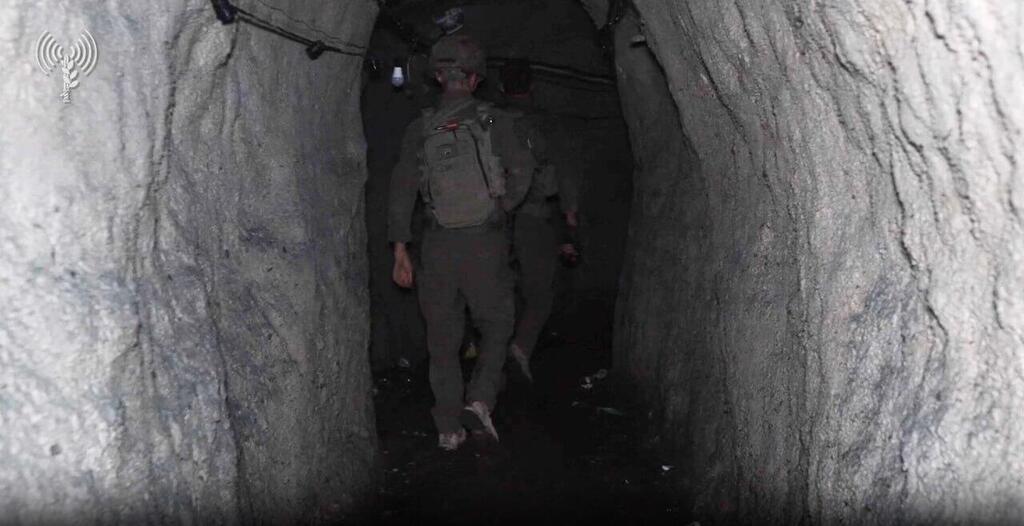
מצלמת גוף של התיעוד המבצעי באחד התוואים
(Photo: IDF)
Food and cigarettes delivered by drone
The biggest challenge was figuring out Hezbollah’s underground system.
“We faced a puzzle: How do you crack Ali Taher Ridge and the underground infrastructure beneath it?” D. said.
The IDF brought specialists from across the military and formed teams to devise methods to force Hezbollah terrorists out of the tunnels, according to the officer.
Israeli forces cut off supplies being delivered by drones and conducted foot searches for shafts, using clues such as metal beneath rocks, openings in the ground and weapons positioned near suspected exits.
Two underground routes were discovered at roughly the same time, D. said. One was penetrated after about a month and the second after roughly six weeks.

Footage from one of the underground routes uncovered: ‘Operating rooms, command centers, as well as toilets and kitchenettes’
(Photo: IDF)
The long ambushes eventually led to close-range encounters.
“When you push deeper into the ridge, you see the enemy starting to shrink back,” R. said. “One day we took down a camera, and then you see terrorists fleeing and others trying to stick their heads out of shafts.”
Israeli soldiers also saw Hezbollah trying to resupply those underground.
“You see a drone above you and then a package drops,” R. said. “You open it and find food and cigarettes.”
He said troops encountered two kinds of Hezbollah fighters.
“One type came from outside and tried to help those underground. They came in uniforms with weapons and combat vests, and some tried to disguise themselves with blankets or camouflage suits. It was very professional equipment.”
During the operation, he said, dozens of Hezbollah terrorists were killed either by drones or in close-range fighting.
“The second type was the enemy fleeing from underground wearing civilian clothes and carrying Kalashnikov rifles,” R. said. “We applied tremendous pressure. Either the enemy abandoned the area or we killed them.”
Forcing Hezbollah out of the tunnels
Yahalom troops used a series of classified measures aimed at making it increasingly difficult for Hezbollah terrorists to remain underground, D. said.
“Once we had a precise grip on the area and a full picture of who was inside, we carried out various classified actions that ultimately caused the enemy to leave the underground infrastructure,” he said.
“We carried out actions that disturbed them and made them uncomfortable, to the point where it became almost impossible to remain on those levels. We brought them above ground in order to eliminate them.”
The troops also used loudspeakers and attempted negotiations with those inside, he said.
Once inside the tunnels, the soldiers found what commanders described as an unusually sophisticated complex stretching for several kilometers.
“There were operating rooms and medical equipment, command rooms and operations centers, as well as toilets, ventilation systems and kitchenettes,” R. said. “There was important intelligence material and weaponry, and above all we saw that they had really planned for these moments of war, so they could attack and command from there.”
He said the underground command infrastructure had been intended to support Hezbollah forces targeting northern Israeli communities and Israeli troops crossing the Litani.
D. said the operating rooms were among the most striking discoveries.
“It wasn’t a clinic,” he said. “It was a room with surgical equipment, medications, anesthetics and beds, something I had not seen elsewhere.”
‘An incredible generation’
The officers said maintaining the operation for months required soldiers to remain in harsh field conditions for prolonged periods.
“The morale in the unit is among the most exceptional I have ever encountered,” D. said. “The soldiers of the company did not go home for three months. They didn’t wash their faces and didn’t eat like normal people. They slept outside in the brush, in the cold and the heat, for hours during long ambushes.”
“They did what was needed to complete the mission because they understood its importance. They did not complain.”
R. said the campaign had tested the unit after commanders were wounded and Ben Ari was killed.
“We have an incredible generation,” he said. “Soldiers and commanders were wounded, returned and were wounded again during this round.”
He said Maglan’s approach was built around finding ways to outmaneuver the enemy through concealment, patience and sustained pressure.
“That is the spirit of Maglan, how do I get around the enemy,” he said. “That is what allowed us to move forward, camouflage ourselves and find the enemy through very long, painstaking work.”
‘We’re not leaving until we blow it up’
The operation reached its climax with the destruction of the underground infrastructure just before the holiday.
Ahead of the demolition, R. took the soldiers to Beaufort, where they could see northern Israeli communities from the commanding heights.
“You see everything from there,” he said. “You see the communities in the north, and you don’t need much explanation about what that commanding position means.”
The soldiers were told the demolition might take place before or after the holiday.
“They said, ‘Rosh Hashanah or no Rosh Hashanah, we don’t care about being home for the holiday. We are not leaving here until we blow it up,’” R. recalled.
“In the end we made it and got out right at the buzzer. It was a battle that will be etched into the history of the unit.”