

The state spent nearly 2.7 million shekels ($882,295) during 2025 and the first half of 2026 on operating Prime Minister Benjamin Netanyahu’s residences and on salaries for employees there, according to data disclosed Tuesday by the Movement for Freedom of Information. The group received the information from the Prime Minister’s Office following a court petition.
The material provided includes an official response from the Freedom of Information unit at the Prime Minister’s Office and two detailed tables. The data show, that alongside salary expenses and routine maintenance, the state paid, among other things, for the replacement of two bathtubs in a little over a year, repeated treatment of roots that had penetrated beneath the Caesarea home, gardening costing tens of thousands of shekels and dozens of Wolt deliveries. However, a large share of the information — including the names of suppliers and sometimes the nature of the expense itself — was blacked out on the grounds that disclosure would harm state security.
Gallery
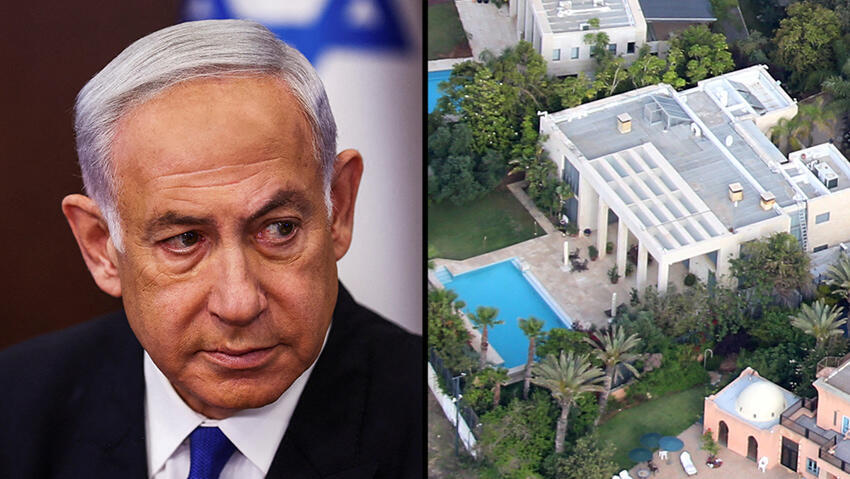
Prime Minister Benjamin Netanyahu an his personal residence in Caesarea
(Photos: Reuters, Shaul Golan)
The data relate to the house on Gaza Street in Jerusalem, where the Netanyahus live; their private home in Caesarea, which has not been lived in since it was hit by a Hezbollah drone in October 2024 and is undergoing renovation and fortification work; and the official residence on Balfour Street, which has been undergoing prolonged renovations and appears in some of the documents alongside “support apartments” and “service apartments” in its vicinity.
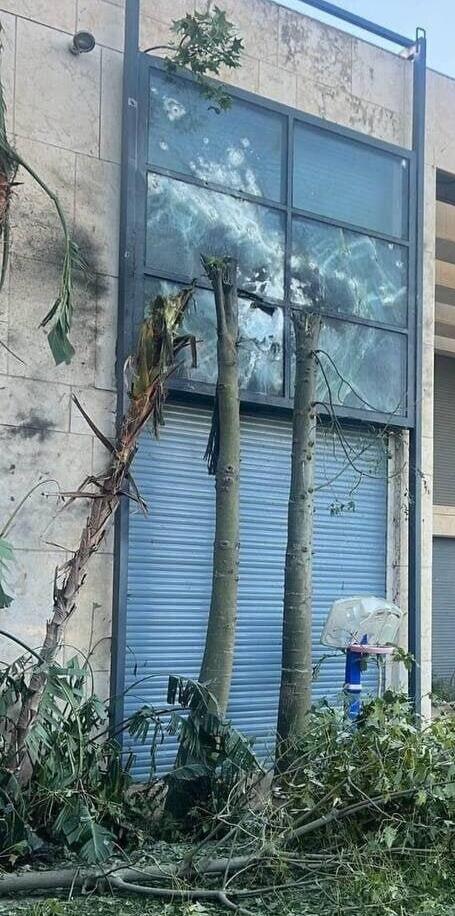
Damage at the prime minister's private residence in Caesarea after it was hit last year by a drone
The request for the data was filed in December 2025 by attorney Ori Szold on behalf of the Movement for Freedom of Information. The official response was signed by Tami Cohen Toito, senior department manager for Providing Information to the Public in the Prime Minister's Office.
Nearly 2 million shekels a year
According to the tables, total spending on the prime minister’s residences in 2025, including employee salaries, amounted to 1,979,517 shekels ($647,260). Of that sum, about 508,000 shekels ($166,135) were defined as operating and maintenance expenses, and about 1.47 million shekels ($480,643) were allocated for salaries.
In the first half of 2026, between January and June, additional expenses totaling 731,081 shekels ($238,942) were recorded: about 466,000 shekels ($152,304) for operations and maintenance and about 265,000 shekels ($86,625) for salaries. If the pace of spending in the first half of the year continues, annual operating spending could be higher than that recorded in 2025, though because of the decline in salary costs, overall spending is not necessarily expected to rise.
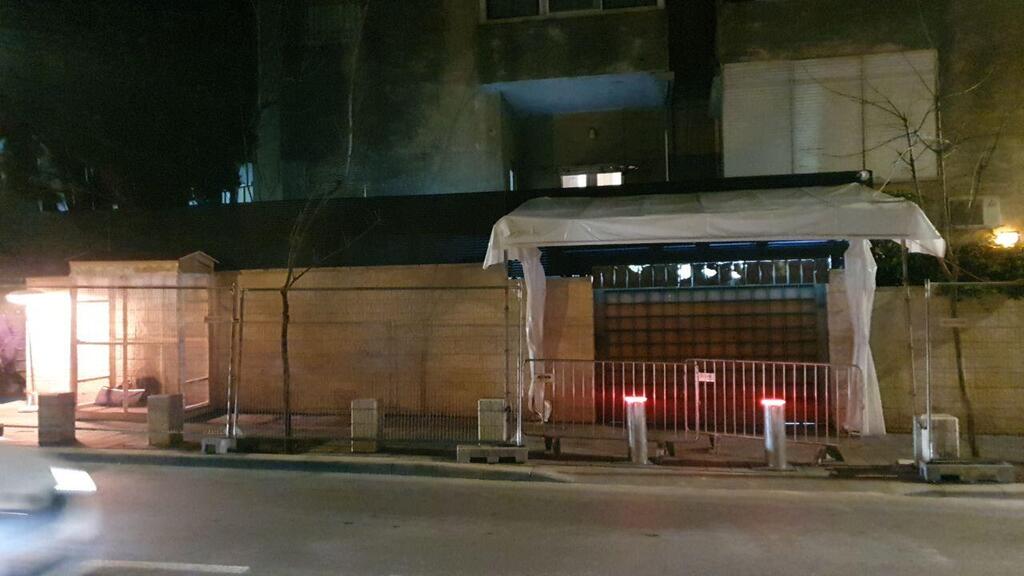
The Netanyahu's Gaza Street residence
(Photo: Alex Gamburg)
Among the disclosed items, food purchases were the largest single expense: 165,444 shekels ($54,082) in 2025 and about 120,000 shekels ($39,227) more in the first half of 2026. The state paid 94,957 shekels ($31,041) in 2025 alone for gardening at the Caesarea home.
The movement notes that this is the first time the house on Gaza Street has been classified separately from the other private residences, allowing a more precise breakdown of expenses among the various facilities.
Two bathtubs in 13 months
Alongside the overall figures, the tables reveal a series of specific maintenance expenses. In March 2025, the state paid 13,570 shekels ($4,435) to replace a bathtub at the house on Gaza Street. About 13 months later, in April 2026, another 14,986 shekels ($4,895) were paid to replace another bathtub at the same residence. In total, the state spent about 28,500 shekels on the two bathtub replacements.
At the Caesarea home, several payments were recorded for treating roots that had penetrated beneath the structure. In 2025, payments were made on three separate dates — once in April and twice in December — totaling 10,590 shekels ($3,459) for “preventive treatment against penetrating roots” beneath the residence. On May 27, 2026, an additional 3,540 shekels ($1,156) was paid for the same purpose. In December 2025, 413 shekels was also paid to replace a float in a toilet tank at the Caesarea home, and in February 2026 the state spent 1,552 shekels to replace three thermostats there.
34 Wolt deliveries in four months
According to the data, between July and October 2025, 34 orders were placed from the house on Gaza Street through Wolt, at a total cost of about 4,984 shekels ($1,628). In August alone, 19 deliveries were made at a total cost of about 2,700 shekels ($882). The table relating to the first half of 2026 did not show additional Wolt orders.
The 2025 data also repeatedly list an item for “hosting and refreshments” at the house on Gaza Street, in amounts ranging from 35 shekels to 224 shekels each time. The Movement for Freedom of Information argued that the item raises questions, because, according to the movement, it is not known of any official hosting taking place at the house on Gaza Street or at the Caesarea home. Various electrical appliances were also purchased for the residences, including a toaster grill costing 229 shekels, a radiator and a fan.
One of the most unusual figures appears on June 16, 2025. On that day, 76 purchases or orders were recorded under the classification “purchase of food products and prepared food,” totaling 9,521.32 shekels ($3,110). Of these, 58 purchases totaling 5,619.88 shekels ($1,836) were attributed to the Gaza and Caesarea residences, and 18 additional purchases, totaling 3,901.44 shekels (1,275), were attributed to the support apartments near Balfour.
The names of the suppliers in all 76 lines were blacked out under the clause in the Freedom of Information Law that allows information to be withheld if its disclosure could harm state security. It is therefore impossible to know from whom the products or food were purchased that day, or whether they were indeed dozens of separate purchases or a centralized recording of invoices.
Nearly half the amount was hidden; in 2026, four of every five lines were blacked out
Beyond the redactions in which only the supplier’s name was hidden, the Movement for Freedom of Information identified 347 unusual expense lines in 2025, totaling 63,033 shekels ($20,592), in which both the supplier’s name and the description of the expense were concealed. As a result, it is not possible to know to whom the money was paid, for what service or what the purpose of the expense was.
According to the Movement for Freedom of Information, the redactions are not limited to expenses with a clear security nature, and they also appear in food purchases, laundry services and routine maintenance work. Even in the line referring to the replacement of the float in the toilet tank at the Caesarea home, the name of the service provider was concealed.
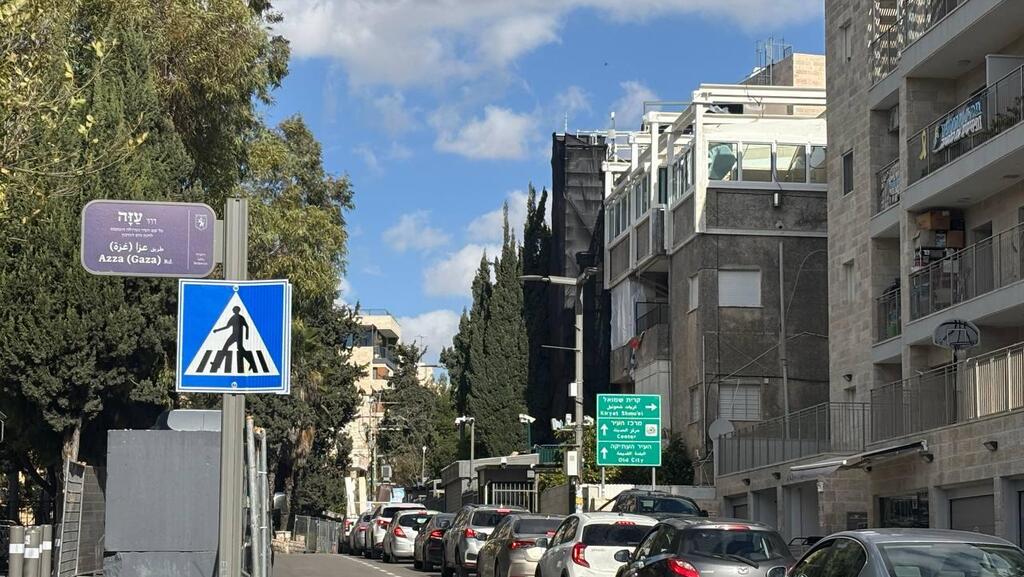
Gaza Street in Jerusalem
(Photo: Gil Yohanan)
Of about 508,000 shekels ($166,002) in operating and maintenance expenses detailed for 2025, about 230,000 shekels ($75,171) — close to 45% of the amount — was attributed to suppliers or services whose details were hidden for reasons of state security. In terms of the number of lines, the redaction rate was even higher: Of 1,531 expense items in 2025, 1,129 items, about 74%, were fully or partially blacked out.
In the first half of 2026, about 184,000 shekels ($60,136) out of operating expenses of about 466,000 shekels ($152,352) — about 39% — was attributed to suppliers whose names were hidden. Of 904 expense lines during this period, 741 lines, nearly 82%, were fully or partially blacked out. The Prime Minister’s Office noted in its response that some of the expenses listed in the tables are still “subject to further professional and legal review,” so the data provided may also not be final.
Balfour residence begins accumulating expenses again
A breakdown of the data by facility shows a change between 2025 and the first half of 2026. In 2025, most of the detailed expenses were attributed to the house on Gaza Street, about 306,000 shekels, and the additional private residences, about 159,000 shekels. Only about 43,000 shekels was attributed to the support apartments around the official residence on Balfour Street.
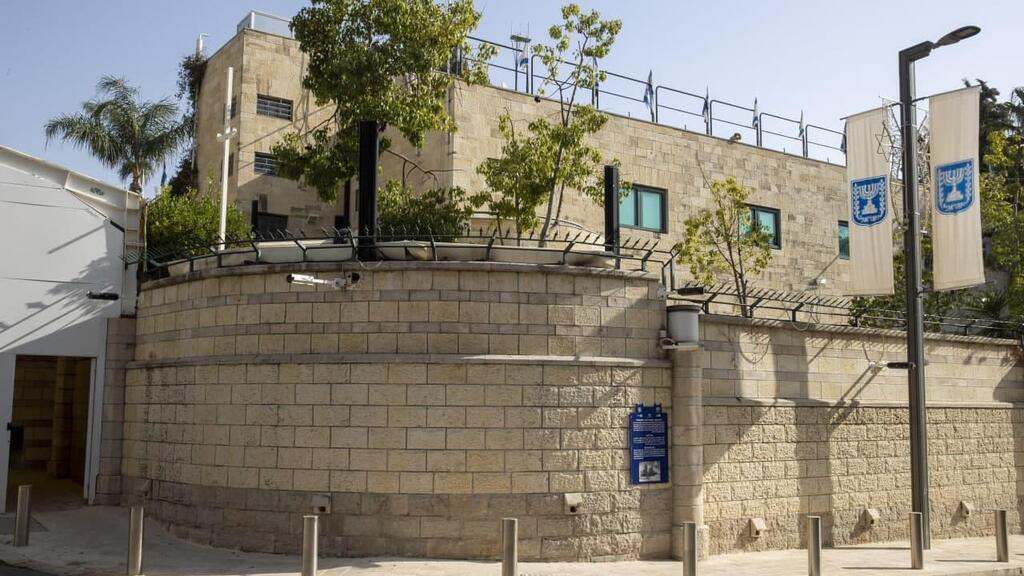
Official residence on Balfour Street
By contrast, in the first half of 2026, the Caesarea home topped the list of expenses, with about 171,000 shekels ($55,906). About 95,500 shekels ($31,222) was attributed to the house on Gaza Street, and for the first time, significant expenses were listed as directly attributed to the “Prime Minister’s House at Balfour,” totaling about 57,500 shekels ($18,798), and to “Balfour service apartments,” totaling another 77,500 shekels ($25,335).
The increase indicates that the complex on Balfour Street and the service apartments around it have begun accumulating significant operating expenses, even though the official residence is still under renovation. It was previously reported that the Netanyahus use one of the apartments in the complex for hair and makeup services. It was also recently reported that the state is renting another apartment for them, but the tables do not make it possible to determine whether these expenses are related to that.
The office refused to provide the invoices
The Movement for Freedom of Information asked to receive not only the expense tables, but also copies of the invoices and receipts on which they are based. The Prime Minister’s Office rejected that part of the request, arguing that collecting, sorting and processing all the documents would require an “unreasonable allocation of resources.”
The office relied on a previous Supreme Court ruling in a proceeding in which the Movement for Freedom of Information was a party, which held that the state should not be required to collect and transfer all invoices related to the prime minister’s residences when the request is not narrowed or delimited. According to the office’s position, the summary reports provided are sufficient and there is no obligation to provide all the supporting documents as well.
The Movement for Freedom of Information has the right to petition the Administrative Affairs Court against the decision.
Attorney Hidi Negev, CEO of the Movement for Freedom of Information, said: “Once again, we were required to go to court to expose information about expenses at the prime minister’s residences, and once again a wasteful policy is revealed in the use of public funds at the prime minister’s residences.
“Precisely at a time when the entire public is coping with a heavy economic burden and the consequences of the war, it is especially important to act responsibly and with full transparency regarding public expenses. This is information that should be published proactively and routinely, not information the public is forced to uncover only through court petitions. A proper reality is one in which expenses of this kind are open and accessible to the public as part of the duty of transparency and oversight over the use of public funds.”