


New satellite images show extensive damage to a pumping station on Saudi Arabia’s East-West oil pipeline, a crucial route that has allowed the world’s largest oil exporter to bypass the Strait of Hormuz during months of regional disruption.
The images, published overnight, show the facility heavily scorched following drone strikes that Riyadh has blamed on militias operating from Iraq.
Gallery
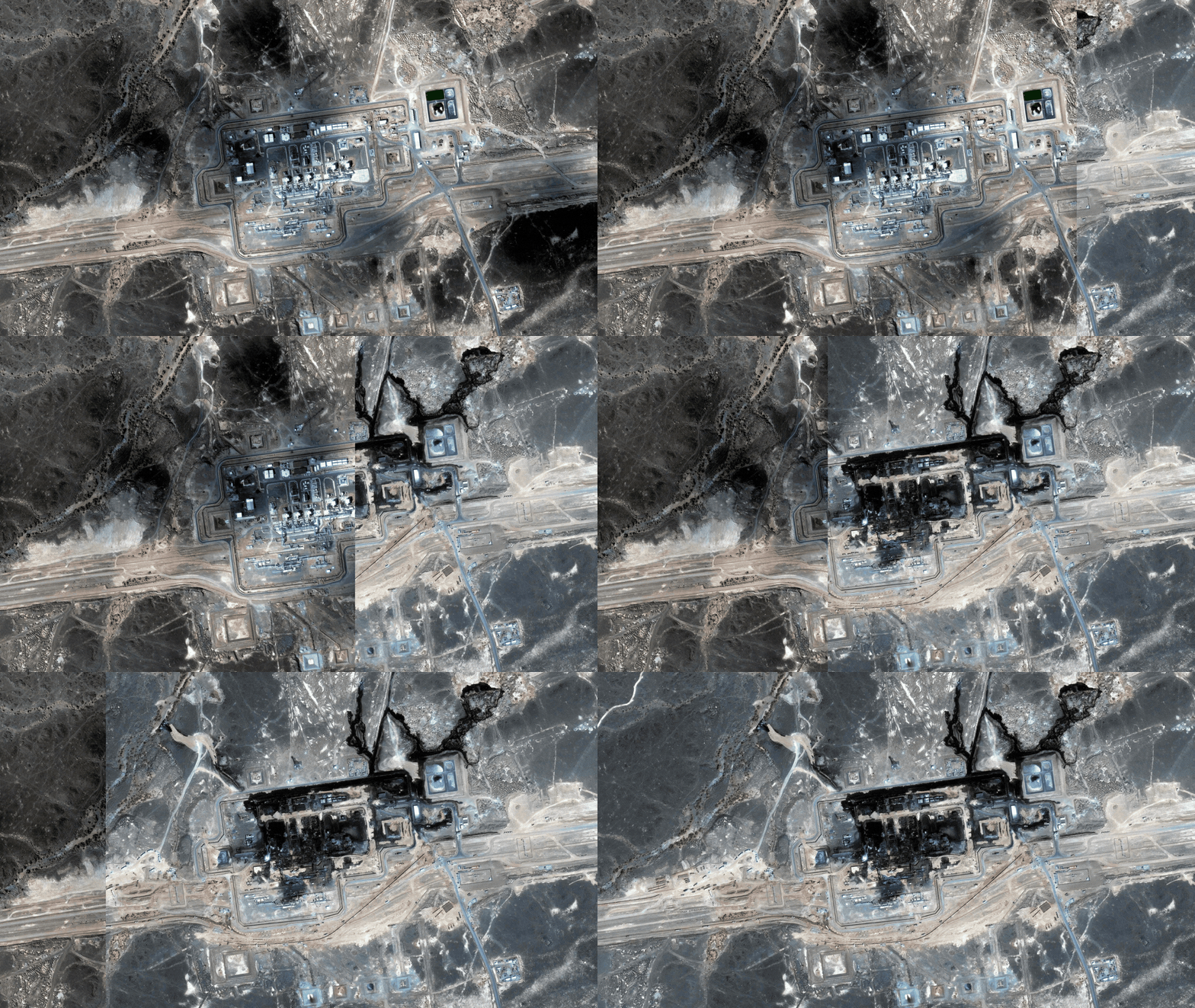
The facility about a year ago compared with the aftermath of the strike
(Photo: AFP PHOTO / Satellite image ©2026 Vantor)
The full extent of the damage remains unclear, but the pipeline has been shut down since Friday and industry sources have warned that Saudi Arabia could begin exhausting readily available export stocks within days if operations are not restored.
At the same time, Yemen’s Houthis have expanded their presence in the southern Red Sea, according to officials from both Yemen’s internationally recognized government and the rebel movement who spoke to The Associated Press.
The officials said Houthi forces had deployed to Greater Hanish and Lesser Hanish islands, roughly 160 kilometers north of the Bab el-Mandeb Strait, after hundreds of personnel withdrew from the archipelago.
The developments add pressure to two of the world’s most important energy and trade chokepoints: Hormuz, already heavily disrupted, and Bab el-Mandeb, where Houthi control has increasingly threatened shipping.
Satellite images show pumping station burned
The Guardian reported that Saudi Arabia could exhaust the oil stocks currently available for export if the damaged pipeline does not resume operations within several days.
Satellite imagery shows one of the pumping stations along the roughly 1,200-kilometer pipeline badly burned after the drone attack.

The fire from the strike was also captured by satellite
(Photo: AFP PHOTO / (C) "© 2026 Copernicus Sentinel Data)
Saudi Arabia has not yet given a full assessment of the damage or said how long the route will remain offline.
Sources cited by Reuters offered differing estimates. One said repairs could take as long as six weeks, while another said the work might be completed sooner and that partial operations could resume before repairs are finished.
Over the past six months, the East-West pipeline has shielded Saudi exports from much of the disruption caused by the closure of the Strait of Hormuz.
The line carries crude from eastern Saudi Arabia to the Red Sea port of Yanbu and had been transporting about 4 million barrels a day, roughly 4% of global oil supply, according to The Guardian.
Industry sources cited by the newspaper said remaining stocks could sustain current export levels for only five to seven days.
Reuters reported that Saudi Arabia also holds oil inventories at Egyptian ports that could supply customers for several more days, but sources said those stocks are not full and would eventually be depleted if the East-West pipeline remains offline.
Any further reduction in Saudi exports could tighten global supply and add upward pressure to already elevated fuel prices.
Houthis seize more Red Sea islands
The pipeline crisis comes as the Houthis expand their footprint around Bab el-Mandeb.
Officials from Yemen’s internationally recognized government and the Houthis told AP that rebel forces had taken control of Greater Hanish and Lesser Hanish, strategically located islands north of the strait.
Their presence could further strengthen Houthi leverage over shipping routes connecting the Red Sea to the Gulf of Aden.
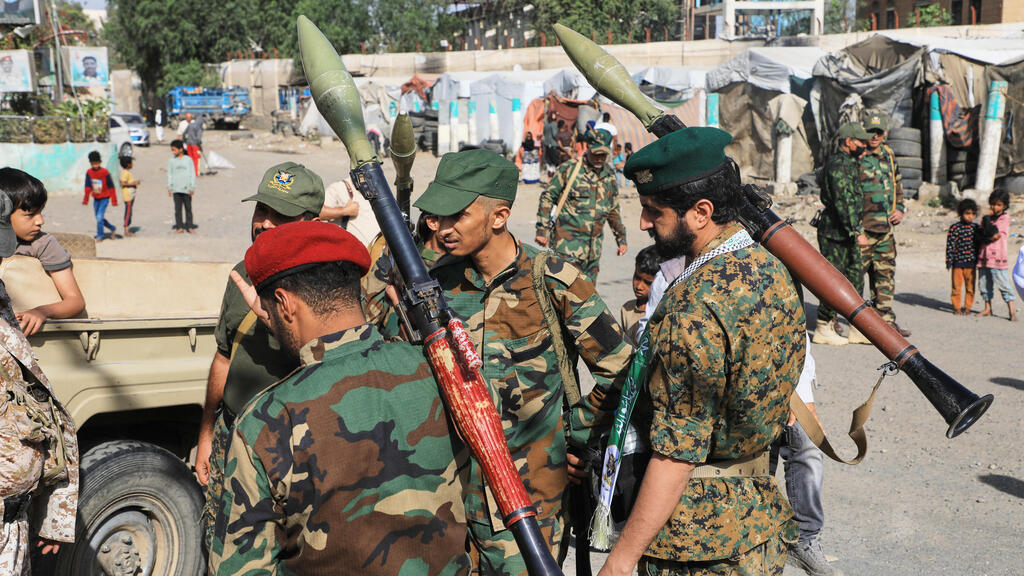
Egypt tried to open a mediation channel between Saudi Arabia and the Houthis, so far without success
(Photo: AP)
Saudi Arabia said the strike on the East-West pipeline was carried out by several drones launched from Iraq. Pro-Iranian Iraqi militias have denied involvement.
U.S. President Donald Trump has blamed Iran directly for the attack.
Iraqi militia groups have also accused Israel and the United States of trying to drag the region into a wider confrontation. Although Iran-aligned factions in Iraq cooperate to varying degrees, they do not necessarily act under a single command.
The Iraqi government said two months ago that Tehran-linked militias would have until September 30 to hand their weapons over to the state, coinciding with the end of the U.S.-led international coalition’s operations in Iraq.
Egypt seeks mediation amid Suez fears
Egypt has meanwhile attempted to open a mediation channel between Saudi Arabia and the Houthis, according to the Lebanese newspaper Al-Akhbar.
Cairo is concerned that escalating tensions around Bab el-Mandeb could further affect traffic through the Suez Canal, a major source of revenue for Egypt and a key artery of global trade.
According to the report, contacts remain at a relatively low level but have reached senior circles in Riyadh.
Egyptian sources said Cairo had offered to host talks, or alternatively hold them in Oman, with the aim of reducing tensions and eventually opening negotiations toward a more stable arrangement.
Saudi officials have so far given no formal response to the proposal.
A vital alternative to Hormuz
Iran’s Tasnim news agency has previously described the East-West pipeline as the principal major alternative to the Strait of Hormuz.
The route stretches from eastern Saudi Arabia to Yanbu on the Red Sea, allowing Riyadh to move oil without relying on passage through waters vulnerable to Iranian pressure or disruption.
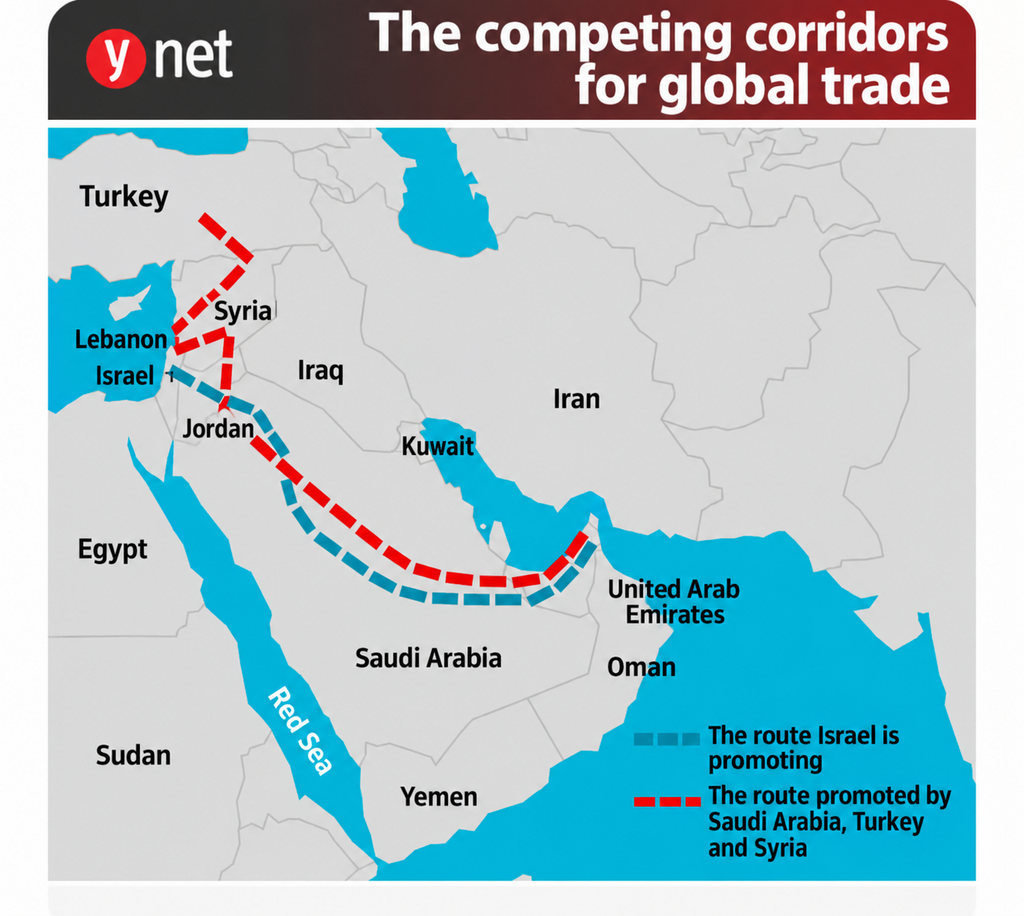
With maritime routes increasingly exposed, regional governments are also revisiting plans for overland trade corridors linking India, the Gulf and Europe.
Two competing projects are currently gaining attention.
One would connect the Gulf and Saudi Arabia to Turkey through Jordan and Syria, partly using historic railway routes. The project has gained momentum following rail and logistics agreements between Turkey and Saudi Arabia, while Syria has promoted itself as a future transport and energy hub linking the Gulf to Turkey and the Mediterranean.
The competing India-Middle East-Europe Economic Corridor, or IMEC, would connect India to Europe through Gulf states, Jordan and Israel before reaching the Mediterranean, but progress on the project has remained slow.
Hormuz summit canceled
Meanwhile, a planned meeting in Oman between Iran and Gulf states aimed at discussing a possible framework for restoring regular tanker traffic through the Strait of Hormuz was canceled at the last minute.
Omani Foreign Minister Badr Albusaidi said the talks had been postponed “to ensure understandings,” while Oman’s Foreign Ministry said the decision was intended to create suitable conditions for constructive dialogue.
An Iranian Foreign Ministry official quoted by Al Jazeera said the postponement came at the request of several regional countries and had been jointly agreed by Tehran and Muscat.
CNN reported that the talks were expected to focus in part on maps and designated shipping routes for tankers and commercial vessels.
Oman’s proposal reportedly included voluntary payments in exchange for navigation safety and environmental protection services, a possible compromise around Iran’s demand for fees from vessels passing through the strait.
Iran had already played down expectations before the meeting was canceled, saying its understandings with Oman did not include the immediate reopening of Hormuz and that Tehran’s conditions for the United States would first have to be met.
Saudi Arabia, the United Arab Emirates, Qatar, Kuwait and Iraq are among the countries involved in the diplomatic efforts, according to Reuters. Bahrain said it would not participate unless diplomatic relations with Iran were first restored.