


Heading for a rupture? U.S. President Donald Trump said Saturday evening in an interview with the French news channel BFM that he does not know whether an agreement with Iran will take shape soon, and warned: "They have an interest in reaching a deal. If that does not happen, they will have a very hard time." At the same time, CNN reported that the president’s patience is wearing thin amid the deadlock in negotiations with Iran.
The American network noted that many in his administration had been watching for the results of the visit to China — Tehran’s strategic partner — in the hope of some kind of breakthrough. But Beijing repeated messages it has delivered more than once, including its desire to see the Strait of Hormuz reopened and its position that Iran "should not" have nuclear weapons.
Iranian interior minister’s visit to Pakistan


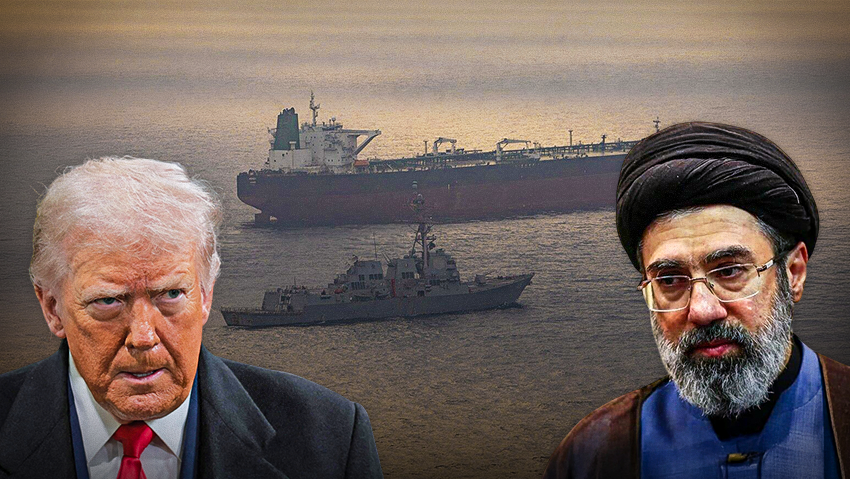
Senior Trump administration officials also said they wanted to see how the talks between Trump and Chinese President Xi Jinping develop before deciding on the next steps regarding Iran. Now, the president must decide whether his best option is to launch another round of strikes in Iran to end the confrontation he began.
Sources familiar with the talks told the American network that there are still disagreements within the administration over the right way to proceed. Some officials, including in the Pentagon, support a more aggressive approach — including strikes — in the hope that it will push Iran to compromise its positions. Others, it should be noted, support continuing diplomacy.
They said that while Iran has shown no willingness to move from its position — which has remained more or less the same since talks between the two countries began — the U.S. president is becoming less patient. They said Trump is particularly angry about the Strait of Hormuz remaining closed and about Iran’s divided leadership, which is making the talks between the sides more complex.
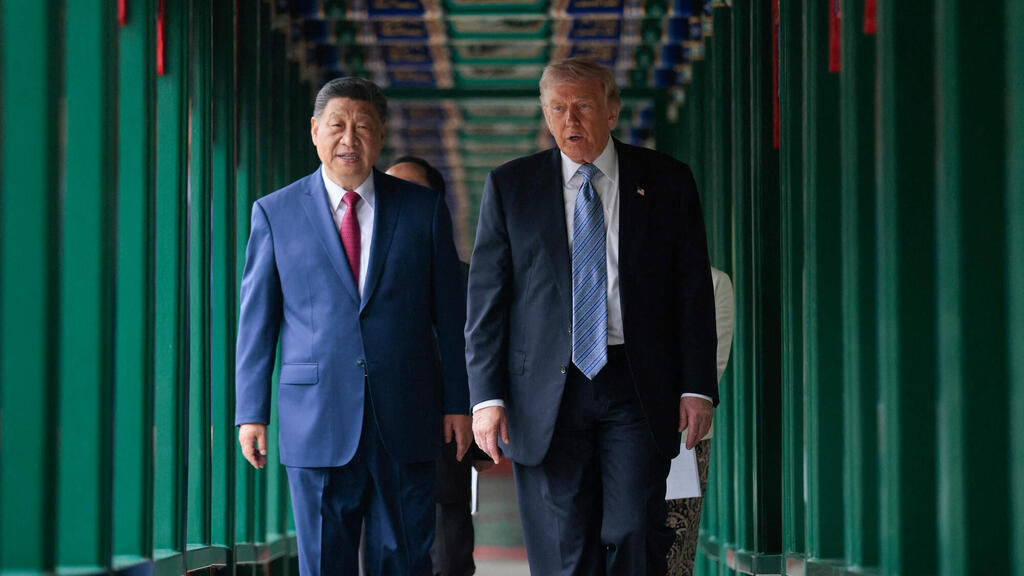
Many had been watching the China visit, which appears not to have led to a breakthrough
(Photo: Evan Vucci / POOL / AFP)
Beyond that, Iran’s latest response to the U.S. proposal to end the confrontation, along with its belligerent rhetoric, has led many in the administration to doubt whether the Islamic Republic is willing to reach any serious agreement at all. The American network noted that a growing sense of urgency is emerging around Trump to find a way out of the conflict, as time runs short ahead of the midterm elections in November and polls show his approval ratings have been significantly damaged by the war with Iran.
One of the president’s advisers, who recently spoke with senior Wall Street executives, said they simply want the war to end. He said their broader message was that the administration should move quickly, adding that officials are trying to find a way out but that the situation cannot continue much longer. One way or another, he said, the strait will have to be reopened.
White House spokeswoman Anna Kelly told CNN in response that President Trump always prefers diplomacy, but said the United States has maximum leverage over the Iranian regime and that the president will accept only a deal that protects U.S. national security.
'In some ways, he is playing into Iran’s hands'
Reuters described how Trump’s aggressive rhetoric, which includes threats, insults and ultimatums, is running into a wall — and is likely weakening his efforts to end the war. Still, Trump does not appear inclined to soften his position.
The dynamic between the two countries is heightening concern that the current confrontation could continue indefinitely, with occasional flare-ups. Experts say one of the main obstacles is the mindset among Iran’s leadership, which wants to preserve its dignity before the public.
On the other hand, experts say Trump’s insistence on emerging from the confrontation with Iran while portraying it as a total U.S. victory — even if that does not match the reality on the ground — is hindering efforts to reach an agreement. Rob Malley, who previously led negotiations with Iran in both the Obama and Biden administrations, said: "No country, not just Iran, can afford to be seen as having been defeated."
Others said the U.S. president’s approach could backfire. According to two sources familiar with the matter, the White House has made no effort to persuade the president to show restraint in his messaging against the Islamic Republic.
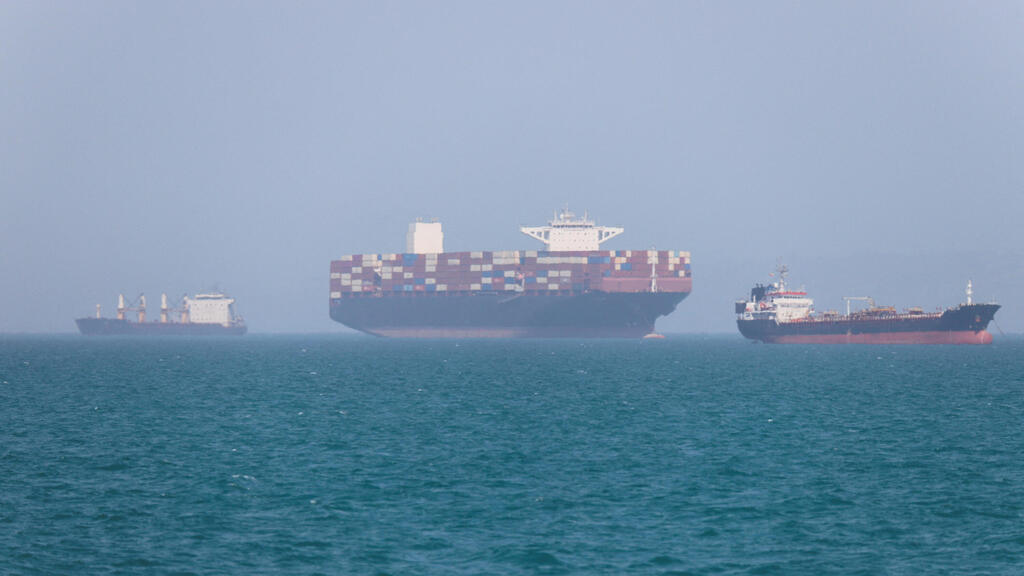
Iran’s leadership believes it can play for time; Strait of Hormuz
(Photo: Amirhosein Khorgooi/ISNA/WANA (West Asia News Agency) via REUTERS)
Experts say Trump’s conduct is actually strengthening Iran’s new rulers, who are seen as more hard-line and already trust him less after strikes were carried out while the sides were conducting negotiations. Others believe his approach could even backfire and lead Iran to intensify efforts to eventually develop a nuclear bomb so it can defend itself, similar to North Korea.
Reuters described Trump and Iran’s leadership as operating on different clocks: The impulsive Trump generally wants a quick agreement so he can move on, while the Iranians have a history of dragging out talks.
Nate Swanson, who was part of the negotiating delegation with Iran until about a year ago, said it is mistaken to assume Iran will cave under pressure, arguing that the country does not respond that way.
Trita Parsi, executive vice president of the Quincy Institute for Responsible Statecraft in Washington, said Tehran’s leadership may be interpreting Trump’s unpredictable approach as a sign of desperation and believes it can simply play for time until he grows tired. "In some ways, Trump is simply playing into their hands," he said.
Pakistan insists there is positive progress
Meanwhile, Iranian Interior Minister Eskandar Momeni met with his Pakistani counterpart, Mohsin Naqvi. He said they discussed an agreement to ease border crossings and open new trade routes. Momeni said Iran and Pakistan are committed to expanding economic, trade and security cooperation, developing political ties and making trade easier.
Pakistani sources told the Saudi channel Al Arabiya that the visit by Pakistan’s interior minister to Iran was aimed at reaching a specific agreement. The sources said the American side had requested answers to specific points raised by Washington, that there had been positive progress regarding the Strait of Hormuz and that the door remained open to negotiations on unresolved issues, including Iran’s nuclear program. Iran’s Nour News added that the interior ministers of Iran and Pakistan discussed the possibility of renewed peace talks.
Earlier, The New York Times reported, citing officials in the Middle East, that the United States and Israel are engaged in intensive preparations — the largest since the ceasefire took effect — for a possible resumption of strikes in Iran as early as next week.
According to the report, Trump’s senior advisers have drawn up plans for a return to military strikes if he decides to try to break the deadlock through additional bombings, but they said he has not yet made a decision on the next steps.
They noted that another option is to deploy special forces on the ground to act against nuclear material buried deep underground. Several hundred special forces troops arrived in the Middle East in March as part of a deployment intended to give Trump that option, they said, adding that such forces could be used against highly enriched uranium in Isfahan. However, they stressed that such an operation would also require thousands of support troops, who could be drawn into fighting with Iranian forces. Military officials acknowledged to The New York Times that such a move would carry a high risk of casualties.