

Iran’s new supreme leader, Mojtaba Khamenei, has not appeared in public since being named successor to his father a week ago, raising growing questions about his condition and about who is truly making decisions in Tehran.
In fact, Khamenei has neither been seen nor heard since the opening strike of the war on February 28, when his father, longtime Supreme Leader Ali Khamenei, was killed along with his wife. Mojtaba Khamenei himself was reportedly wounded in the attack but survived.
Gallery
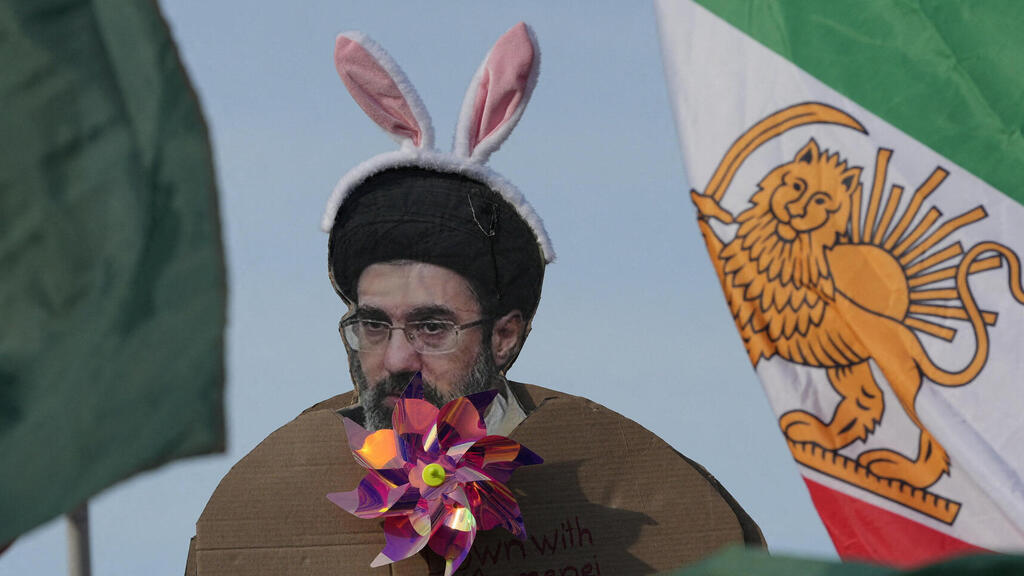
Iranian regime opponents hold up a cardboard cutout mocking Iran’s new supreme leader, Mojtaba Khamenei, in Washington, United States
(Photo: Ken Cedeno/ Reuters)
His continued absence during the war with Israel and the United States has fueled speculation about his fate and about the balance of power within the Iranian regime.
Iranian media outlets aligned with the regime have resorted to distributing AI-generated images of the new leader to bolster support. So far, no confirmed recent photograph of him has been published.
One widely circulated poster shows Mojtaba Khamenei standing alongside his father and the founder of the Islamic Republic, Ayatollah Ruhollah Khomeini. Other fabricated images show him beside Gen. Qassem Soleimani, the Iranian commander killed in a U.S. strike in 2020.
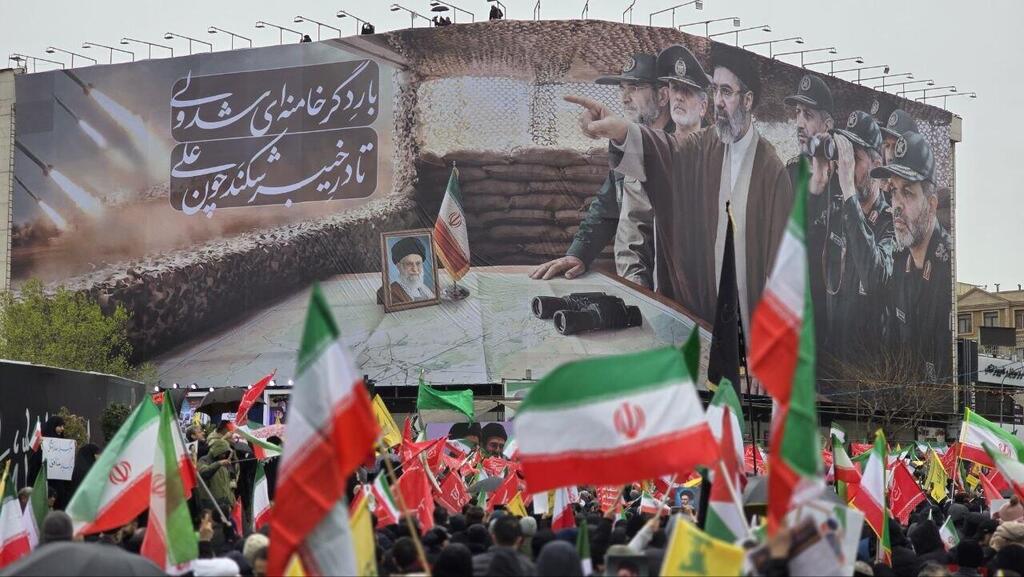
A massive banner installed in Tehran’s Revolution Square also features an AI-generated image depicting him alongside commanders from Iran’s Revolutionary Guards looking through binoculars as he points toward an unseen target.
Even the profile picture on a newly opened account in his name on the social media platform X appears to be digitally altered. BBC journalist Shayan Sardarizadeh, who has been verifying images and videos circulating from Iran during the war, said analysis using AI-detection software indicated the profile photo was generated using Google AI.
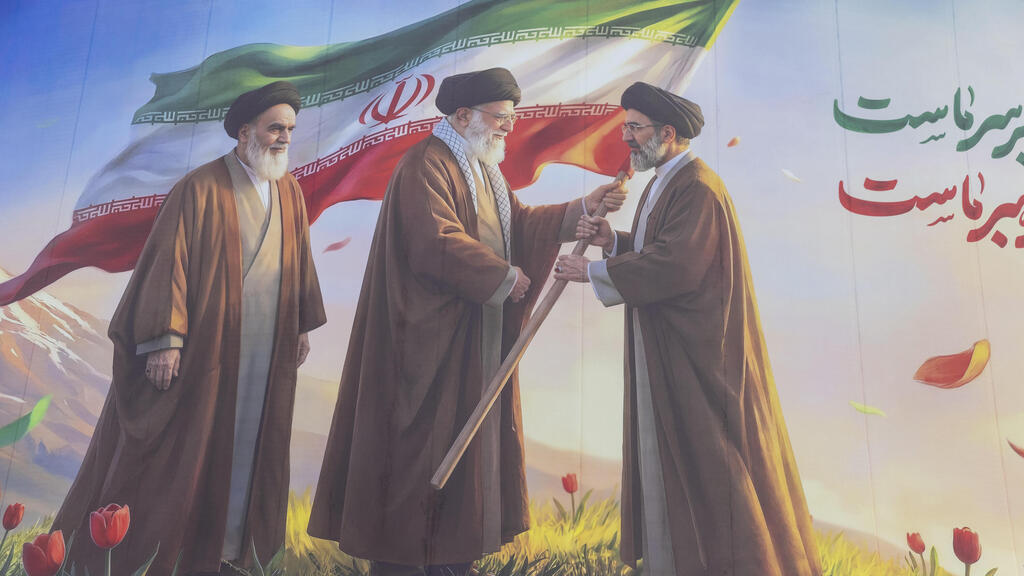
An Iranian poster depicting the transfer of the flag from Ali Khamenei to his son Mojtaba, alongside Ruhollah Khomeini
(Photo: Majid Saeedi/ Getty Images)
The image shows Khamenei against a background of greenery, with his face apparently taken from a photograph of a past rally attended by regime supporters. Metadata from the account indicates it is based in the Netherlands.
The absence of the new leader has sparked ridicule among critics of the Iranian regime. Images circulating on social media show his face attached to cardboard cutouts, a meme that apparently originated from a fake video claiming regime supporters had displayed a cardboard figure of him during the announcement of his appointment.
In the actual footage from that event, supporters were seen holding only his photograph.
Opponents of the regime inside Iran, many of whom remain reluctant to protest publicly during the war, have also mocked the situation. “They call him the AI supreme leader,” one Tehran resident told CNN.
Mojtaba Khamenei, 56, has long operated largely behind the scenes. For decades he was an influential figure in his father’s inner circle while avoiding public appearances.
The biggest controversy surrounding him came in 2005, when critics accused him of helping Mahmoud Ahmadinejad win Iran’s presidential election.
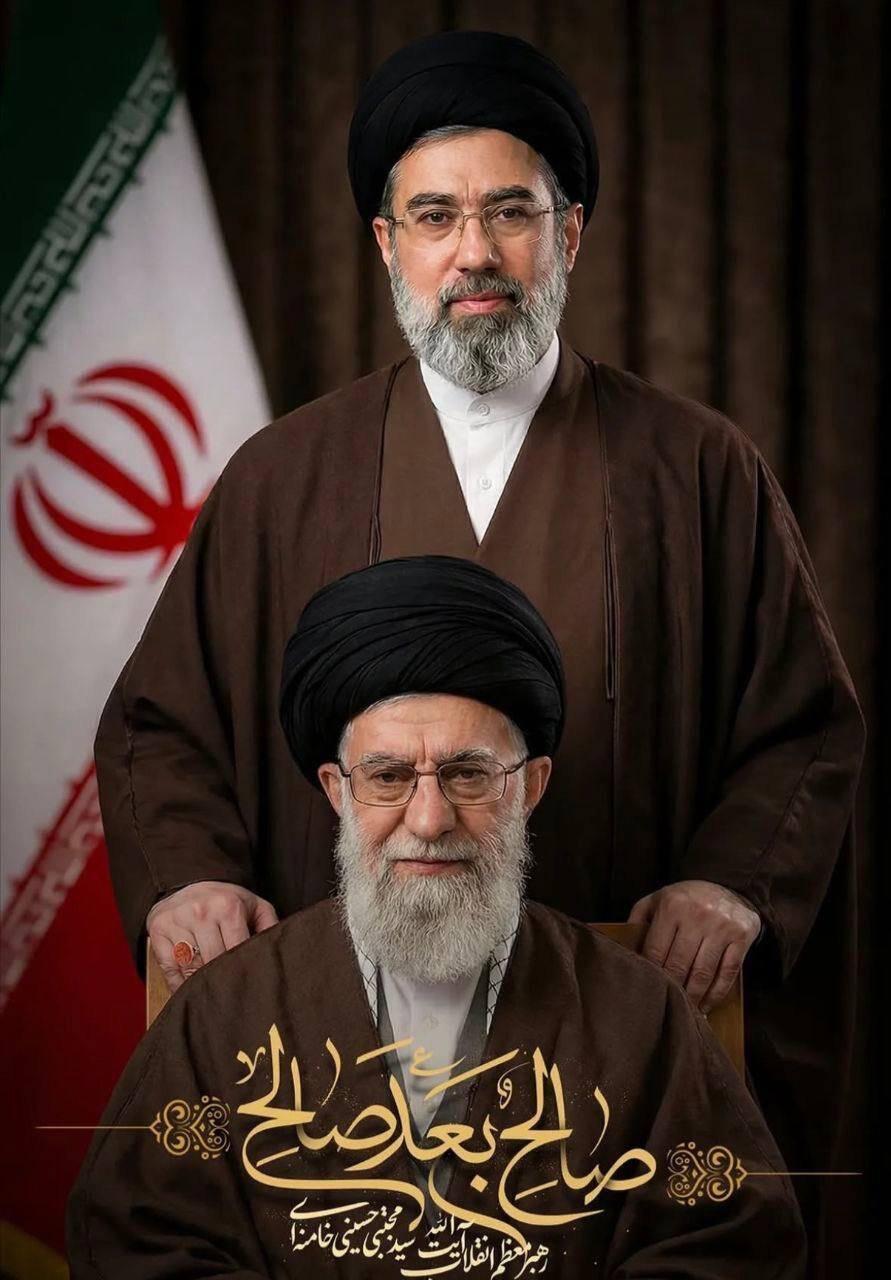
Mojtaba and Ali Khamenei
Over the years, he cultivated close ties with key centers of power within the regime, particularly the Revolutionary Guards. Those relationships, according to reports, played a significant role in his selection as successor.
Despite his absence, regime supporters quickly pledged loyalty after his appointment, encouraged by state media. Large crowds also turned out for pro-government demonstrations, including rallies marking Quds Day, the annual event dedicated to anti-Israel demonstrations organized by the Iranian regime.
Senior officials, including President Masoud Pezeshkian and Foreign Minister Abbas Araghchi, attended those rallies despite the threat of Israeli strikes.
Supporters of the regime say Khamenei’s absence is due to wartime security restrictions and the fact he would be a clear target for assassination by Israel or the United States.
Some even portray his disappearance as a virtue. Influential Iranian cleric Mahmoud Karimi said, “The fact that no one has ever seen him says enough about his character.”
Arash Azizi, a historian at Yale University, told CNN that Khamenei’s sudden rise to power during wartime, combined with his absence, echoes themes rooted in Shiite theology that underpin the Islamic Republic.
According to Azizi, the killing of Ali Khamenei is being framed by the regime as the martyrdom of a revolutionary leader. “They will naturally try to use similar motifs around Mojtaba,” he said, noting that the son of a “martyred imam,” who himself was wounded, resembles figures revered in Shiite tradition.
CNN reported that his absence may not necessarily be a disadvantage for the regime, at least in the short term.
“The prolonged absence from public view signals a shift in the centers of power in the Islamic Republic, where institutions and security bodies may carry greater weight than the individual at the top,” the network wrote.
Sanam Vakil, director of the Middle East and North Africa program at the Chatham House think tank in London, said the Iranian system could function for a considerable time without public appearances by the supreme leader.
“Invisibility does not necessarily undermine legitimacy in the short term, especially if institutions continue to function and decisions appear coordinated,” she said.
Analysts cited in the report suggested Tehran’s leadership may currently be more focused on presenting unity among institutions formally subordinate to the supreme leader than on showcasing the leader himself.
Behind that dynamic is the growing influence of the Revolutionary Guards, who reportedly pushed for Mojtaba Khamenei to succeed his father.
According to CNN, his appointment provides political legitimacy for the Guards’ military leadership, effectively serving as political cover as they manage the war effort.
“These actors likely hold the real power in Iran, not Mojtaba himself,” Azizi said, “even if he eventually appears in public and recovers from his injuries.”
In the longer term, however, Vakil said Iran’s political elite will likely want “clear signals” that the new supreme leader is capable of functioning if the regime survives the war.
Speculation about his condition intensified overnight after U.S. President Donald Trump said in an interview with NBC that he was uncertain whether Mojtaba Khamenei was even alive.
“I don’t know if he’s even alive. So far nobody has been able to show him,” Trump said, adding that he had heard “he might not be alive,” though he stressed it was only a rumor.
Iran’s foreign minister quickly rejected the claims again on Sunday.
“The leader of the revolution is in good health and fully managing affairs,” Araghchi said.
First published: 09:38, 03.16.26