

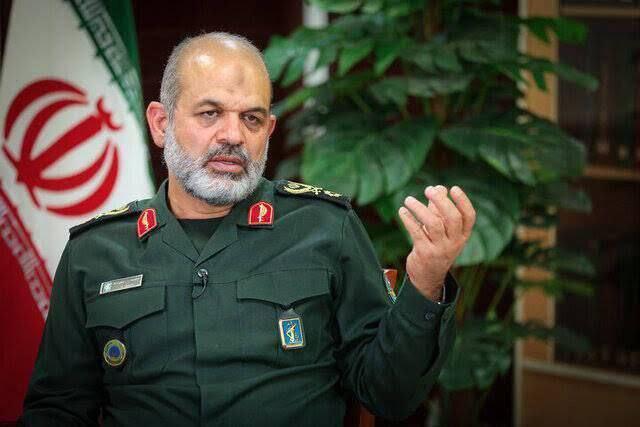
Ahmad Vahidi, the new commander of Iran’s Revolutionary Guards, has emerged as one of the most powerful figures in Tehran, pushing a hard line against Israel and the United States, according to a Wall Street Journal report.
Iran’s decision to fire ballistic missiles at Israel for the first time in months was not only a military message to Jerusalem, but also a signal of the shifting balance of power inside the Iranian leadership, the report said.
Iranian missiles trigger sirens around Israel
(Video: Dvir Lahav, Adi)


Citing Iranian and Arab officials, the Journal reported that Vahidi pressed Iran’s leadership to strike Israel forcefully in an effort to halt Israeli attacks on Hezbollah in Beirut. More moderate voices in Tehran had urged delaying the strike, fearing it could endanger talks with Washington and a potential agreement that could help rescue Iran’s economy.
Vahidi prevailed. According to the report, he persuaded Iran’s Supreme National Security Council to support the missile launches, leading to the first exchange of fire between Iran and Israel since the April 8 ceasefire.
The Journal described Vahidi as a key figure in Iran’s centers of power and a driving force behind Tehran’s uncompromising position in negotiations with Washington. President Donald Trump and mediators have signaled that the sides are close to an initial agreement, possibly as soon as Sunday, but Iran has expressed reservations about the timeline.
According to the report, the Revolutionary Guards and figures close to them have become the main obstacle to an agreement.
The deal under discussion is expected to include reopening the Strait of Hormuz and lifting the U.S. blockade, while postponing harder issues — including Iran’s nuclear program and frozen assets abroad — to a later stage. Tehran has said it has not yet approved the draft.
Vahidi, 67, is considered the most influential voice among the regime’s hard-liners. He has pushed Tehran not to compromise until all its demands are met, arguing that Iran must first restore its military deterrence to improve its leverage with the United States.
For months, the Journal reported, Vahidi has clashed with more public-facing political figures, including President Masoud Pezeshkian and Foreign Minister Abbas Araghchi. Each time, the report said, Vahidi prevailed.
Vahidi was appointed commander of the Revolutionary Guards after his predecessor, Mohammad Pakpour, was killed on the first day of Operation Rising Lion. Despite his long career in Iran’s security establishment, he is seen as coming mainly from an intelligence background rather than as an experienced battlefield commander.
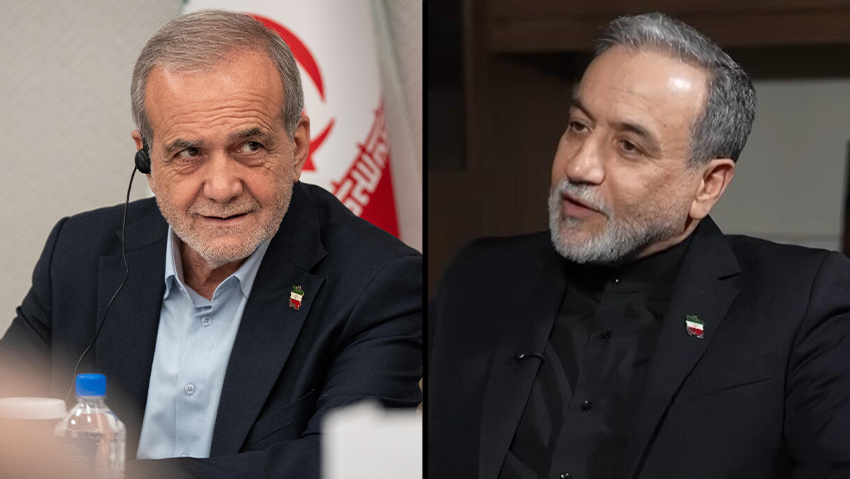
Iranian President Masoud Pezeshkian, Iranian Foreign Minister Abbas Araghchi
(Photo: AP Photo/Angelina Katsanis)
Saeid Golkar, an expert on Iran’s security services at the University of Tennessee at Chattanooga, told the Journal that such an appointment was “almost unprecedented” for someone in that role. He said Vahidi’s rise was partly the result of more experienced and less controversial commanders being killed in confrontations with the United States and Israel.
Vahidi’s control of the regime’s most powerful armed force gives him direct influence over talks to end the war. Mediators involved in the negotiations say his position is shaping Iran’s approach. His forces enforce Iran’s hold over the Strait of Hormuz, Tehran’s strongest bargaining chip with Washington and mediators.
According to Arab, Iranian and European officials, Vahidi has repeatedly bypassed Araghchi and Pezeshkian during the war. The two had pushed for a quick initial deal with the United States to prevent economic collapse under the pressure of the U.S. blockade on Iran’s oil industry. Vahidi prioritized restoring Iranian deterrence and protecting Hezbollah.
Arab mediators said Vahidi was also the figure who linked the fighting in Lebanon to the war with Iran, making any agreement with the United States dependent on Israel ending its confrontation with Hezbollah. He also pushed negotiating teams to protect Iran’s missile stockpile, secure access to frozen funds and avoid restrictions on using that money for military purposes.
Vahidi’s hard line is rooted in his long record inside Iran’s security establishment. He was part of the founding core of the Revolutionary Guards after the 1979 Islamic Revolution. In 1982, at age 23, he became head of the group’s intelligence division.
He later helped establish the Quds Force, the elite Revolutionary Guards unit that trains foreign militias to attack Iran’s enemies, and became its first commander in 1988. In the 1990s, he helped turn Hezbollah into Lebanon’s dominant military force.
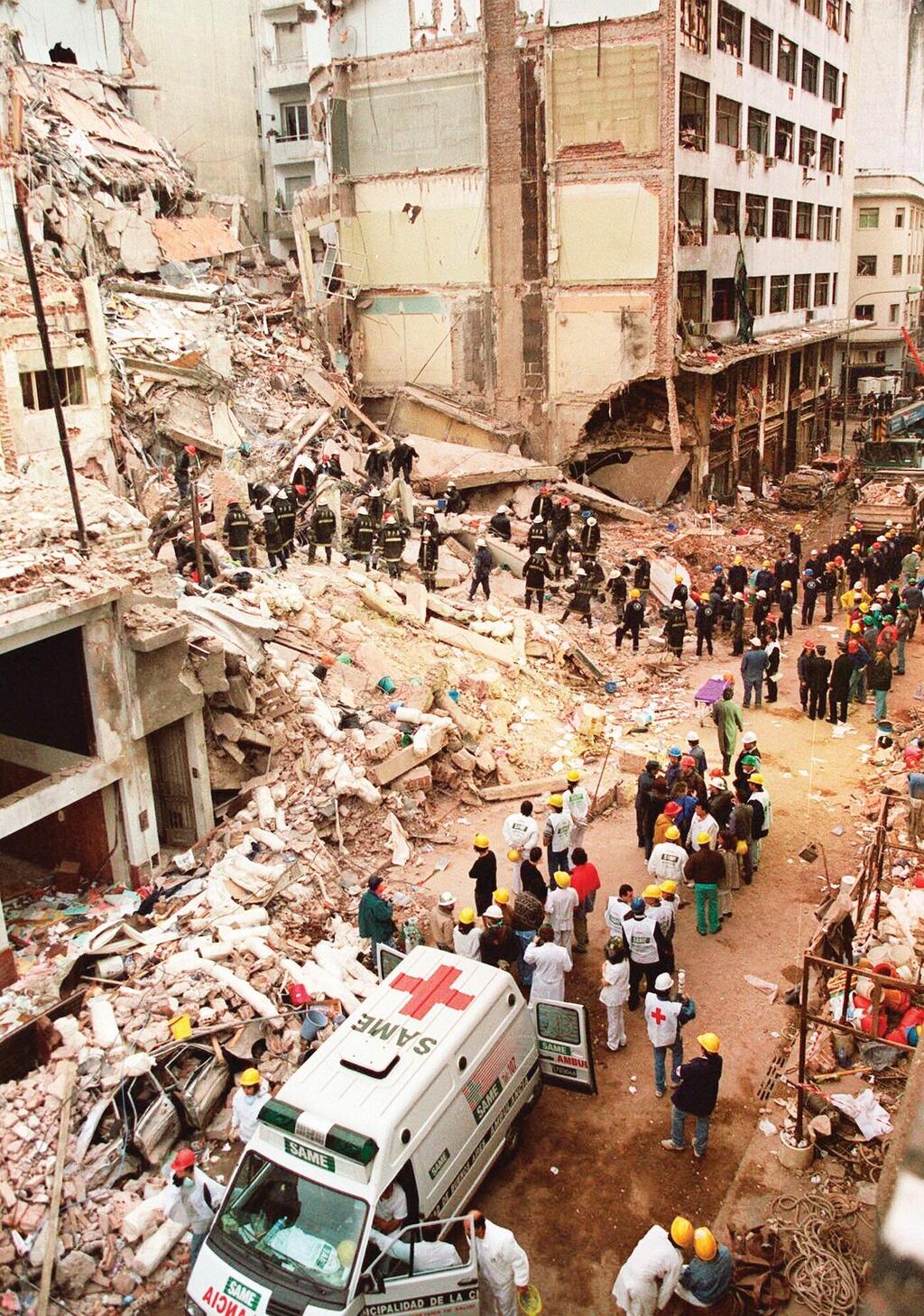
The 1994 bombing of the AMIA Jewish community center in Buenos Aires
(Photo: AP)
Vahidi is also wanted internationally. In 2007, Argentina, through Interpol, issued an arrest warrant for him, accusing him of helping plan the 1994 bombing of the AMIA Jewish community center in Buenos Aires, which killed 85 people and wounded hundreds. Iran has repeatedly denied that Vahidi or any Iranian official was involved.
Over the years, Vahidi has served as defense minister, interior minister and deputy commander of the Revolutionary Guards. According to the U.S. Treasury Department, as defense minister in 2009 he played a central role in procurement for Iran’s missile, drone and nuclear programs. The United States imposed sanctions on him the following year.
In 2022, as interior minister, he oversaw the deadly crackdown on the hijab protests that erupted after the death of Mahsa Amini, a 22-year-old woman who died in police custody after allegedly violating Iran’s Islamic dress code.
Since taking command of the roughly 200,000-member Revolutionary Guards, Vahidi has moved quickly to consolidate power.
One example came when Pezeshkian said Tehran would stop attacking its Gulf neighbors, only for the Revolutionary Guards to contradict him. According to Arab mediators, some of whom were briefed by Iranian negotiators and others who spoke directly with Vahidi, he presented evidence to the Supreme National Security Council that he claimed showed Gulf states had helped attacks against Iran.
The same pattern played out around the Strait of Hormuz. On April 18, Araghchi said the strait was open, but Arab officials said the Revolutionary Guards told mediators otherwise. Soon after, media affiliated with the Guards dismissed the foreign minister’s remarks as inaccurate or incomplete. Attacks in the waterway continued.
Despite his power, Vahidi holds one of the most dangerous jobs in Iran. The United States and Israel have killed several Revolutionary Guards commanders in airstrikes over the years, including Pakpour and former Quds Force commander Qassem Soleimani, who was killed in a U.S. strike in Iraq ordered by Trump during his first term.
Now, according to the Journal, Vahidi — one of the hardest-line voices in Tehran — is directly influencing whether Iran moves toward an agreement or keeps fighting.