

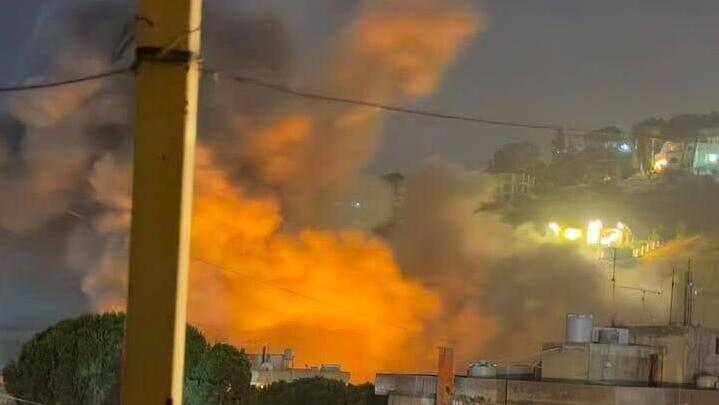
Lebanese media reported Saturday morning that seven people were killed and two others wounded in overnight Israeli strikes in the Ali al-Taher ridge area and the villages of Ansar and Nabatieh al-Fawqa.
The IDF confirmed that it had struck Hezbollah infrastructure, saying the strikes came “In response to an action by the Hezbollah terrorist organization against IDF soldiers in the Ali al-Taher Ridge, which is located in the Security Zone where IDF soldiers are operating.”
Israeli strikes and damage in the Nabatieh al-Fawqa and Ansar areas of southern Lebanon


The strikes came a day after Lebanese reports said Iran had warned that an Israeli attack on the strategic Ali al-Taher ridge could draw Tehran directly into the escalating confrontation.
Official sources told Lebanon’s Al-Jadeed television Friday that “Tehran conveyed a direct message to the relevant parties that an Israeli attack in the Ali al-Taher area would be met by Iran entering the cycle of escalation.”
According to the report, Israel is refusing to withdraw from the area under terms that would allow it to be transferred to the Lebanese army, while Hezbollah insists the ridge cannot be handed over without a full Israeli withdrawal.
The report came amid growing concern in Lebanon over a possible Israeli operation to seize the strategic ridge.
A senior security official told the Lebanese newspaper Al-Joumhouria that authorities in Beirut had received messages indicating that Israel was preparing to launch an operation to capture Ali al-Taher. The official said Israel was ready to act and was awaiting a green light from the United States.
The official claimed Washington had informed Lebanese authorities that it could not completely prevent an Israeli operation but had asked that any action be a precise, surgical operation with minimal civilian casualties and that it not undermine the framework agreement between Jerusalem and Beirut.
“The Israelis need this achievement and will not back away from it,” the official said.
Attention, he added, was now focused on Hezbollah’s response and whether the group would enter the fighting.
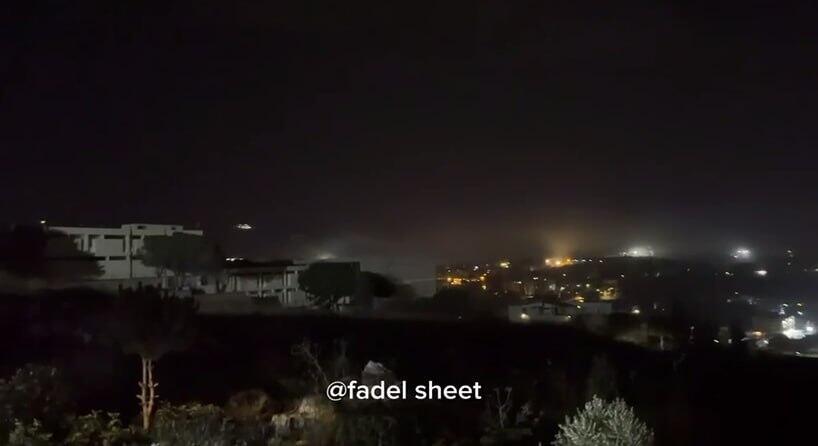
Israeli strikes and damage in the Nabatieh al-Fawqa and Ansar areas of southern Lebanon
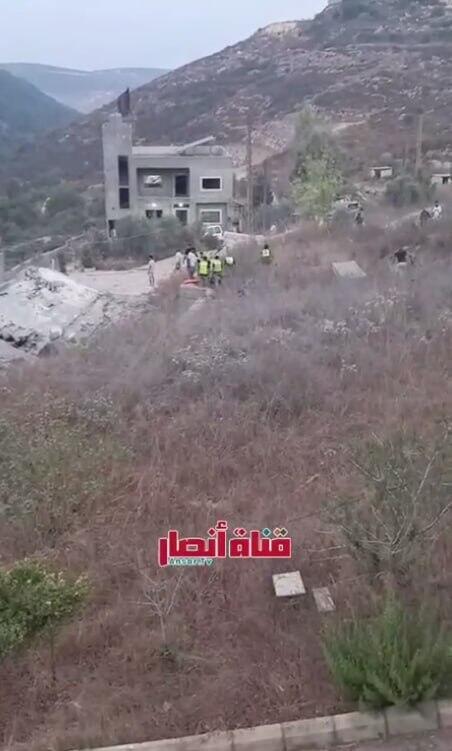
Israeli strikes and damage in the Nabatieh al-Fawqa and Ansar areas of southern Lebanon
“This battle has become a matter of time, and it is a race against the approaching U.S.-Iran agreement, which will undoubtedly affect the front in southern Lebanon,” he said.
Lebanese television channels have in recent days carried widespread speculation about Israel’s next move in southern Lebanon, with particular attention focused on the Ali al-Taher ridge.
Hezbollah operatives are trapped in an underground facility there as Israeli forces tighten a siege and cut water supply lines to the site. Hezbollah operatives have been attempting to break the siege by using drones to transport equipment and supplies.
Operating in the West Bank, preparing for Lebanon
Israeli troops who were operating deep inside Lebanon only about three months ago are now conducting intensive operations in the West Bank while simultaneously preparing for the possibility of renewed fighting on Israel’s northern front.
Soldiers from the 931st Battalion of the Nahal Brigade are currently operating under the Ephraim Regional Brigade in the northern and central West Bank. Between nighttime arrests in Tulkarm and searches for weapons in Palestinian villages, the troops are being required to maintain combat readiness with an eye toward Lebanon.
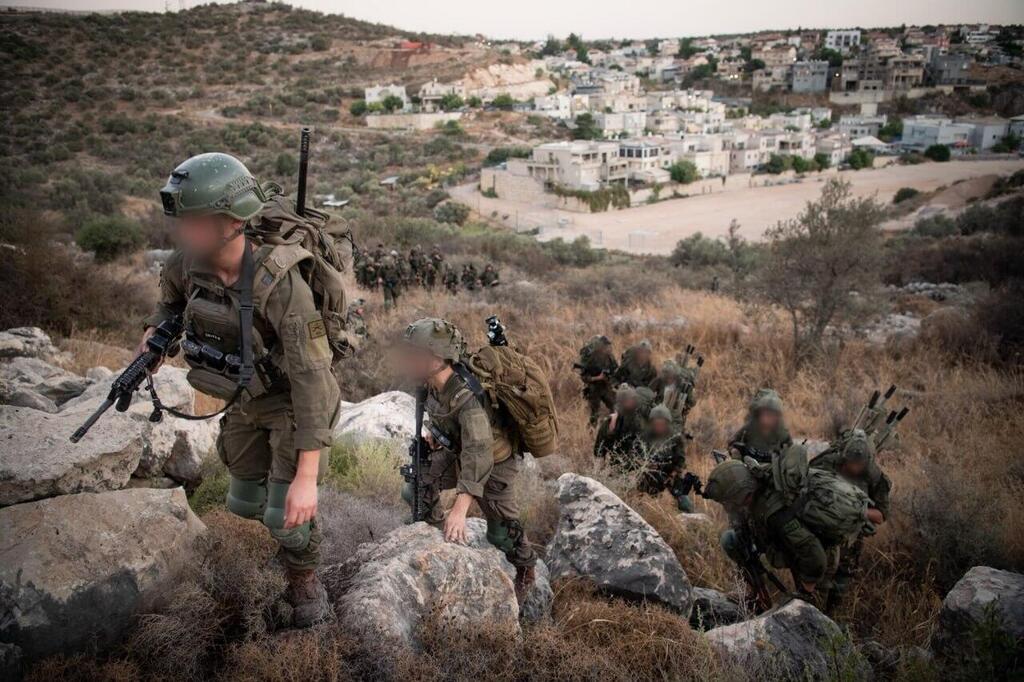
Nahal Brigade troops operating in the West Bank
(Photo: IDF)
This week, the battalion completed an intensive two-day exercise in Nahal Kana, a rugged valley in the West Bank chosen to simulate fighting in the dense, mountainous terrain of southern Lebanon.
Despite the demands of its ongoing operational deployment, the unit conducted a full battalion-level exercise.
The terrain, characterized by deep ravines, steep ridges and dense vegetation, was used to replicate the challenging conditions troops could encounter in Lebanon.
“We took advantage of the terrain that best simulates Lebanon,” the battalion commander, identified only as Lt. Col. N. in accordance with IDF rules, told ynet.
“It was a full battalion exercise, despite the manpower constraints of holding an operational sector, with all the supporting capabilities — firepower, drones and a complete operational command structure surrounding us, along with simulated enemy forces and FPV drones,” he said.
“The terrain of the ravines and dense vegetation required commanders and soldiers to analyze the ground all over again,” he added. “That is a central lesson from the fighting: Everything begins with terrain analysis, especially in a place like Lebanon, which is unlike any other sector.”
One of the major threats Israeli forces have faced in Lebanon is Hezbollah’s use of explosive-laden fiber-optic first-person-view (FPV) drones, which can be difficult to disrupt through conventional electronic warfare because they are controlled through physical cables rather than radio signals.
The battalion commander acknowledged that the military initially struggled to respond to the threat.
“It’s no secret that there was frustration in the military over the threat at the beginning,” he said. “But today we are preparing for the war that will be, not the war that was.”
The military has since developed standardized procedures, defensive measures and technological solutions for protection and interception in cooperation with civilian companies, he said.
“During the exercise, all of our systems were networked, and the soldiers practiced a precise response procedure,” he said.
Katz vows long-term Israeli presence, drawing US criticism
Defense Minister Israel Katz visited Lebanon on Wednesday and declared that Israeli troops would remain in security zones in Lebanon, Syria and Gaza for the long term.
“The IDF is here to stay in the security zones in Lebanon, Syria and Gaza,” Katz said. “I have instructed the IDF to take all necessary steps to prepare for a long-term presence in the area.”
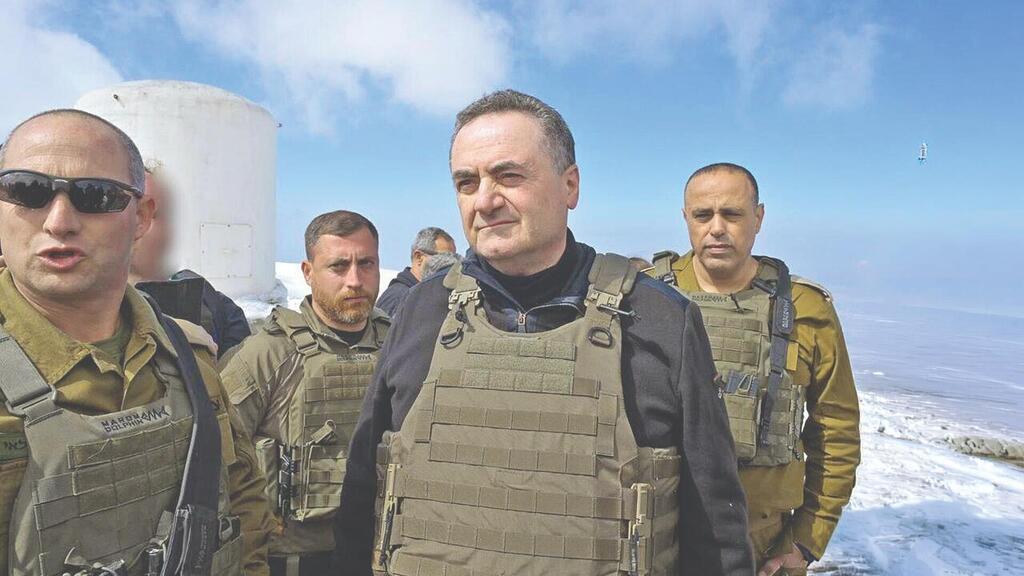
Defense Minister Israel Katz (center) visits Lebanon
(Photo: Defense Ministry)
His remarks drew criticism from Washington. A U.S. State Department official later said the United States “expects all parties to act in any manner consistent with the framework they agreed to, and Israel clearly stated that it has no territorial ambition in Lebanon.”
“A permanent military presence in south Lebanon is not consistent with the commitments made in the framework or the long-term peace and security of both states,” the official said.
The United States fully supports Lebanon’s territorial integrity and sovereignty, the official added, saying the framework explicitly provides for a conditions-based, phased Israeli redeployment tied to the verified disarmament of Hezbollah and dismantling of its infrastructure.
During his visit, Katz referred to the Beaufort ridge, a strategically important high ground overlooking northern Israel and large areas of southern Lebanon.
“We see the Beaufort Ridge here after the tunnels there were destroyed,” Katz said. “The IDF maneuvered here across the Litani. With extraordinary courage and skill, it defeated Hezbollah and captured the Beaufort, which protects Metula, the northern communities and IDF soldiers, and threatens all of Hezbollah’s territory on the horizon.”
Katz said Israel had no intention of withdrawing from the security zone.
“As the prime minister and I have made unequivocally clear, we are not withdrawing from this security zone,” he said. “I am standing here in the heart of the security zone, from the western coastline to the Beaufort area and the approaches to Mount Hermon in the east.”
“The IDF is here to protect the northern communities and its forces,” Katz continued. “We will clear this area and ensure the security of the residents of the north — and under no circumstances will we withdraw from the security zones: not in Lebanon, not in Syria and not in Gaza.”
Katz said the policy reflected lessons Israel learned from the Hamas-led attack on southern Israel on Oct. 7, 2023, which triggered the Gaza war and subsequent fighting across the region.
“The lesson of Oct. 7 is that we protect residents by having the IDF here, in these places, protecting them from raids, gunfire and everything else,” he said. “That is our policy, that is our approach.”
Katz said the Beaufort fortress demonstrated the logic of the strategy.
“We are up here, they are down there, the residents are protected,” he said. “The IDF is inside; 200,000 residents are outside. We are destroying the underground infrastructure and all the terrorist infrastructure they built with Iranian backing to invade the Galilee, and destroying all the homes in the area.”
Negotiations expected to resume after summer
Earlier this week, a diplomatic source told the Hezbollah-aligned Lebanese television network Al Mayadeen that there were no plans for another round of negotiations between Lebanon and Israel next month.
If another round takes place, it will likely be after the summer, the source said.
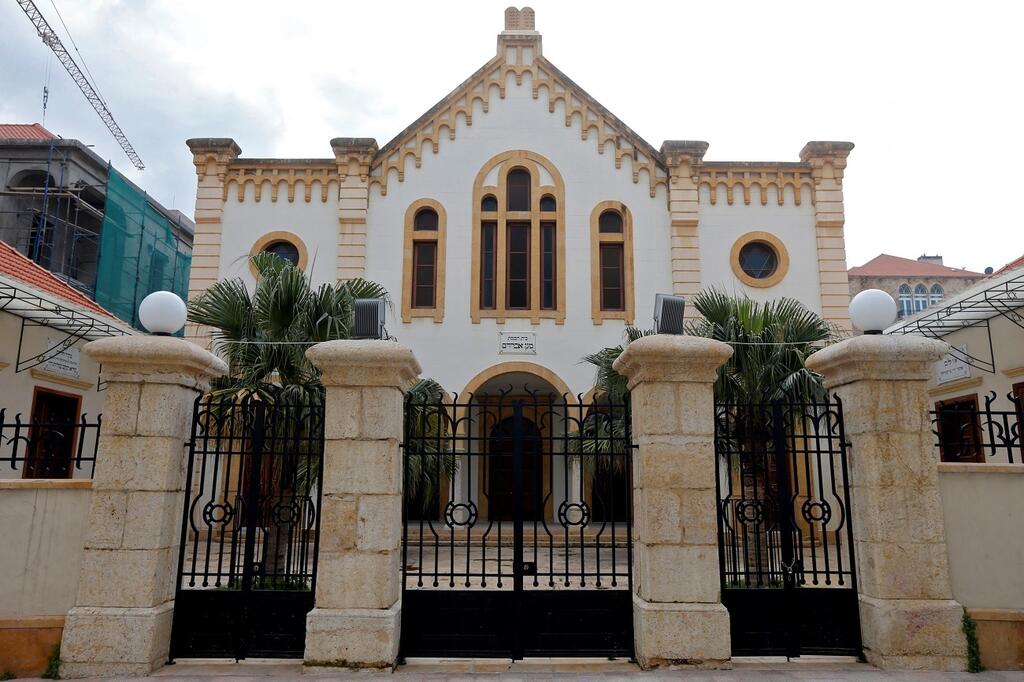
Magen Avraham Synagogue in Lebanon
(Photo: Reuters)
According to the report, Israel and the United States rejected expanding pilot zones before progress was made in two previously designated areas. Both Israel and Washington also demanded that Hezbollah withdraw from the Ali al-Taher ridge in the Nabatieh area.
The source said the Lebanese delegation rejected Israel’s assertion that explosions in southern Lebanon were the result of strikes on military infrastructure.
The Hezbollah-aligned Lebanese newspaper Al-Akhbar separately reported that Israel had proposed an exchange involving civilians during talks with Lebanon and raised the issue of Lebanon’s historic Jewish community.
According to the report, Israel noted that Jews who left Lebanon years ago were seeking to transfer the remains of relatives from Jewish cemeteries in Lebanon for reburial in Israel.
The report said Israeli negotiators referred to “a significant number of remains” in Jewish cemeteries in Beirut and Sidon.
Thousands of Jews lived in Lebanon until the period surrounding the 1967 Six-Day War, continuing a Jewish presence in the country that stretched back centuries. Estimates suggest that Lebanon’s Jewish population reached between 12,000 and 20,000 at its peak.
The issue of Jewish remains in Lebanon was also raised over the weekend by the Saudi newspaper Asharq Al-Awsat.
Sources told the newspaper that “the Israeli negotiating delegation demanded the return of the remains of Lebanese Jews who were killed during the civil war, and information about the fate of Lebanese Jews who disappeared during Lebanon’s civil war, particularly in the 1980s.”
According to the report, Israel also sought information about Ron Arad, an Israeli air force navigator who went missing after his aircraft was shot down over Lebanon in 1986, or the return of his remains if he is dead.
Sources quoted by the newspaper described the Israeli demands as “impossible,” saying the Lebanese state “knows nothing about the remains of the Jews, nor about Ron Arad.”
Asharq Al-Awsat reported that the issues had also been raised during the U.S.-mediated negotiations that led to the 2022 maritime border agreement between Israel and Lebanon. The parties understood at the time, according to the report, that Lebanon lacked the ability to determine what had happened to the missing people.
Lebanon’s LBCI television network reported last week, citing sources, that preliminary lists concerning prisoners and missing people had been exchanged.
“The Lebanese side submitted preliminary lists regarding prisoners and missing persons, while the Israeli side presented a list of names of missing and deceased Lebanese Jews,” the report said.
Lebanon’s Jewish community was historically concentrated in Beirut’s Jewish quarter, Wadi Abu Jamil. The community gradually dispersed during and after Lebanon’s 1975-1990 civil war, with many members emigrating abroad.
Moshe Zafrani, who left Lebanon at age 14, has previously said communities of Lebanese Jews and their descendants can now be found in France, Mexico, New York and Brazil, as well as across Israel, including in Bat Yam, Holon and Haifa.