


It was a tense week in relations between U.S. President Donald Trump and Prime Minister Benjamin Netanyahu, as Trump sought to restrain Israel's response to attacks and threats from Iran and Hezbollah.
According to remarks Netanyahu later shared with ministers and obtained by ynet and Yedioth Ahronoth, Trump pressed the Israeli leader during a tense phone call after Iran launched missiles at Israel in response to an Israeli strike in Beirut's southern suburbs.
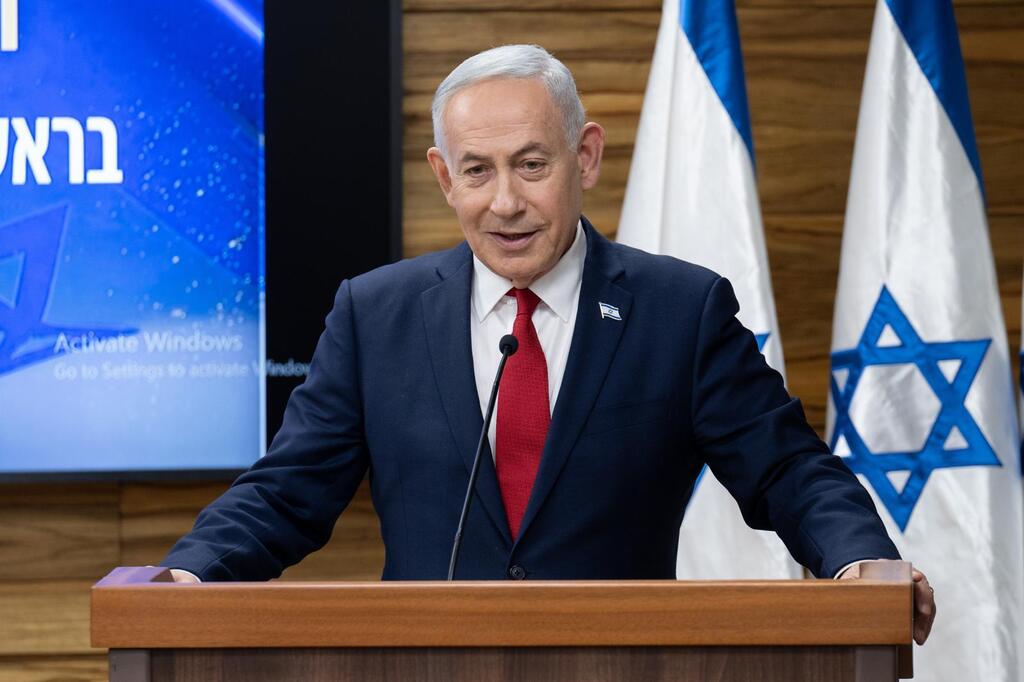
Prime Minister Benjamin Netanyahu
(Photo: IDF)
“Trump asked me, ‘Did they kill any of your people?’” Netanyahu told ministers during Monday evening's Cabinet meeting. “I told him, ‘No, but I am not prepared to accept an equation in which we respond only if people are killed. If they attack Israeli territory, I respond and strike back.’”
Netanyahu also addressed criticism that Israel had become overly dependent on Washington. “We are not subordinate to the Americans; we are their allies,” he told ministers. “When you have a partner, you act like a partner. We are not working against them but with them.”
According to Netanyahu, Trump remains determined to pursue a diplomatic agreement with Iran. “I told him I completely understand his desire for an agreement, but I don't think there will be one, and we will not become victims of such an agreement,” Netanyahu said.
IDF Chief of Staff Lt. Gen. Eyal Zamir told ministers that Israel was capable of acting independently against Iran if necessary. “We could have struck Iran harder,” Zamir said, according to participants in the meeting. “We are prepared for a significant and powerful wave of attacks. We have the endurance to conduct an intense campaign against Iran on our own. But, of course, we prefer to do it with our partner.”
Zamir described preserving cooperation with the U.S. military as a strategic objective in itself. “We have targets in Iran and we have targets in Lebanon. We are working on all of them, but one of our goals is preserving the alliance with our partner,” he said. “It is very possible there will be another joint campaign against Iran. The relationship that has developed between us and the U.S. military is unprecedented and must be maintained.”
IDF leaders also discussed Hezbollah's condition following months of fighting.
Maj. Gen. Shlomi Binder, head of military intelligence, said the balance between Iran and Hezbollah had shifted. “Hezbollah was built to attack us if we attacked Iran,” Binder said. “Now Iran is attacking in order to defend Hezbollah. That demonstrates their weakness. Hezbollah is more on the run than in any other situation.”
The head of the military intelligence research division told ministers that Iran's response to Israel had been deliberately limited. “The Iranian response against us was restrained from the Iranian perspective,” he said.
The comments were made before Trump later declared that the conflict with Iran had ended and celebrated what he described as an emerging agreement with Tehran.