

Sirens sounded across central Israel and parts of the south on Sunday morning after launches were detected toward the region, as Israel continued a new wave of strikes against Iranian targets and Tehran warned it is prepared for a prolonged conflict.
Emergency services reported that interceptor fragments fell in several locations. No direct casualties were reported. Magen David Adom, Israel’s emergency medical service, said its teams were scanning the sites and treated a woman who was injured while rushing to a protected area as well as a man suffering from anxiety.
Gallery
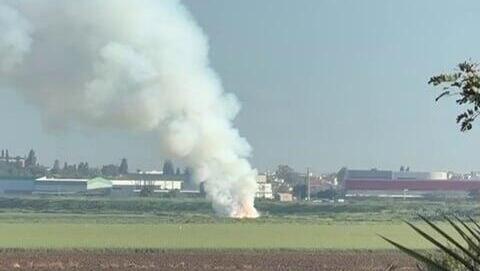
Impact in an open area in the Shfela region
(Photo: Used under Section 27a of the Copyright Law)
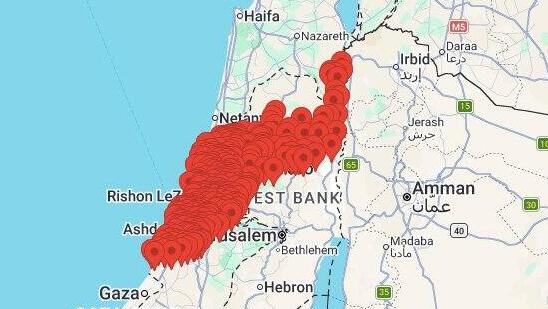
Rocket alert sirens
(Photo: Cumta Red Alerts)
Impact in an open area in the Shfela region
(Video: Used under Section 27a of the Copyright Law)


Earlier, the Israel Defense Forces said it had begun another wave of strikes against infrastructure belonging to what it called the Iranian “terror regime” across Iran. Explosions were reported in the capital, Tehran, according to the Qatari network Al Jazeera.
Meanwhile, Iranian President Masoud Pezeshkian said Tehran would respond if neighboring countries attempted to invade its territory.
“We are brothers with the neighboring countries, but if they wish to invade our land we will respond,” Pezeshkian said in remarks broadcast on Iranian television. “Iran has not surrendered to pressure and will not do so.”
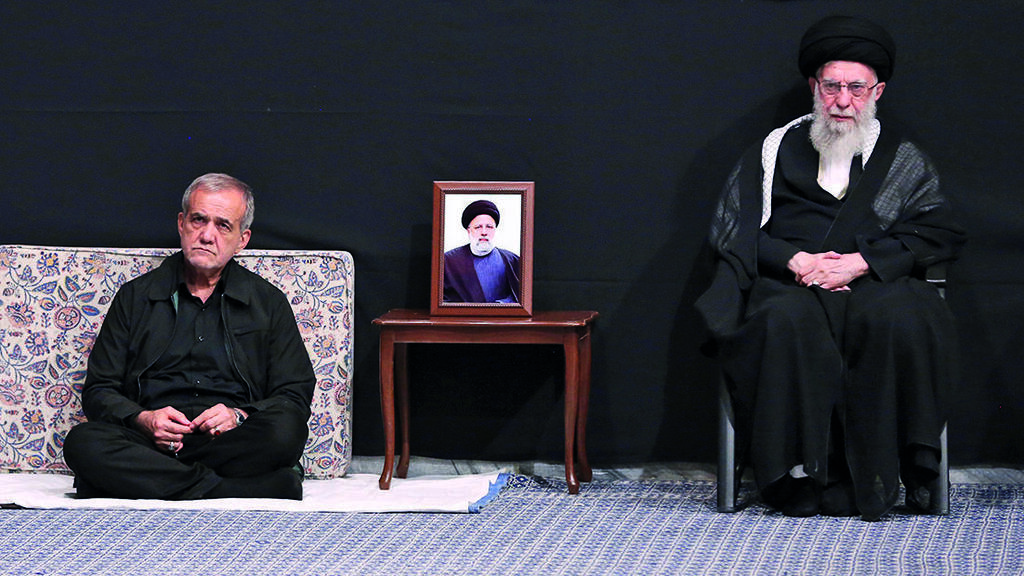
Iranian President Masoud Pezeshkian with Ali Khamenei
(Photo: AP)
Separately, a report in The New York Times said U.S. intelligence agencies assess that Iran could still retrieve its highest-grade enriched uranium from the country’s main stockpile, even though it was buried beneath Iran’s nuclear facility in Isfahan during U.S. strikes last year.
According to officials familiar with classified intelligence reports, Iran could access the uranium through a very narrow entry point. It is unclear how long it would take to reach the material, which is stored in gaseous form inside special containers, and remove it from the complex.
U.S. officials said American intelligence agencies are closely monitoring the site in Isfahan and are confident they would detect — and respond to — any attempt by Iran or other groups to move the uranium.
Earlier, the U.S. news site Axios reported that the United States and Israel discussed the possibility of sending special forces into Iran at a later stage of the war to secure the country’s enriched uranium stockpiles, citing four people familiar with the discussions.
First published: 08:12, 03.08.26