


The phenomenon of child marriages in the ultra-Orthodox community in Yavne’el continues to grow, with hospitals in northern Israel reporting a sharp rise in underage mothers in recent years. Data from Poriya Hospital, the only facility to share information with lawmakers, shows a dramatic increase in deliveries by minors, illustrating the difficulty authorities face in enforcing the law.
According to hospital records, in 2021, only one girl from the community gave birth. By 2025, ten girls had delivered infants at Poriya, up from two in 2023, five in 2022, and eight in 2024. Many of the girls were 16 at the time of giving birth, indicating marriages at age 15. The numbers reflect only a single hospital; other medical centers in northern Israel have not provided similar data, suggesting the overall scale is even higher.
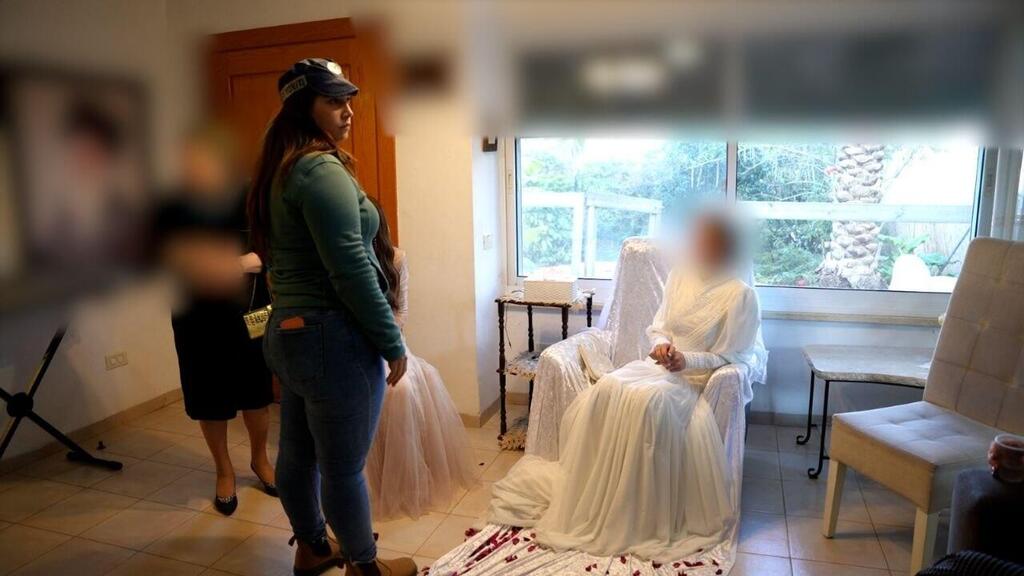
Police raid on a wedding in Yavne'el
(Photo: Israel Police)
The rise comes after recent public scrutiny following the case of a 15-year-old girl married to a man around 30 years old in Yavne’el. Authorities report that gathering evidence in such cases is extremely challenging. Many ceremonies are conducted in secrecy, without a formal marriage contract or public acknowledgment, and are often described as “engagement rituals” to evade legal scrutiny. In one recent instance, police found a bridal chair and an unsigned marriage contract in an apartment, but the lack of identifying details prevented a formal investigation.
According to the Knesset’s Information and Research Center, between 2023 and 2025, 321 reports were filed regarding child marriages without official authorization in Israel, primarily in the Arab sector and ultra-Orthodox communities. Yet, only a handful of indictments have been filed in relation to these cases.
Lawmakers and authorities stress the risks faced by the young mothers. Two weeks ago, a 16-year-old from the Yavne’el community gave birth at Emek Hospital in Afula, prompting a welfare referral. The data, compiled at the request of Knesset Committee for the Advancement of the Status of Women chair Merav Cohen, underscores the growing scope of underage motherhood in the community. Cohen emphasized that Poriya Hospital was the only facility to provide full transparency. Other hospitals and health funds either refused to share data or were unresponsive.
“Every time I dig deeper into child marriages in Yavne’el, the scope becomes alarming,” Cohen said. “Only a combined effort of police, social services, health and education systems can bring real change. Those who withhold information that could save young lives must be held accountable.”
The Ministry of Health said it works with other government agencies and enforcement bodies through an interministerial committee established in 2023 to address the phenomenon and develop appropriate responses. Health officials provide professional care for minor mothers, including risk assessments, social worker involvement, and coordination with welfare and community services to ensure ongoing support.
Police and welfare authorities say enforcement remains difficult. Even when police attend suspected underage weddings, the ceremonies often appear to be legal engagements, complicating prosecution. Authorities continue to investigate where possible, but the clandestine nature of these marriages has limited legal action.