

Nearly a full day after Prime Minister Benjamin Netanyahu abruptly canceled a planned statement on the contentious draft exemption bill for yeshiva students, senior leaders in the Haredi political parties on Wednesday voiced frustration and confusion over what they described as an unnecessary and potentially inflammatory move.
According to officials in the ultra-Orthodox Shas and United Torah Judaism factions, the purpose of such a statement was unclear. “What’s the logic in making a public address when everything is already being handled in the Knesset Foreign Affairs and Defense Committee?” one senior figure said, referring to the parliamentary body currently rewriting the bill.
Gallery
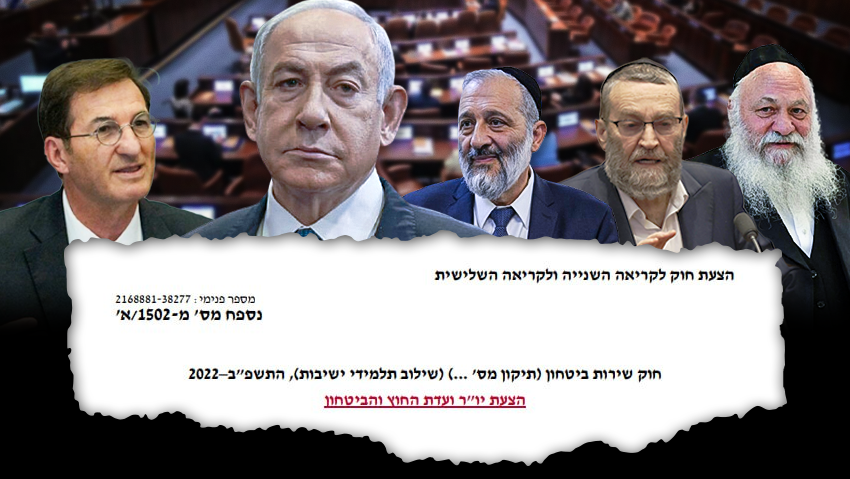
Boaz Bsimuth, Benjamin Netanyahu, Aryeh Deri, Moshe Gafni, Yitzhak Goldknopf
(Photo: Amit Shabi, Reuven Castro, Yair Sagi, AFP, Yoav Dudkevitch, Alex Kolomoisky, AP)
“Anything the prime minister says will only inflame tensions and fuel more media attacks on the Haredi public. Even if Netanyahu is under pressure from Finance Minister Bezalel Smotrich and his people, it makes no sense for him to do it at the Haredis’ expense.”
The proposed legislation, commonly known as the “Haredi draft exemption bill,” aims to formalize long-standing exemptions that allow most ultra-Orthodox men to avoid compulsory military service. For decades, this issue has been one of Israel’s most sensitive internal debates, pitting secular and religious communities against each other.
Shas chairman Aryeh Deri grew alarmed as soon as the Prime Minister’s Office announced that Netanyahu would make a televised statement. Deri contacted Netanyahu’s aides and warned that such remarks would only fuel public outrage and increase pressure from opponents inside Netanyahu’s own right-wing coalition.
Both the Shas party and the Degel HaTorah faction — one of two parties comprising United Torah Judaism — have been pushing for a rapid legislative process, with as little time as possible for broad public mobilization against the law. Deri argued that a prime ministerial speech would do the opposite, rallying critics in Likud and in the Religious Zionist alliance.
United Torah Judaism’s Moshe Gafni also opposed any public statement — as did virtually all ultra-Orthodox representatives.
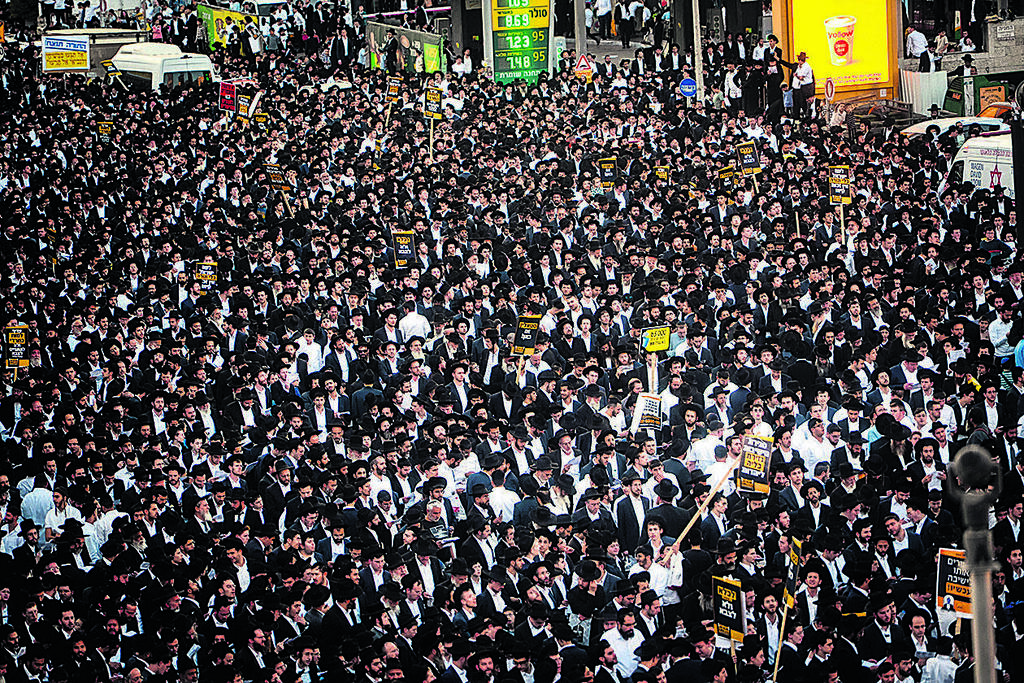
Hundreds of thousands gather in Jerusalem to protest the Haredi draft bill
(Photo: Shalev Shalom)
Netanyahu, however, has been urging his Haredi partners to allow him to present a public defense of the bill, arguing that a strong televised endorsement could counter growing resistance inside his own coalition and prevent the proposal, authored by Foreign Affairs and Defense Committee chair Boaz Bismuth, from collapsing.
Meanwhile, the Haredi parties are trying to bring dissenting voices in their own camp back into line. One major concern is Yitzhak Goldknopf, leader of the Hasidic Agudat Yisrael faction, who has signaled hesitation. Another is lawmaker Meir Porush, who this week declared the proposal “a terrible law” that should be “torn up.”
Sources close to senior ultra-Orthodox rabbis are promoting a rare joint meeting between top Lithuanian (non-Hasidic) leaders — Rabbis Dov Landau and Moshe Hillel Hirsch — and the Gerrer Rebbe, Goldknopf’s powerful spiritual patron. The goal would be to issue a unified rabbinic declaration preventing any Haredi lawmaker from opposing the bill.
Netanyahu had been expected to address the nation on Tuesday evening — the first time he would comment publicly since the proposal was unveiled last week. His office announced the statement was set for 8:10 p.m., but minutes beforehand aides said it was postponed “due to scheduling constraints.”
At the same time, Netanyahu met with Transportation Minister Miri Regev on next year’s state budget.
Opposition leaders quickly seized on the cancellation. Former prime minister Yair Lapid said Netanyahu “ran away,” calling the bill a “draft-dodging law.” “He canceled the statement because he knows the truth, because he knows we have seen the details. There’s no way to defend it,” Lapid said. “Not 50% of Haredim will enlist. Not even 5%.”
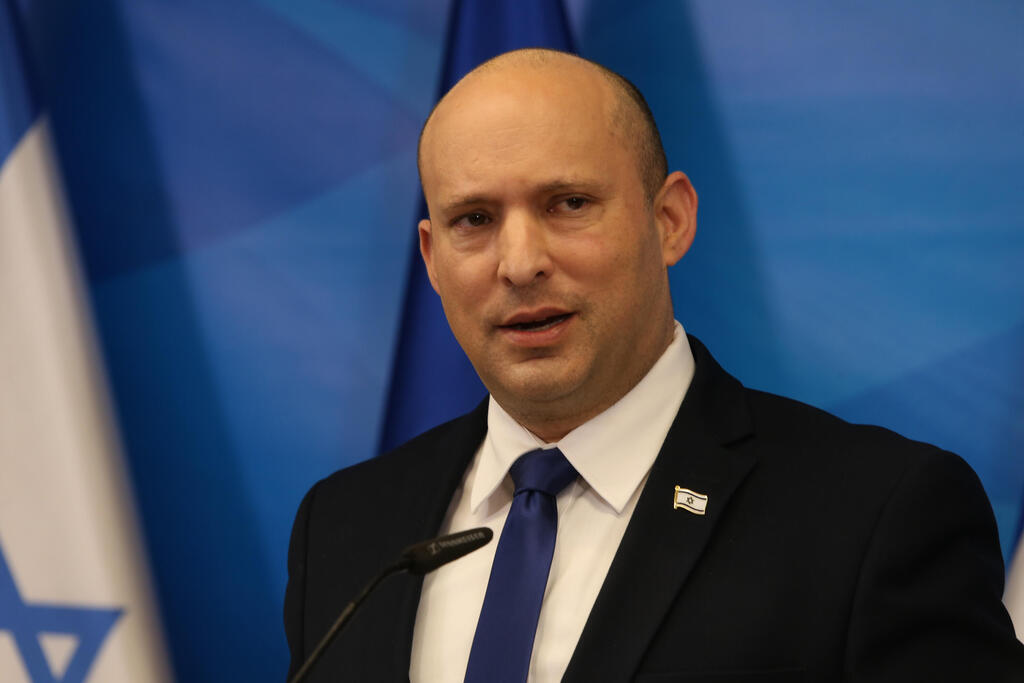
Former prime minister Naftali Bennett
(Photo: Ami Shabi)
Former prime minister Naftali Bennett also addressed the nation, tying the dispute to Israel’s October 7 trauma. “Only when we stand together can we overcome everything,” he said. He argued that the IDF currently faces a shortage of about 20,000 soldiers. “There are only two options: recruit our ultra-Orthodox brothers, or permanently extend reservists’ service by 120 days a year and destroy their futures.”
Bennett claimed the government’s proposal would ensure that Haredi enlistment never increases, calling it “Isra-bluff” — Israeli slang for a deceptive policy dressed up as reform.
Resistance to Bismuth’s draft law text has spread across Netanyahu’s right-wing partners. Among those opposing the proposal are Likud’s Yuli Edelstein, who previously advanced a stricter version of the law, as well as lawmakers Dan Illouz, Sharren Haskel, Moshe Saada, Eliyahu Revivo, Moshe Solomon and Michal Woldiger.
Religious Zionist Party Minister Ofir Sofer announced he would vote against the bill even if it costs him his cabinet post.
A coalition official said Netanyahu anticipated trouble but not the current scale of internal revolt. “He knew there would be a problem,” the official said. “He just didn’t know how deep the opposition would be — or how big the problem.”