



One of the most unusual barrages since the start of the campaign was recorded yesterday along Israel’s northern front, when hundreds of launches were fired from Lebanon toward Israel within a short period of time. Air defense systems operated under heavy load, with numerous interceptions visible in the skies over northern Israel. Security officials said the barrage was likely only part of a broader attack plan.
According to the data, 217 rockets were launched from Lebanon during the unusual barrage. Of those, 127 crossed into Israeli territory, while air defense systems intercepted a significant portion of the launches.
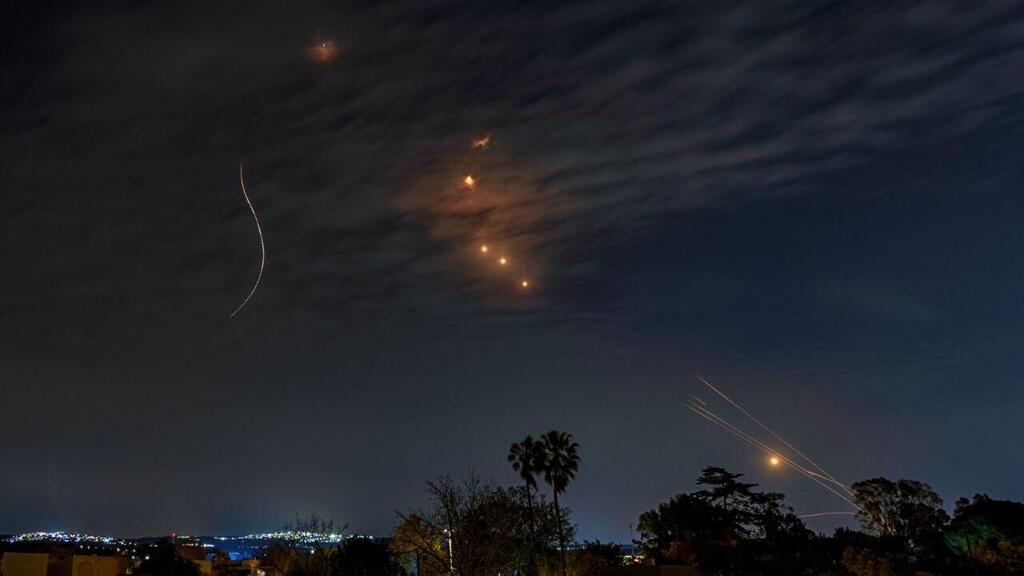
The interceptions yesterday in the western Galilee
(Photo: Amir Yarchi)
In addition to the rockets, five unmanned aerial vehicles, or UAVs, were launched. Air defenses intercepted most of them, though two penetrations were reported, with no injuries.
According to assessments, Hezbollah planned to carry out the attack in three waves. The first barrage was launched, but the two additional waves were disrupted following operational activity by the Israel Defense Forces, which thwarted parts of the plan.
Since the start of the fighting, hundreds of projectiles have been launched toward Israel from several fronts. According to the data:
- About 300 missiles have been launched from Iran
- 594 rockets have been launched from Lebanon and reached Israel
- In total, about 1,300 launches have been carried out from Lebanon, though not all crossed into Israeli territory
Significant figures were also recorded in the use of unmanned aerial vehicles:
- 167 UAVs were launched from Iran
- 74 UAVs were launched from Lebanon
Widespread evacuations in Lebanon
Alongside the escalation, large population movements have been recorded in Lebanon. According to estimates, about 1.2 million people have evacuated their homes. Of them, about 700,000 residents left the Dahieh area of Beirut — a Hezbollah stronghold — and roughly half a million others fled southern Lebanon.
In response to the launches, the IDF has expanded its strikes in Lebanon. Since the start of the campaign, about 80 structures have been destroyed: roughly 60 in Beirut and about 20 in southern Lebanon. Security officials said some of the buildings served as Hezbollah infrastructure and targets.
The data also indicates that Iran has launched more than 10 cluster munitions during the conflict. Each munition contains between 20 and 80 submunitions, with each warhead weighing between about 4 and 8 kilograms (9 to 18 pounds).