

Israel's October 27 election is generating intense interest and growing concern among American Jews, as three years of war in the Middle East have deepened divisions over Israel within American society. Those disagreements are increasingly visible in street demonstrations and in the campaign for the U.S. congressional midterm elections in early November.
American Jews remain sharply divided along political, religious and often generational lines over the outcome they hope to see in Israel's election, widely regarded as a referendum on Prime Minister Benjamin Netanyahu. The vote is also taking place against the backdrop of the continuing trauma of the October 7, 2023 Hamas attack, which triggered the war in Gaza.
Gallery
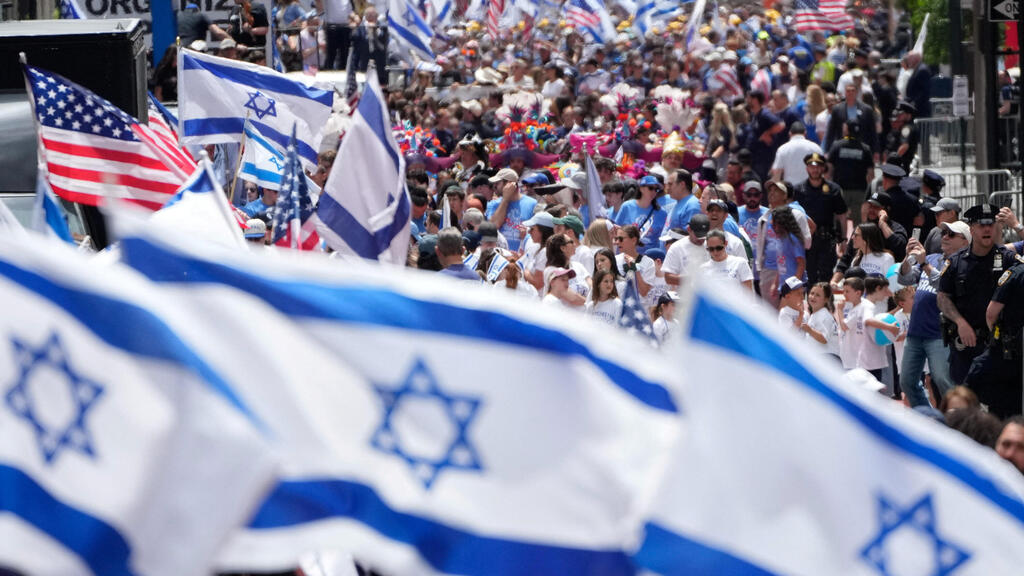
The annual parade in support of Israel on Fifth Avenue in New York in May
(Photo: REUTERS/Eduardo Munoz)
Netanyahu's supporters, particularly among Orthodox Jews, believe he is defending a country they love and regard as central to their identity. Many liberal and younger American Jews, however, believe his policies have damaged Israel's international standing and generated widespread hostility that threatens to affect them in the United States as well.
The situation is especially sensitive amid rising antisemitism and antisemitic violence. Even some of Netanyahu's harshest critics, whether over the war in Gaza or Israeli settler violence in the West Bank, acknowledge that responsibility for attacks against Jews cannot be placed entirely on the Israeli prime minister.
Rabbi Dan Levin of Temple Beth El, a Reform synagogue in Boca Raton, Florida, said many American Jews feel caught between competing concerns. They want an end to attacks on Palestinians by Israeli settlers in the West Bank, while also rejecting accusations of genocide against Israel and what they regard as double standards applied to the Jewish state.
Israel remains central to many American Jews' identity
Levin's large Reform synagogue is among numerous congregations across the United States holding educational programs this fall about the Israeli election. Although most members are not Israeli citizens and cannot vote, Levin said they feel a profound emotional investment in the outcome.
Israel's complex multiparty electoral system makes the October 27 result difficult to predict. Polls suggest a close contest between the political bloc led by Netanyahu and an alliance of his opponents, with neither side assured of forming the next government.
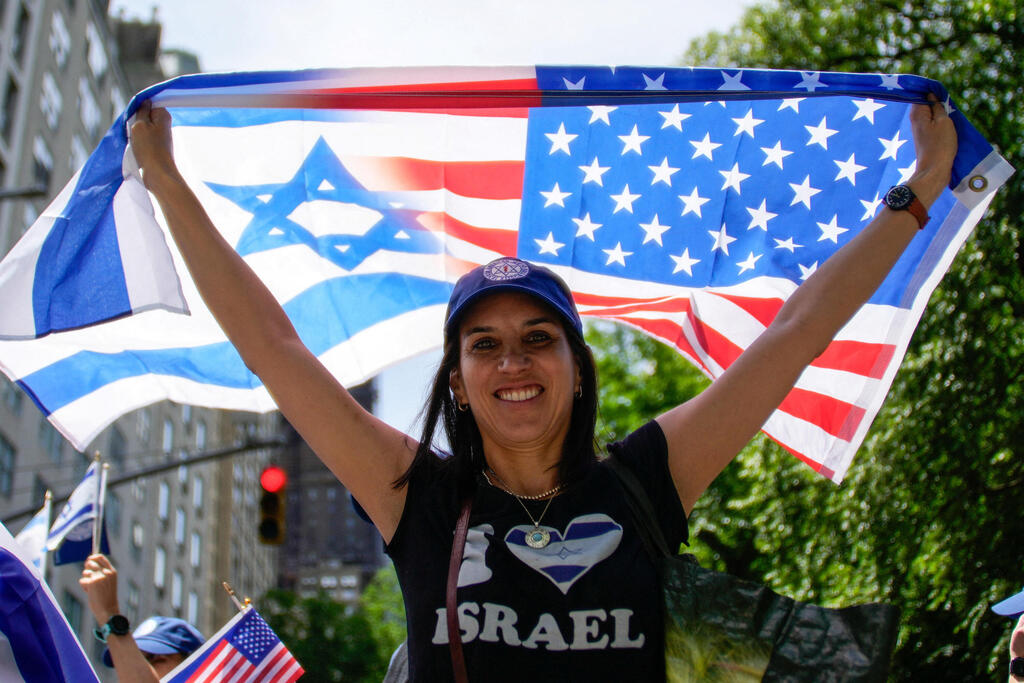
Participants in the annual pro-Israel parade on Fifth Avenue in New York
(Photo: REUTERS/Eduardo Munoz)
Many American Jews have friends and relatives living in Israel. Beyond those personal ties, supporting Israel remains an important part of Jewish identity for many older Americans, particularly religiously affiliated Jews aged 45 and above, according to a recent poll conducted by The Associated Press and the NORC Center for Public Affairs Research.
Reform Judaism, the largest Jewish denomination in the United States, places considerable emphasis on progressive values. Many Reform Jews see no conflict between their liberal beliefs and Zionism, which they understand as the Jewish people's aspiration to live freely and independently in their homeland, according to Rabbi Josh Weinberg of the Union for Reform Judaism, an umbrella organization representing more than 800 Reform synagogues across North America.
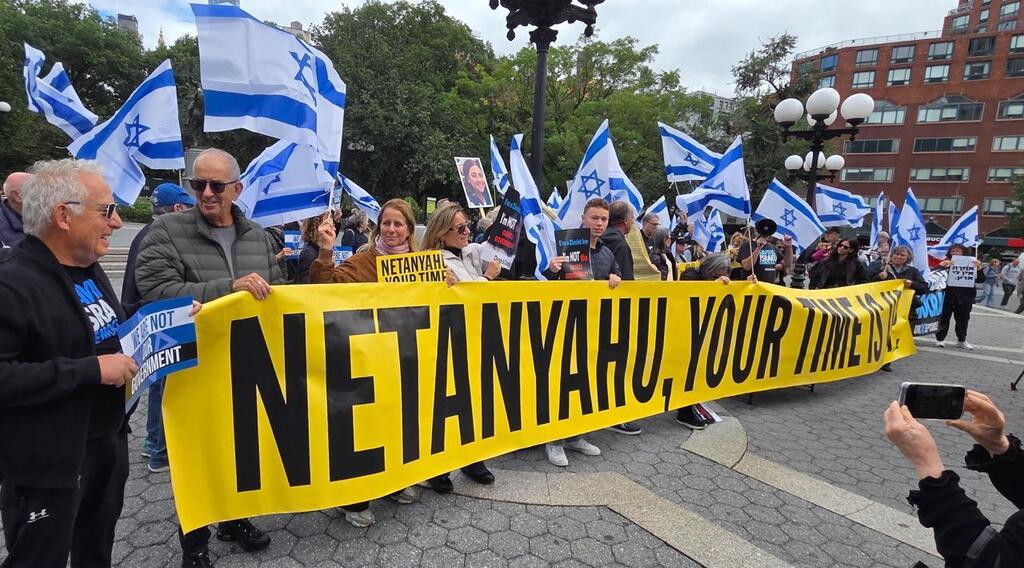
Israelis protest against Prime Minister Benjamin Netanyahu in New York last month
(Photo: UnXeptable)
But Weinberg said many Reform Jews are concerned about the growing influence of ultra-Orthodox parties over Israel's political and religious life, as well as government settlement policies and the treatment of Palestinians in the West Bank. They regard those policies as fundamentally inconsistent with their values.
Weinberg warned that another Netanyahu victory could deepen the disillusionment of younger American Jews, some of whom may ultimately decide they have had enough and say, "I'm giving up on Israel."
The generational divide is reflected in the AP-NORC survey. Only about four in 10 religiously affiliated Jewish adults under 45 said supporting Israel was extremely or very important to their Jewish identity. Younger respondents were more likely to place greater importance on other expressions of Jewish identity, including observing Jewish holidays.
Antisemitism remains a central concern
The same survey found that most Jewish American adults consider prejudice against Jews an extremely or very serious problem in the United States today.
With Israel's election approaching, many Jewish communities are concerned that its outcome could affect attitudes toward Jews in the United States. Jonathan Sarna, professor emeritus of American Jewish history at Brandeis University, said some American Jews believe a different kind of Israeli prime minister, one more like previous leaders who frequently spoke about their desire for peace, could change how Jews themselves are perceived in America.
The scene of an antisemitic attack at a synagogue in New York


Even Netanyahu's critics, however, do not expect antisemitic attacks to disappear simply because Israel elects a different government. Their concern is particularly acute when anger over Israeli policies toward Palestinians is used to justify violence against Jews regardless of their nationality, political beliefs or connection to Israel.
Weinberg pointed to a protest slogan calling for an intifada and revolution, which he and others interpret as encouraging violence against Jews. He argued that the meaning of such rhetoric changes depending on where it is heard. A slogan shouted in the Palestinian city of Ramallah, he said, carries a different implication when repeated on the streets of Minneapolis. For him, the latter raises an unmistakable concern about antisemitism.
Others believe changes in Israeli policy could nevertheless help reduce hostility. Rabbi Jill Jacobs, CEO of T'ruah, a rabbinic human rights organization, said people who attack Jews in the street or deliberately drive vehicles into synagogues bear full responsibility for their own actions. Such violence cannot be blamed on the Israeli government's conduct.
At the same time, Jacobs warned that the election of another Netanyahu government, particularly one continuing policies she described as expanding the occupation, ethnic cleansing and an endless war, would create a deeply frightening environment for Jews around the world.
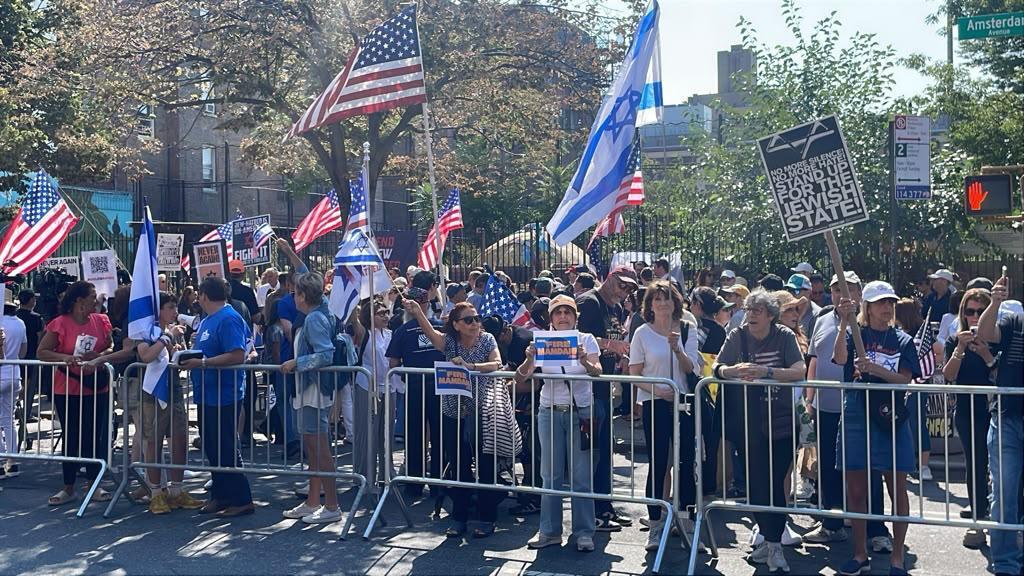
Demonstrators protest against antisemitism on New York's Upper West Side
(Photo: Omri Kupershtein)
Stanley Weinstein, an Orthodox Jew from Florida, rejects much of the criticism directed at the Israeli military and the country's political leadership, particularly given the threats posed by Hamas terrorists in Gaza and other continuing confrontations. These include tensions with Hezbollah in Lebanon and Iran, even as fragile ceasefires remain in place.
Weinstein considers Israel's security essential, especially as he sees increasingly hostile rhetoric toward Israel and Jews among American political figures on both the right and the left. He has observed those trends even from his home in Miami Beach, which has a large and diverse Jewish community.
He said he was appalled by the growing hostility, both as an American and as a Jew, but added that it only reinforced his gratitude for Israel's existence, declaring, "thank God there is an Israel."
Netanyahu, Trump and elections that could deepen divisions
For American Jews, Israel is also becoming an increasingly important issue in the U.S. midterm elections, which will determine control of Congress for the next two years. American voters will go to the polls on November 3, exactly one week after Israelis cast their ballots.
From New York to Michigan and elsewhere, support for Palestinians and demands to end American military assistance to Israel have become more prominent issues among Democratic voters.
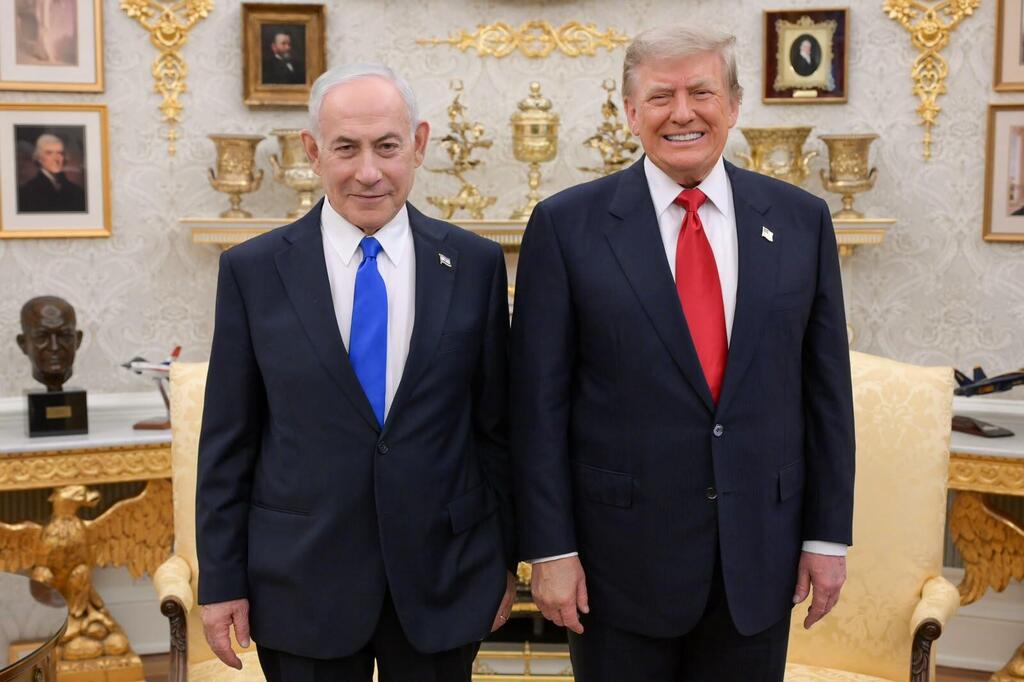
Prime Minister Benjamin Netanyahu meets US President Donald Trump at the White House
(Photo: GPO)
Both elections could influence the longstanding alliance between Israel and the United States. Relations have been particularly close under the Trump and Netanyahu administrations, although tensions have emerged in recent months, especially over the war the two countries jointly launched against Iran.
Despite growing controversy over some Israeli government policies in the United States, support for Israel itself remains substantial among American Jews, according to Jason Isaacson, chief policy officer of the American Jewish Committee, a prominent advocacy organization seeking to represent a broad spectrum of Jewish communities in the United States and internationally.
Isaacson said there is continued strong backing among American Jews for maintaining the U.S.-Israel relationship, as well as broad agreement on the importance of Israel's continued existence and security.
Yet regardless of political affiliation or religious outlook, some American Jews are most troubled by the possibility that Israel's election will produce even deeper divisions within the country and across Jewish communities abroad.
Levin, the Reform rabbi from Boca Raton, said the upcoming vote could prove one of the most consequential elections in modern Israeli history. He argued that the Netanyahu government's deeply divisive character has created tensions severe enough to threaten the cohesion of Israeli society itself.
Weinstein, the Orthodox Jewish resident of Miami Beach, believes Netanyahu has performed extremely well as prime minister. Nevertheless, he shares Levin's anxiety about Israel's future. For him, the greatest challenge facing the country is the lack of national unity, a problem he considers more important than the outcome of any individual political contest.
His central question is whether Israel can overcome those differences: "Is there a way to unify the country, unify the people?"