

“We’re going to hit them very hard tonight and we’re going to hit them hard tomorrow. And there’s not a damn thing they can do about it,” U.S. President Donald Trump said Monday.
Shortly afterward, U.S. Central Command announced it had begun strikes in Iran for the third consecutive night. Iranian state television reported explosions in the Bandar Abbas area on the southern coast, as well as near Kish Island in the Persian Gulf.
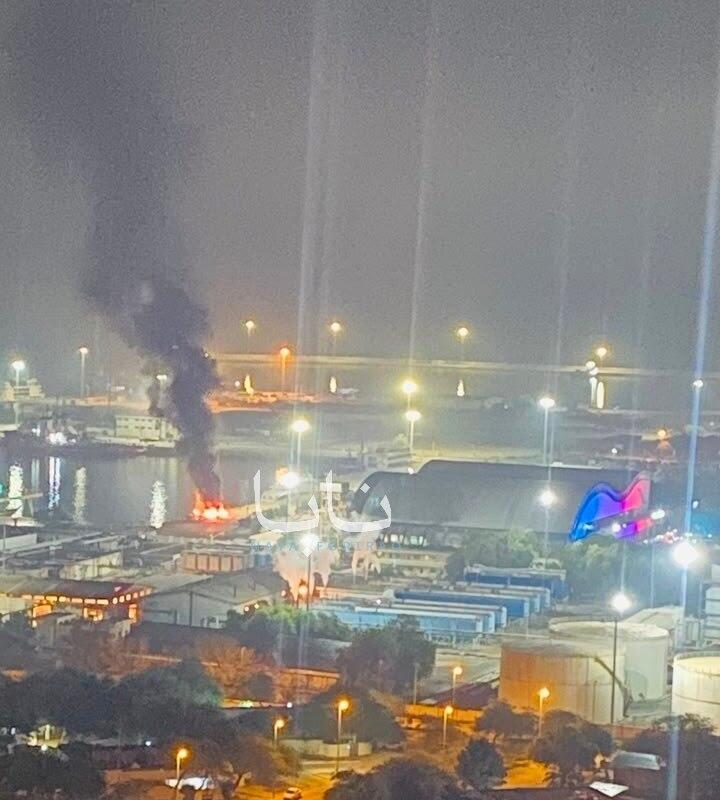
Later, additional explosions were reported on the islands of Abu Musa and Qeshm in the Strait of Hormuz, as well as in Jam County in Iran's southern Bushehr Province.
CENTCOM said the strikes "will continue imposing a heavy cost on Iranian forces and degrade their ability to attack innocent civilians and commercial shipping in the Strait of Hormuz."
Iran's Fars news agency, citing authorities in Hormozgan Province, reported that a missile struck western Bandar Abbas. No casualties were reported.
Meanwhile, the United Kingdom Maritime Trade Operations agency, or UKMTO, said it had received a report that a tanker had been struck by an "unknown projectile" about 64 kilometers (40 miles) southeast of Kalhat, Oman. The agency said no crew members were injured and there was no environmental damage.
The United Arab Emirates' Defense Ministry later said two tankers had been struck by two Iranian cruise missiles south of the Strait of Hormuz. One Indian crew member was killed and eight others were wounded, including four seriously, in the attack, which the ministry said took place in Omani territorial waters.
"The fires aboard both tankers have been brought under control," the ministry said, adding that the UAE "reserves the full right to respond to the escalation."
Separately, security sources told Reuters that a missile strike hit a site belonging to an Iranian Kurdish opposition group east of Erbil, Iraq. No casualties were reported.
Speaking later at the White House, Trump said the strikes were targeting Iran's capabilities related to the Strait of Hormuz.
"We're taking out all of their capability for anything having to do with the strait," Trump said. "I think a deal is possible." He also said he wanted financial compensation from the Gulf states for U.S. efforts to protect shipping through the critical oil trade hub.
In the interview, he also addressed his tense relations with Prime Minister Benjamin Netanyahu. “I get along with him great,” Trump said of Netanyahu. “Sometimes I disagree with him, and I make sure he knows it.”
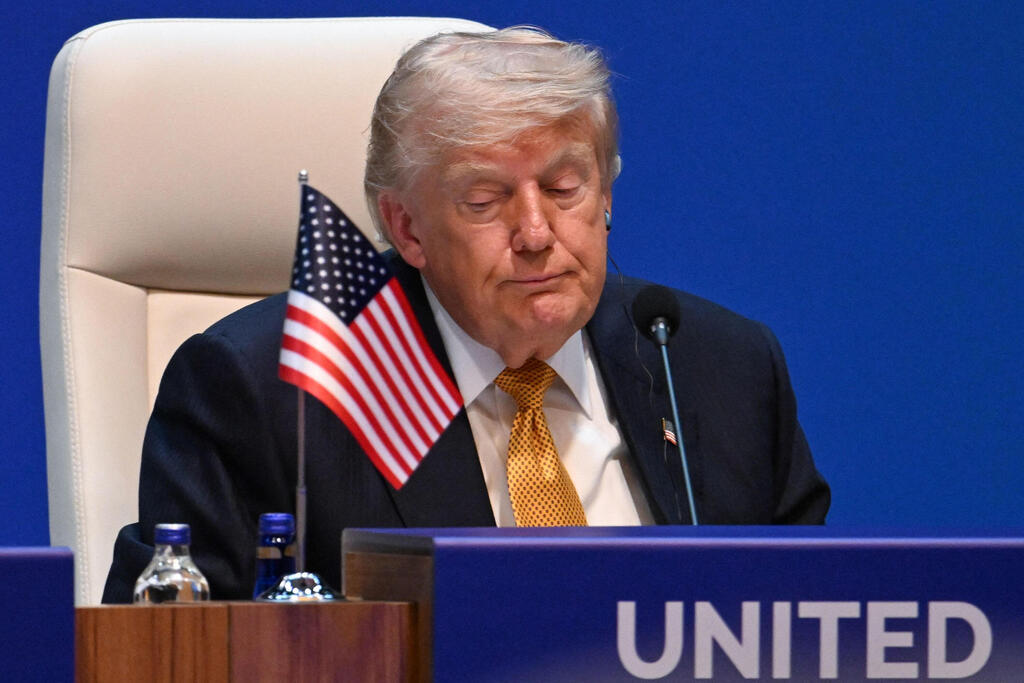
Donald Trump
(Photo: Alexis JUMEAU / POOL / AFP)
Asked about the secret nuclear site near Natanz, Trump threatened to strike Pickaxe Mountain. “We’re going to take out Pickaxe Mountain. Tell the Iranians to be ready,” Trump said.
“We’re watching Pickaxe Mountain closely. We see no activity there. They’re not doing well with their nuclear situation. Every time we hear about it, we blow it up. So they don’t like talking about it. But we’ll probably give Pickaxe a shot relatively soon,” he added.
Pickaxe Mountain, located near Iran’s heavily damaged Natanz uranium enrichment facility, is a heavily fortified site that hosts two deeply buried tunnel complexes that experts assess may be beyond the reach of the most powerful bunker-buster bombs in the U.S. arsenal.
Satellite images published about two months ago showed suspicious movement at the site and the blocking of tunnel entrances. Trump, however, insisted there was no current activity there, while making clear Washington was still watching the site closely.
The U.S. president was then asked whether the memorandum of understandings had been designed to fail from the start.
“It was meant to test them,” Trump replied. “It was a test. When you deal with crooks, a memorandum of understanding is not worth much. Even when you deal with honorable people, it is not worth much, because it is a memorandum of understanding. It does not mean much.”
Trump again claimed that “yesterday there was an agreement that was on its way to being 100% done, and then suddenly they got a phone call and everyone ran out of the room.”
“These people are crazy,” he said. “We had a deal in which we got everything, and they just violate agreements. For them, agreements are meant to be violated. These are people you cannot trust at all. And frankly, if they ever have a nuclear weapon, they will use it within one day.”
Earlier Monday, Trump said the United States was reinstating its blockade of Iranian shipping in the Gulf and would ensure the Strait of Hormuz remains open, for a fee, after the two sides exchanged more missile and drone attacks.
The secret site
About six years ago, Iran announced the construction of a new site “in the heart of the mountains” near the Natanz nuclear facility, intended for the production of advanced centrifuges. The Associated Press later published a satellite image showing that Iran had begun building a nuclear facility at Natanz, and analysts assessed that excavation work was taking place at the site.
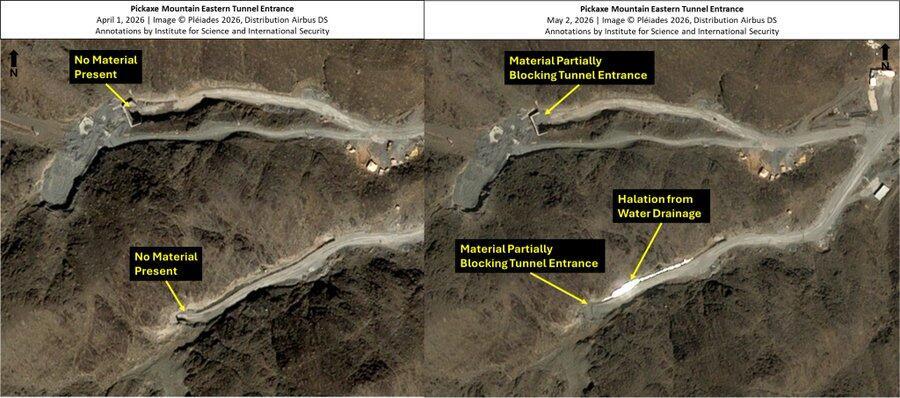
Satellite images of Pickaxe Mountain in Iran
In 2022, The New York Times reported that officials in the Biden administration were monitoring construction of the facility. Those officials said at the time that they were not concerned about its construction because, according to them, it was still several years away from completion.
Three years ago, AP reported that Iran was continuing to advance construction of a nuclear facility believed to be beyond the reach of the GBU-57, the U.S. military’s main “bunker buster” weapon for destroying underground bunkers.
According to satellite images from Planet Labs PBC revealed at the time, Tehran had dug tunnels into the mountains. The facility is believed to be located 80 to 100 meters underground. Such depth could pose a problem for bunker-penetrating bombs. In describing the bomb’s capabilities, the U.S. Air Force has said it can penetrate up to 60 meters underground.
First published: 00:14, 07.14.26