

U.N. Secretary-General Antonio Guterres has urged Security Council members to maintain a uniformed U.N. presence in Lebanon after the mandate of the U.N. Interim Force in Lebanon (UNIFIL) expires at the end of the year.
In a letter to the 15-member Security Council dated Monday and seen by Reuters, Guterres outlined three options for replacing the current 7,500-strong force. The proposals range from a light monitoring presence of about 1,980 personnel to a more robust force of up to 5,525 personnel with broader monitoring and de-escalation capabilities.
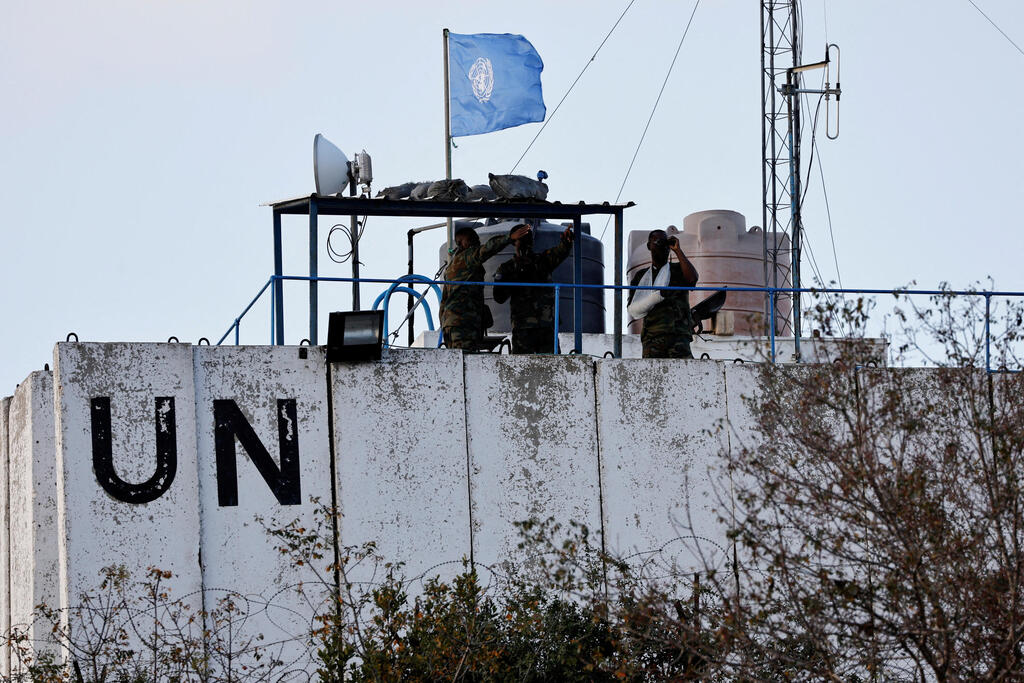
(Photo: REUTERS/Thaier Al-Sudani)
Guterres said the situation in Lebanon has deteriorated significantly since March and stressed that all proposed options require a continued uniformed U.N. presence to support a strengthened political mission aimed at achieving a long-term solution to the conflict.
The first option would include 350 unarmed military observers, backed by four infantry battalions of 750 troops each and a 700-member reserve force for protection. Guterres said this option would provide the strongest monitoring capability, allowing observation along the entire Blue Line and up to the Litani River.
The second option would consist of 285 unarmed military observers, two infantry battalions of 750 troops each and a 450-member reserve force. Under this plan, the mission would focus on the area between the Blue Line and the Litani River, monitoring parts of the border through observation posts and patrols.
The third option would include 215 unarmed military observers, two light infantry battalions of 450 troops each and a 350-member quick-reaction force. It would monitor developments along the Blue Line and several kilometers north of it through static positions and mobile patrols.
However, Guterres noted that under the third option the entire Blue Line could not be continuously monitored without additional technological support. The force would also lack the capacity to position itself between Israeli and Lebanese forces to help de-escalate tensions and would have only limited ability to report ceasefire violations.
Guterres said any future mission would require air assets for medical evacuations, as well as engineering and demining capabilities. He added that radar systems, helicopters, drones and satellite imagery would significantly enhance the mission’s monitoring capabilities.