


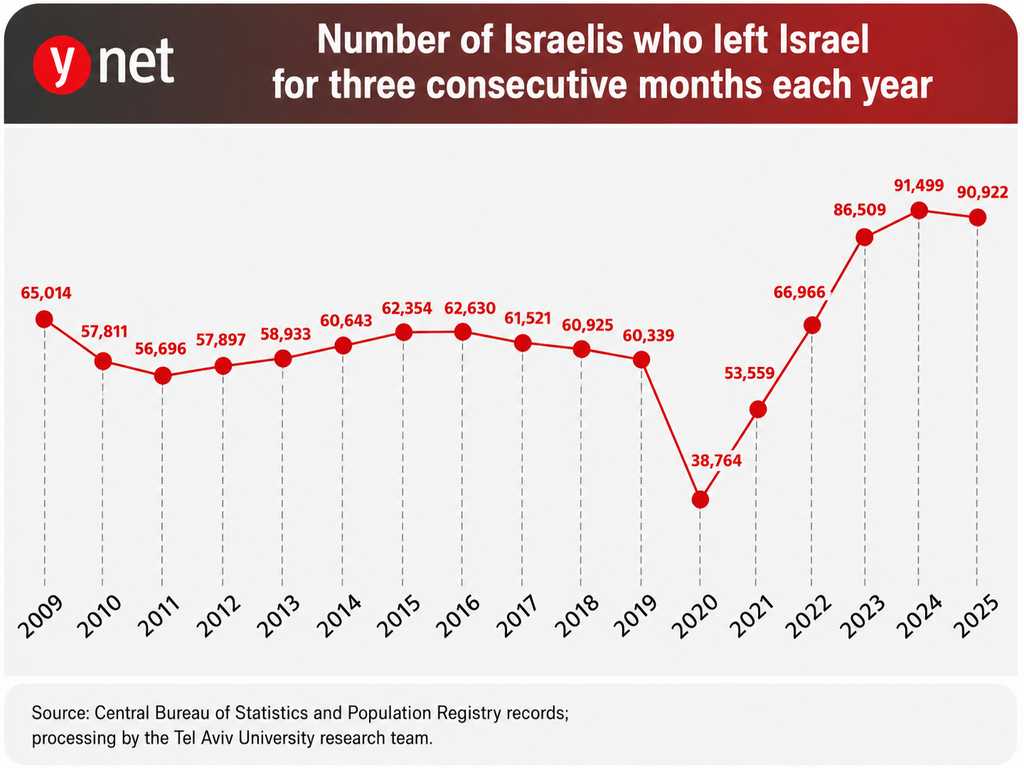
More than 90,000 Israelis left the country in 2025 for a period of at least three consecutive months, according to a new study by Tel Aviv University, continuing a trend of rising emigration in recent years.
The number is slightly lower than the 91,499 Israelis who left in 2024, but higher than the 86,509 recorded in 2023. In total, around 268,000 Israelis have left the country over the past three years, according to the study.
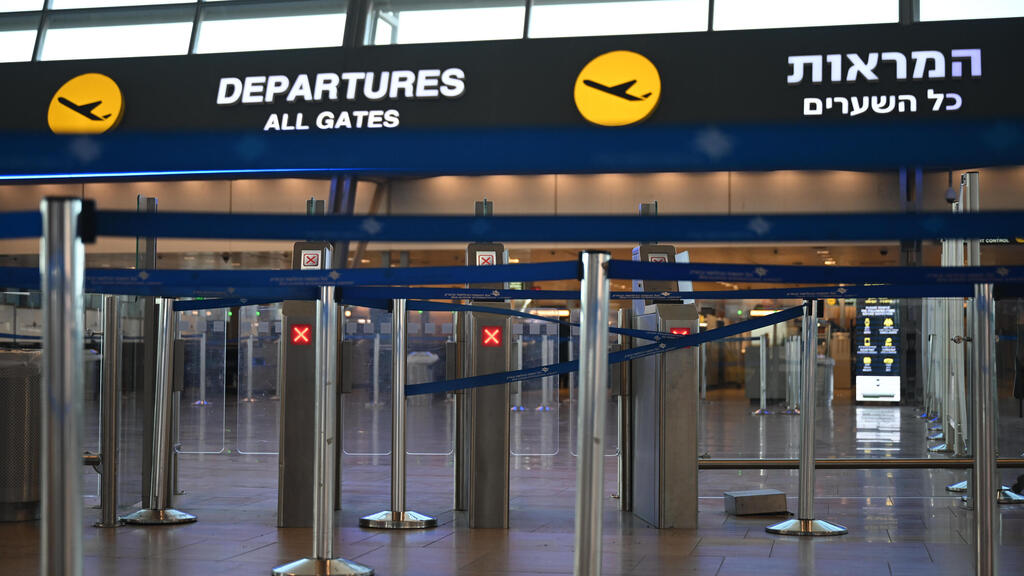
Behind the numbers are families who say they made the difficult decision to leave because of a combination of security concerns, rising living costs and a desire to provide their children with a different future.
Several Israelis who recently emigrated told ynet they do not regret their decision.
‘Our trust was broken’
Anna Sitchek, 42, moved to Portugal with her partner Moran, their two daughters Gali and Tomi, and their two dogs in March 2025.
She said the decision was influenced by several factors, including harassment connected to their sexual orientation, the aftermath of October 7 and a desire for a calmer and safer environment.
“As two women, despite choosing to live in Pardes Hanna, which is considered an open and liberal place, we suffered for a long time from harassment by homophobic neighbors who targeted us and damaged our business, a home-based dog boarding service,” she said.
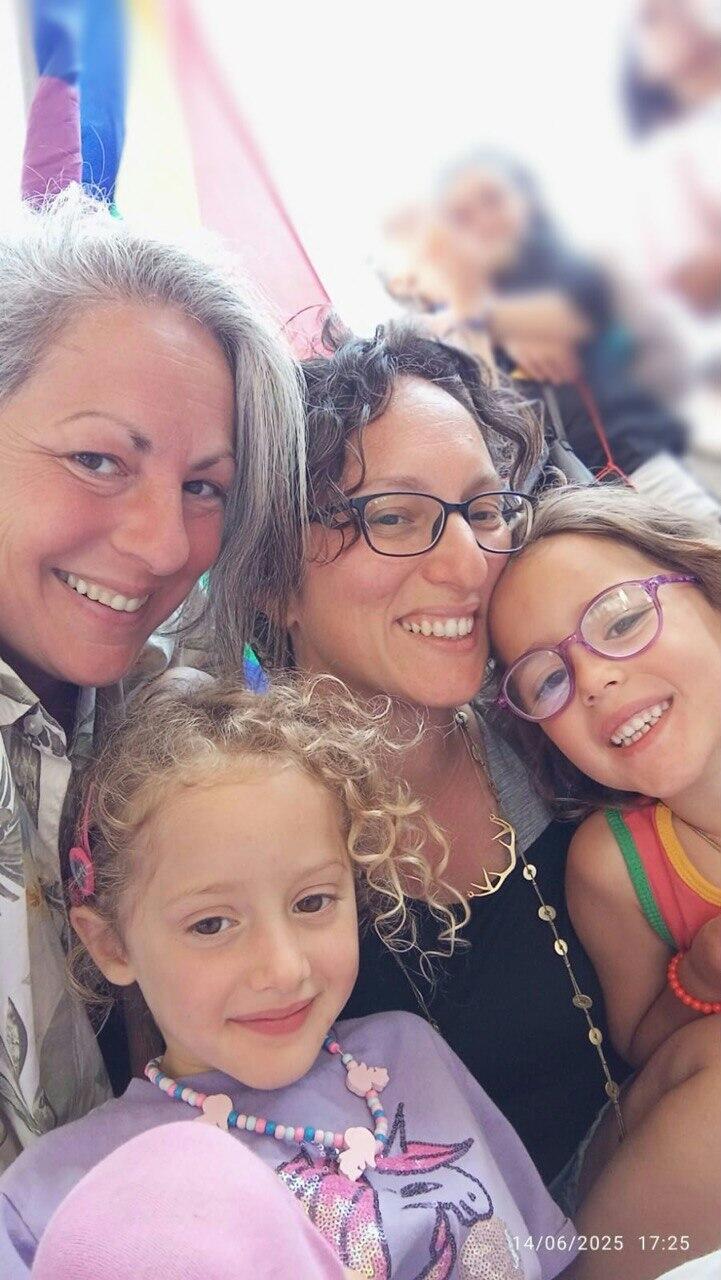
‘Our trust was broken’: Anna, her partner and their two daughters
According to Sitchek, the breaking point came when a neighbor arrived with a torch and set fire to a Pride flag and the front yard of their home.
“We were lucky it did not end in disaster, but it was a very frightening experience,” she said. “Unfortunately, the police chose not to handle the case despite witnesses and evidence.”
She said the incident damaged her faith in Israeli institutions.
“It created a strong feeling that there was no one to protect us, no justice, and that violent people were receiving support and approval,” she said.
The events of October 7 deepened those feelings.
“October 7 brought a lot of fear, pain and hatred that led to violence, racism and, worst of all, indifference and a lack of empathy,” she said. “It was not the atmosphere we wanted to raise our children in.”
‘It is simply a different world’
After moving to Portugal, Sitchek said her family found a different quality of life.
“We have peaceful lives. We fulfilled the dream and built a boutique hotel for dogs and cats with a huge property, something we could never have done in Israel,” she said.
“The authorities here support the process, everyone is kind and helpful. It is simply a different world.”
She said her daughters are happier and that the family now has more time and energy.
However, she acknowledged that emigration comes with challenges.
“Migration is a very complex process. Missing family and friends hurts. Portuguese is a difficult language, and we work every day to learn it,” she said.
“When you are 42, building new friendships and a supportive community is not easy. It is a process of breaking down your identity and rebuilding it.”
Sitchek said she cannot currently imagine returning to Israel.
“We did not relocate, we chose to emigrate,” she said. “I hope that in 10 years, when someone asks my daughter where she is from, she will answer that she is Portuguese.”
‘The situation became too much’
Sharon Diner, 35, moved to Prague with her husband and their two-year-old daughter about a month ago.
For her, the move was partly an adventure but also a response to security concerns and financial pressure.
“Since our daughter was born, living with the constant presence of war has been very difficult, especially for me,” she said. “I do not want to raise my daughter in a difficult security situation.”
She said life in Prague has brought improvements in several areas.
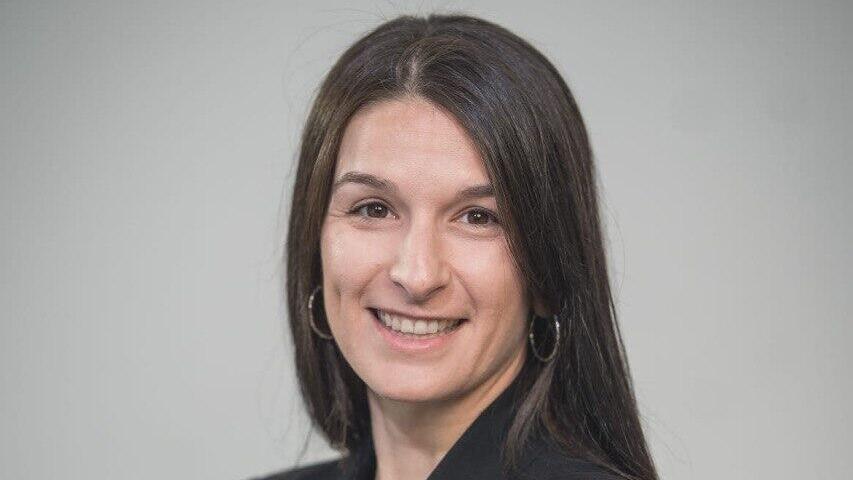
Sharon Diner
Her daughter attends an international kindergarten with fewer children and more individual attention, while housing and daily expenses are significantly cheaper.
“I can afford a bigger, renovated home with better facilities and new furniture in central Prague for 3,000 shekels less than what I paid in Tel Aviv for a much smaller, older apartment,” she said.
She also praised the city’s public transportation, cleanliness and sense of security.
Still, she said leaving Israel does not mean it has stopped feeling like home.
“No matter how comfortable it is here, the Czech Republic is not my home,” she said. “There is something about the country where you were born where you truly feel at home.”
‘You have to get used to the quiet’
Hadar Tzur, 50, moved to the Czech Republic with her 13-year-old daughter after years of considering emigration.
She said her daughter had struggled with fears during the security situation in Israel, and the events of recent years pushed them to leave.

‘It became too much lately’: Hadar Tzur
“If October 7 and the wars had not happened, maybe we would not have moved,” she said. “But recently it became too much.”
Tzur said adjusting to the calm has itself been a process.
“It is hard to explain what it is like to live without that fear sitting in your head all the time,” she said.
“Not only war, but also the fear of an attack. You walk down the street and constantly look around, wondering if someone will suddenly pull out a knife. We lived with that as normal, and here there is none of it.”
She said she is not ruling out a return one day, particularly because of her elderly parents, but for now she and her daughter are staying.
The growing number of Israelis leaving reflects a mix of personal decisions shaped by security concerns, economic pressures and differing views about Israel’s future.
For those who have left, the move has brought both relief and loss: a new sense of stability abroad, alongside the challenge of building a new life far from home.