


Israeli attorney Itay Epstein sharply criticized Israel at the UN Security Council on Monday, urging international action against the country during a periodic debate on Resolution 2334, which says Israeli settlements are illegal under international law.
Epstein adopted the advisory opinion of the International Court of Justice, saying “Israel’s continued presence in the occupied Palestinian territory is itself unlawful.”
Israeli UN Ambassador Danny Danon remarks against attorney Itay Epstein at the UN Security Council


He called on the Security Council to act to end Israel’s presence, dismantle settlements and avoid cooperation with what he described as an “unlawful situation.”
Israeli UN Ambassador Danny Danon denounced Epstein’s appearance and noted that Epstein had previously compared Prime Minister Benjamin Netanyahu and U.S. President Donald Trump to Adolf Hitler.
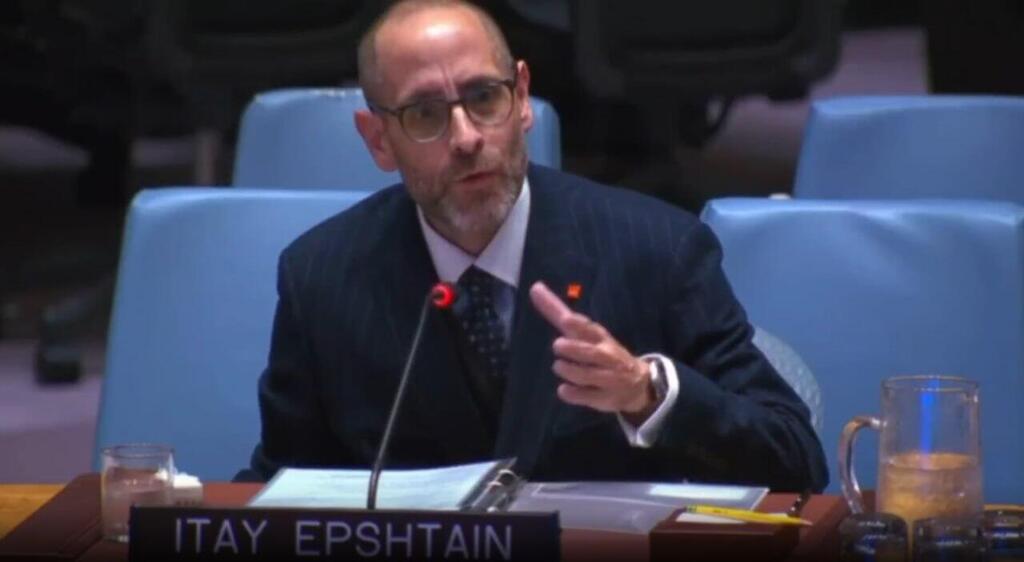
Itay Epstein
“The UN is no longer satisfied with Hamas propaganda,” Danon said. “This time the presidency made an extra effort. It found some of the most radical anti-Israel voices it could find. These are not. Neutral experts. Definitely not. Mr. Itai Epstein, if you look at the social media, even compared President Trump and Prime Minister Netanyahu to Hitler a few months ago.”
Danon said anyone who uses the Security Council platform to “defame IDF soldiers” and call for action against Israel is “not a human rights activist, but a partner in the international campaign seeking to harm the State of Israel.”
Epstein also accused Israel of obstructing humanitarian work. In a post on X, he said states must move beyond “statements of concern” and pursue nonrecognition, nonassistance and cooperation to end Israel’s presence in territories captured from Jordan in the 1967 Six-Day War. He also called for remedies for Palestinians, including restitution where possible and compensation through an expanded UN damage registry.
Danon said the episode showed how the UN gives a platform to figures promoting legal and diplomatic campaigns against Israel while presenting them as “Israeli voices.”