


One of Israel’s most consistent Democratic supporters in Congress is issuing an unusually stark warning: Israelis, he says, are failing to grasp how sharply American public opinion toward their country has changed.
Rep. Brad Sherman, a California Democrat who has served in the House since 1997, posted a series of messages on X on Friday urging Israeli officials and voters to watch a CNN segment from July detailing a steep decline in Israel’s standing among Americans. Sherman is a longtime member of the House Foreign Affairs Committee and has repeatedly identified strengthening the U.S.-Israel relationship as a central part of his work in Congress.
“Every Israeli official and voter should watch this clip, and it needs to be translated into Hebrew,” Sherman wrote. He said he had spoken a day earlier with Israeli Ambassador to Washington Yechiel Leiter and added: “I don’t think he or the majority of Israelis realize what is at stake.”
Sherman argued that the danger goes far beyond the question of annual U.S. aid. If the trend continues, he warned, it could eventually affect Israel’s access to American weapons as well as the diplomatic backing it has received from Washington and other allies.
He also sharply criticized Israel’s handling of its international image, arguing that the country is unwilling to take even basic steps that could improve its standing abroad and has failed to devote sufficient resources to its Foreign Ministry.
Sherman singled out National Security Minister Itamar Ben Gvir, saying his presence in the government represented an “existential risk” to Israel, and warned that Israel could not survive without friends around the world. Sherman has criticized Ben Gvir before, including ahead of Israel’s 2022 election, when he urged Israeli political leaders to ostracize politicians he described as extremists and warned that they could damage U.S.-Israel relations.
Sherman also addressed violence by Israeli settlers against Palestinians in the West Bank. He argued that dismissing international criticism simply because Israelis believe it is unjustified reflects a misunderstanding of Jewish history, and said such incidents would continue damaging support for Israel unless the government bodies responsible for addressing them were led by officials committed to stopping the violence.
From +51 to -16 in eight years
The CNN segment Sherman highlighted aired July 24 and featured chief data analyst Harry Enten reviewing polls from Ipsos, Fox News, Marquette University Law School and the Pew Research Center. In every survey cited, Israel’s net favorability was negative: minus 10 points in Ipsos, minus 11 in Fox, about minus 20 in Marquette and minus 23 in Pew.
Enten said the shift was no longer confined to Democratic voters. “We’re not just talking about the Democratic base anymore,” he said. “We’re talking about the general electorate as well.”
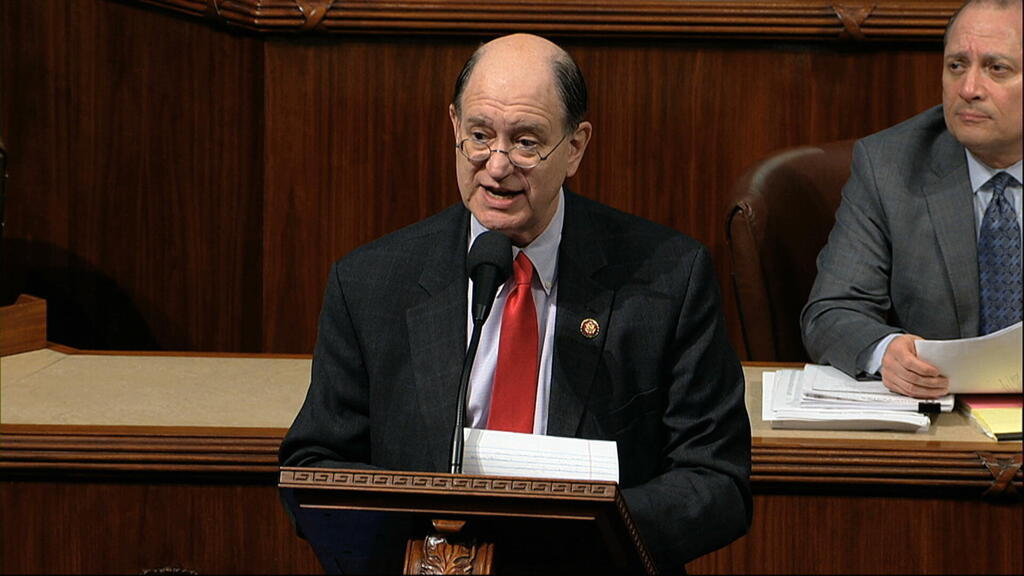
The historical comparison was even more striking. According to the polling average presented by CNN, Israel had a net favorability rating of about plus 51 points at the comparable point in President Donald Trump’s first term in 2018. By July 2026, the figure stood at roughly minus 16, a 67-point swing over eight years.
“Israel used to be a consensus issue in American politics, and that was a pro-Israeli position,” Enten said. The shift, he added, was appearing “poll after poll after poll.”
The 67-point figure represents a change in net favorability, not a 67% decline. Net favorability measures the difference between the share of respondents expressing a favorable view and the share expressing an unfavorable one.
Pew’s March 23-29 survey found that 60% of U.S. adults held an unfavorable view of Israel, compared with 37% who viewed it favorably. In spring 2022, the balance had been reversed, with 55% favorable and 42% unfavorable.
Marquette University Law School recorded a similar trend. Its April survey found 54% of U.S. adults viewed Israel unfavorably and 33% favorably. By late July, favorable views had slipped to 31%, while 55% held an unfavorable opinion.
Growing pressure over US military aid
The CNN segment also pointed to mounting opposition to U.S. military assistance for Israel. Enten cited Washington Post-Ipsos polling in which 55% of Americans said Washington should reduce or end military aid, including 51% of respondents without college degrees and 62% of college graduates.

National Security Minister Itamar Ben Gvir
(Photo: Erik Marmor/Getty Images)
For Sherman, the numbers carry particular significance because of his political record. He has served in Congress for nearly three decades, is a senior Democrat on the House Foreign Affairs Committee and has long been associated with congressional efforts to strengthen ties with Israel. His official House biography describes him as the committee’s second-ranked Democrat and lists the Israel Allies Caucus among his caucus memberships.
Sherman has repeatedly backed the U.S.-Israel alliance and argued that support for Israel must remain bipartisan. His decision to publicly warn Israelis about the erosion of American support therefore represents a notable intervention from a lawmaker who has spent much of his career defending the relationship.