


Only last week, senior national-religious rabbis appealed to Defense Minister Israel Katz, demanding that the Israel Defense Forces stop encouraging religious women to enlist. They argued that the defense establishment is conducting activities that contradict regulations granting religious women an exemption from service, and said such efforts must cease immediately.
The letter followed a separate appeal sent to principals of religious girls’ high schools and ulpanot, urging them not to allow organizations that promote enlistment in the IDF to enter educational institutions in the national-religious sector. In the letter, sent at the start of the school year, the rabbis wrote, among other things, that encouraging enlistment ‘harms the army’s ability to fight more effectively,’ and that the IDF ‘is not meant to satisfy progressive agendas, but to win, save lives and bring peace to the people of Israel.’
(Photo: Shutterstock )
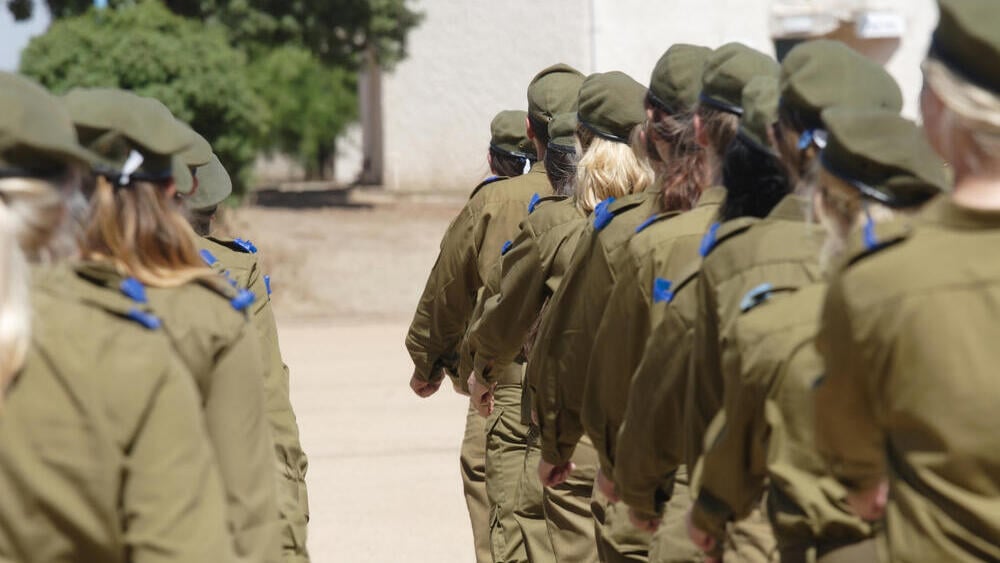
Despite these pressures, 2025 marked a new and significant record in the number of women from the religious sector enlisting in the IDF, about 4,000. By comparison, at the start of the previous decade the figure stood at fewer than 1,000. It then rose gradually, reaching about 3,000 in 2020, with a further jump recorded over the past two years of war.
Many of the women had previously received exemptions based on declarations of religious observance, but chose to waive them and enlist. The overall enlistment potential among religious women stands at about 9,000. The clear trend in recent years shows that more and more religious women prefer military service over national service, despite extensive efforts, including significant financial investment in campaigns, to steer them toward national service. In practice, they are voting with their feet.
Alongside this trend, two additional developments have emerged. First, in recent years more young women have chosen not only to enlist, but also to serve in combat roles. The IDF has opened designated tracks for them, and demand has surged.
Only recently, a platoon of dozens of religious women completed combat training in the Combat Intelligence Collection Corps and received their combat insignia. This is the first platoon of its kind ever formed, part of a special program developed by the army for recruits from several religious seminaries, while maintaining a religious lifestyle within a combat framework.
‘Religious women have proven they are full partners in carrying the burden, in regular service and in the reserves. Ultra-Orthodox young men should also step under the stretcher.’
At the same time, a broader look at the data highlights ongoing challenges. Nearly half of all women, about 45 percent, do not enlist in the IDF, a troubling figure. Most are discharged through a religious declaration exemption, with about 37 percent receiving such exemptions.
The data indicate that this is not limited to ultra-Orthodox and religious women, who together account for about 30 percent. About 40 percent of religious women do enlist. In parallel, recent years have seen growing misuse of this exemption, which can be obtained relatively easily, including by secular women. This calls for stricter enforcement by the IDF, potentially including changes to the conditions for receiving the exemption. At the same time, efforts are needed to continue increasing the number of religious women enlisting, accelerate the trend, and bring their enlistment rate closer to that of religious men, which exceeds 80 percent.
Responding to the developments, Yifat Sela, chair of the women’s movement Emunah and former CEO of Aluma, an organization that assists religious women in enlisting in the IDF, said: ‘The train has left the station, and the desire of religious women to enlist in the IDF has only grown over the years. During the war, they proved they are full partners in carrying the burden, in regular service and in the reserves.’
She added: ‘During the fighting, thousands of young religious women served, hundreds of women who had previously completed national service enlisted for a second stage of service, and alongside them mothers and wives of reservists carried the load on the home front. At a time when the draft law is under debate, I expect ultra-Orthodox young men, out of a sense of mission, even if it is frightening or challenging, to step under the stretcher of the national task and strengthen our hold on the Land of Israel, the Torah of Israel and the people of Israel. I am proud to be part of a group that sees meaningful service, military or national, as a privilege and not only an obligation.’