

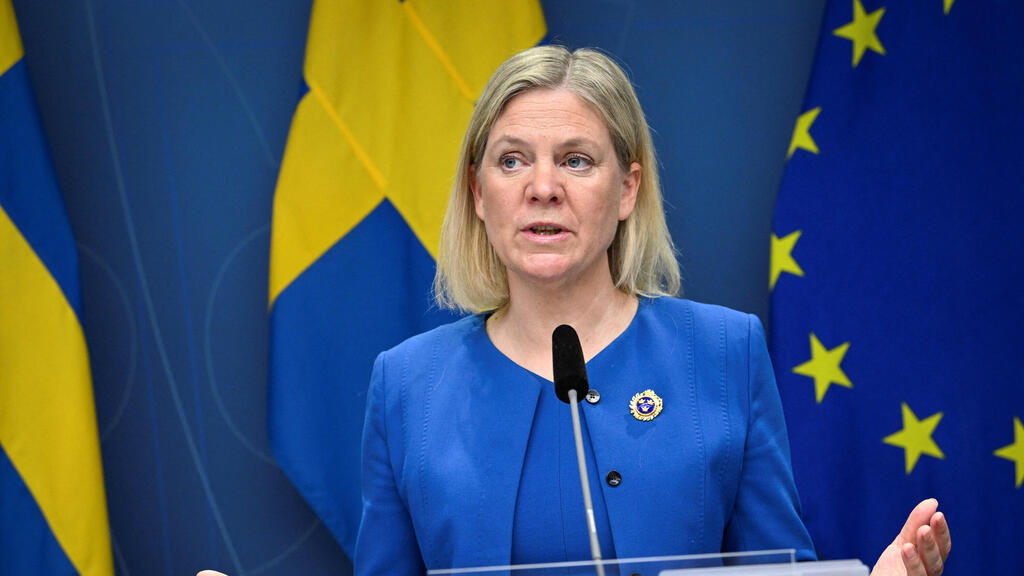
Sweden’s razor-thin election could have significant consequences for its relationship with Israel, with the center-left opposition holding a narrow lead that could return former prime minister Magdalena Andersson to power and bring a tougher Swedish approach toward Jerusalem.
With most votes counted, Andersson’s bloc was projected to win 176 of parliament’s 349 seats, compared with 173 for the right-wing bloc led by incumbent Prime Minister Ulf Kristersson. The margin remains narrow enough that neither side can yet declare victory.
For Israel, however, the difference between the two possible governments is substantial.
Kristersson’s government initially adopted a relatively supportive position toward Israel after the October 7 Hamas attack, repeatedly emphasizing Israel’s right to defend itself. Sweden also ended its core funding for UNRWA in late 2024.
Relations have cooled considerably since then. Stockholm has backed additional European Union sanctions against extremist Israeli settlers and far-right ministers, and last week joined countries moving toward or considering restrictions on trade with Israeli settlements.
An Andersson-led government would likely go further.
Her Social Democrats have called for suspending the EU-Israel Association Agreement as long as Israel fails, in their view, to meet its obligations under international law. The party also supports significantly expanding sanctions connected to Israeli settlements, banning settlement goods from Sweden and restoring funding to UNRWA.
The Social Democrats condemn Hamas and support a two-state solution, but their approach to Prime Minister Benjamin Netanyahu’s government is markedly more critical than that of Sweden’s current governing parties.
There is also historical baggage. A Social Democratic government recognized a Palestinian state in 2014, triggering a serious diplomatic crisis with Israel.
Sweden Democrats lose ground
The election is also being closely watched because of the Sweden Democrats, the nationalist party that has become one of Israel’s strongest political supporters in Sweden.
The party supports Israel’s right to self-defense, opposes Sweden’s recognition of a Palestinian state and has advocated moving the Swedish Embassy in Israel to Jerusalem, while expanding security and research cooperation between the two countries. It has also called on Israel to curb settlement expansion and violence by extremist settlers.
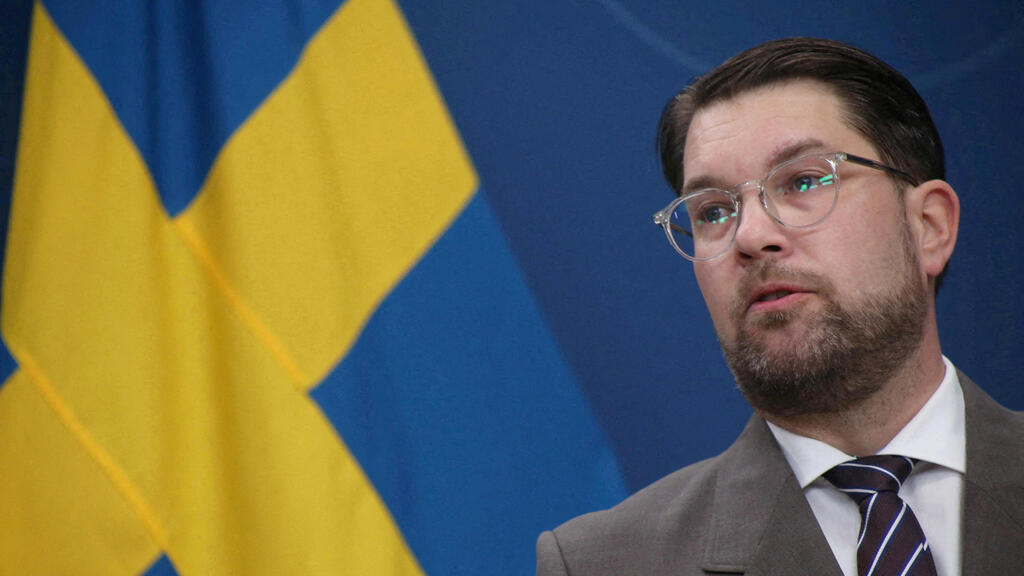
Sweden Democrats leader Jimmie Åkesson. Will he enter government for the first time?
(Photo: REUTERS/Tom Little/File Photo)
Kristersson had said before the election that, if his bloc won, he would be prepared to give Sweden Democrat politicians Cabinet posts for the first time. Since 2022, the party has supported his government from outside and wielded considerable influence over immigration, citizenship and crime policy.
But the election appears to have dealt the Sweden Democrats a setback. They were projected to receive 17.6% of the vote, dropping from second to third place behind Kristersson’s Moderates after winning 20.5% in 2022.
The party’s roots remain deeply controversial in Sweden. It emerged in the 1980s from circles that included far-right and neo-Nazi activists, though its current leadership has spent years attempting to distance the party from that history.
Andersson made the prospect of the Sweden Democrats entering government one of the central issues of her campaign, warning that the election could put a party founded by neo-Nazis into Sweden’s Cabinet for the first time.
Even if Andersson’s bloc retains its lead, forming a government will not necessarily be easy. Her prospective coalition partners disagree sharply on economic policy and other issues, meaning a narrow victory could still produce lengthy negotiations or another minority government.
For Jerusalem, the outcome will nevertheless be closely watched: a Kristersson victory would likely preserve the more favorable of Sweden’s two possible governing blocs, while an Andersson comeback could add another influential European government pressing Israel over settlements, Gaza and its broader policies toward the Palestinians.