

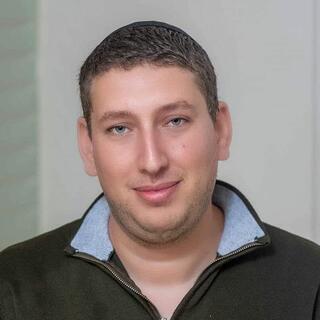
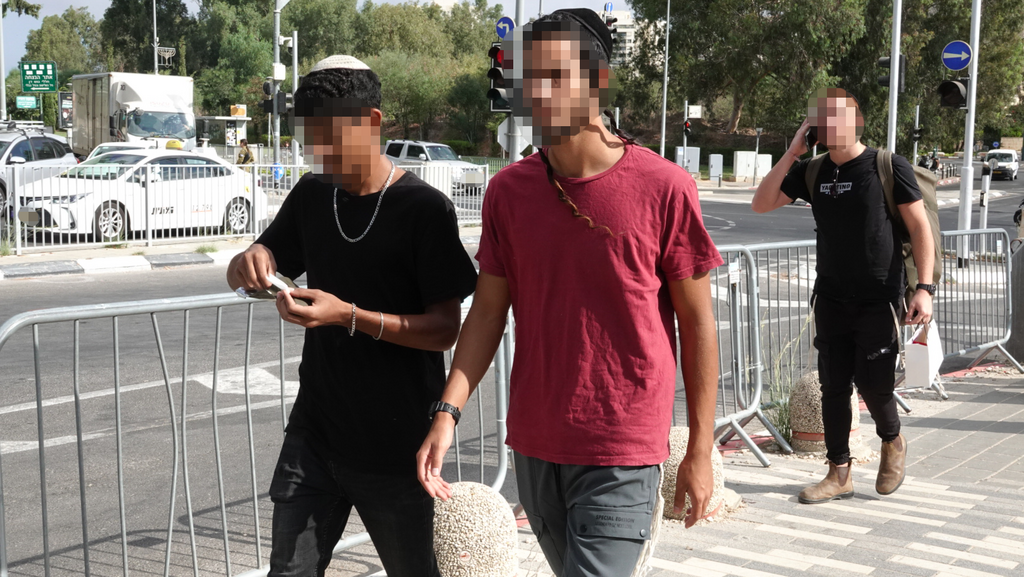
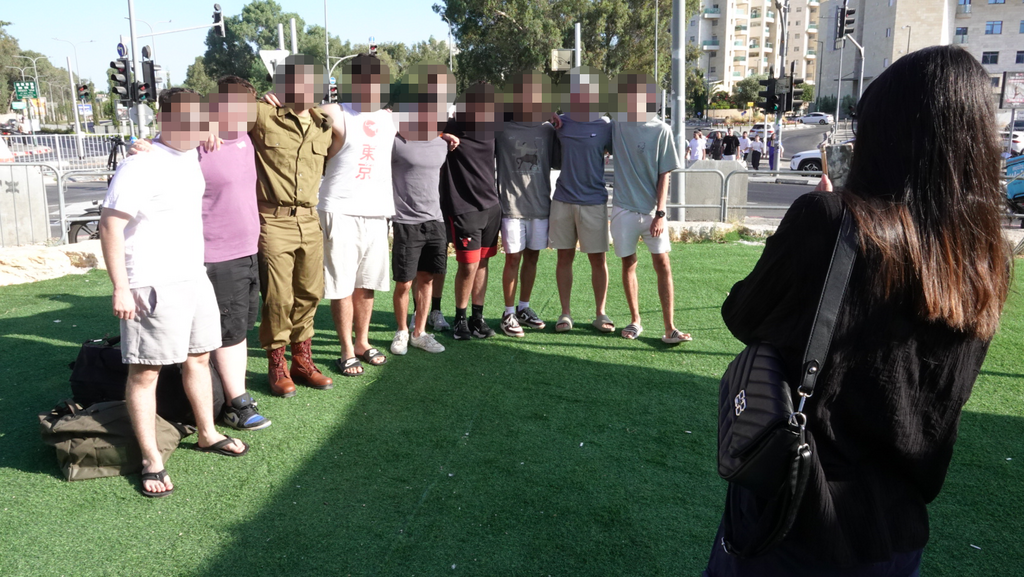
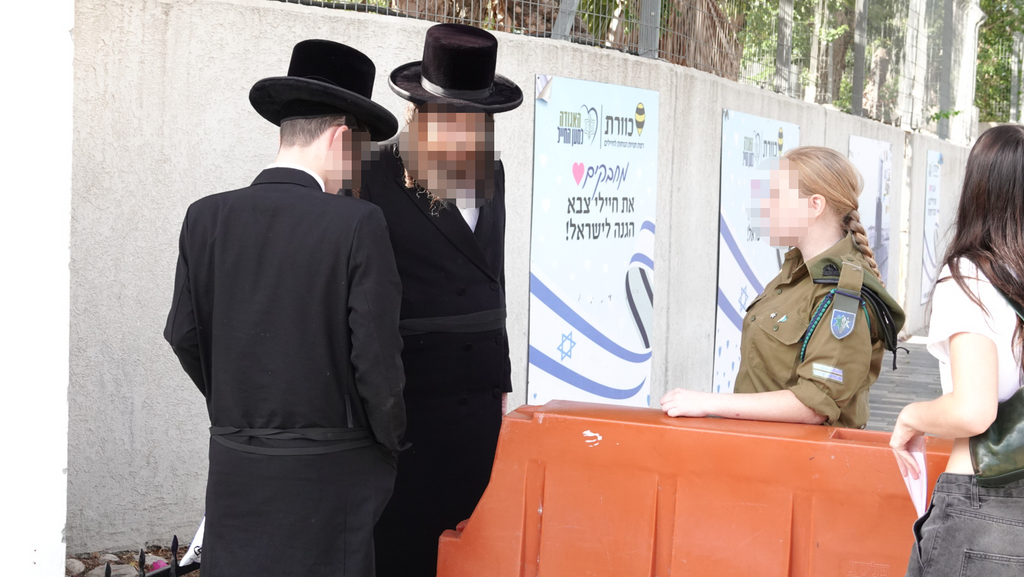
Against the backdrop of one of Israel’s most divisive debates, dozens of ultra-Orthodox Jewish men reported Monday morning to the IDF’s Tel Hashomer induction center, where they received uniforms and began their military journey in units tailored for Haredi recruits.
The recruits were assigned to battalions including Netzah Yehuda, Hashmonaim, and others. For many, the day was emotional but sensitive. Several declined interviews or photos, telling reporters at the entrance: “It’s sensitive for us, please don’t film.”

Yehoyada Cohen, who enlisted in the Hashmonaim infantry brigade, explained his decision: “It’s our time. Soldiers gave everything they had to enlist, and now it’s our turn. I hope the army will allow us to defend Israel while preserving our Haredi way of life.”
(Photo: Shaul Golan)
His father, David, supported him: “Those who study Torah should do so. But if someone has finished that path, they should also share in this mitzvah. It’s good that the army created frameworks that allow Haredim to serve while keeping religious observance. As parents, we want to trust that our sons will be protected in a framework that promises to respect their lifestyle.”
David, 19, a graduate of the Haredi pre-military academy Nitzotz Ba’emuna, joined the Netzah Yehuda infantry battalion. “For the past two years, I wasn’t studying in yeshiva anymore, and I felt it was time to contribute. I’m excited to be a combat soldier and give of myself for the people of Israel,” he said.
(Photo: Shaul Golan)
Parents expressed mixed emotions. One father admitted, “Army and religion don’t always go together. It’s not simple, not easy. But today, there are some frameworks that make it possible. The most important thing is support from home. This was his decision, and we support him. May God protect them.”
Daniel Yekuel, another recruit to Hashmonaim, was accompanied by his parents, who said, “We didn’t know if this would happen or not. But it was his wish, and we accepted it. His yeshiva head gave his approval, too. We hope God protects all the soldiers, especially during wartime.”

(Photo: Shaul Golan)
For Michal, whose second son enlisted in Netzah Yehuda, the moment was deeply moving: “We are very proud. I believe in the way of combining Torah, work, and serving the state. We don’t want to be on the sidelines—we want to be part of our people and their victory.”
The “Shomer Israel” organization, which supports Haredi IDF frameworks, said in a statement: “We are proud of every recruit who chooses to combine Torah observance with contributing to Israel’s security. They prove one can be both Haredi and a combat soldier.”
(Photo: Shaul Golan)
Unlike previous ultra-Orthodox draft days, there were no protests by extremist Haredi factions, who in the past tried to disrupt enlistment events. Military officials confirmed earlier Monday that the IDF shelved a plan to establish a dedicated draft office for Haredim, fearing it would become a magnet for demonstrations.
Former minister Yoaz Hendel, chairman of the reservists’ movement, criticized Haredi leadership: “They are tearing us apart, and the government enables it. Instead of proudly supporting these young men, leaders fight against them, and the IDF is forced to find ways to shield them.”