

Exiled Iranian Crown Prince Reza Pahlavi said on Thursday that a future Iran under his leadership would immediately recognize Israel, expand the Abraham Accords into what he called the “Cyrus Accords” and end Iran’s military nuclear program, laying out an Israel-centered vision for a post-Islamic Republic Iran.
In a video statement released this week, Pahlavi said a post-revolutionary Iran would pursue peace with its neighbors and rejoin the international community after decades of isolation. He said Iran under the current clerical leadership has become synonymous abroad with “terrorism, extremism and poverty,” but argued that a different Iran could quickly emerge if the Islamic Republic collapses.
Exiled Iranian Crown Prince Reza Pahlavi lays out his vision for a post-Islamic Republic Iran


“The real Iran is a different Iran — a beautiful, peace-loving and flourishing Iran,” Pahlavi said. “It is the Iran that existed before the Islamic Republic, and it is the Iran that will rise again from its ashes the day the Islamic Republic falls.”
Pahlavi, 65, the son of Iran’s last shah, has lived in exile for nearly five decades and is seen by some opposition supporters as a symbolic leader of the protest movement against the ruling clerics. He stressed that his vision was practical rather than ideological, centered on national interest, stability and cooperation.
On security and foreign policy, Pahlavi said a free Iran would immediately terminate its military nuclear program and halt support for terrorist groups across the region. He said Iran would work with regional and global partners to combat terrorism, organized crime, drug trafficking and Islamist extremism, and would act as what he described as a stabilizing force in the Middle East.
Addressing relations with Israel, Pahlavi said that “the State of Israel will be recognized immediately” and Iran would seek to broaden the U.S.-brokered Abraham Accords into the “Cyrus Accords” linking a free Iran with Israel and Arab states. He said the new framework would be based on mutual recognition, sovereignty and national interest.
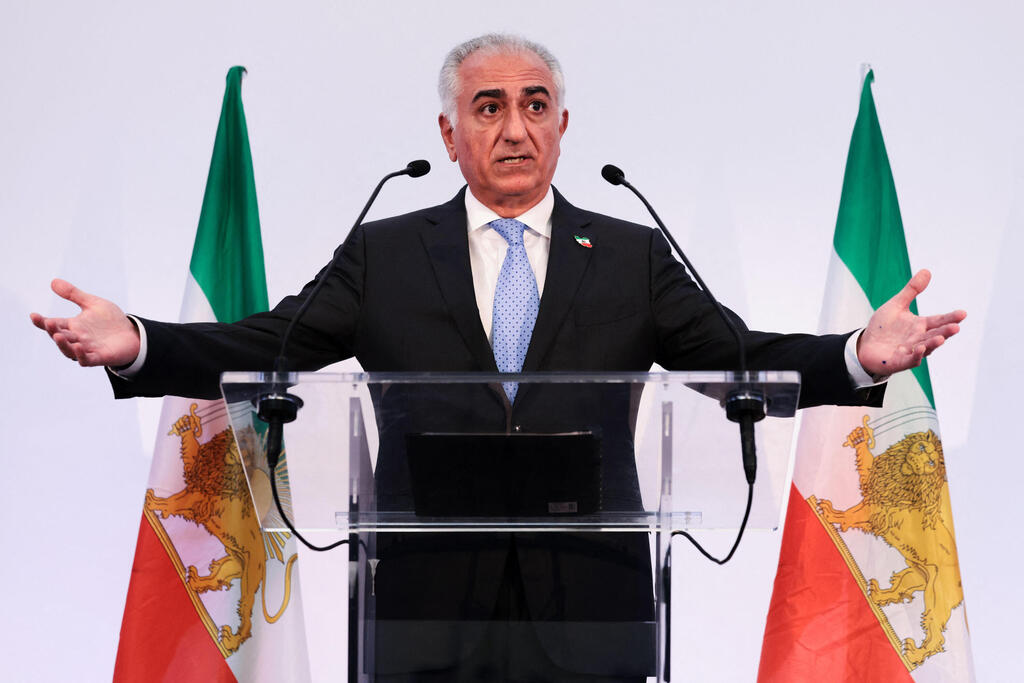
Iranian Crown Prince Reza Pahlavi
(Photo: JOEL SAGET / AFP)
In diplomacy, Pahlavi said relations with the United States would be normalized, describing a future partnership with Washington as friendly and strategic. He also outlined economic reforms, including opening Iran’s economy to trade, investment and innovation, adopting international standards of transparency, banning money laundering and dismantling organized corruption.
Pahlavi said Iran’s vast oil and gas reserves could position the country as a reliable energy supplier to what he called the free world, replacing isolation with opportunity.
“This is not an abstract vision,” he said. “The fall of the Islamic Republic and the establishment of a secular democratic government in Iran will not only restore dignity to my people, it will benefit the region and the world. A free Iran will be a force for peace, for prosperity, and for partnership.”
Still, U.S. President Donald Trump publicly questioned whether Pahlavi could actually assume power in Iran. Speaking to Reuters, Trump described Pahlavi as “a very nice" person but said he was uncertain whether Iranians inside the country would accept him as a leader.
“I don’t know how he’d play within his own country,” Trump said. “I don’t know whether or not his country would accept his leadership, and certainly if they would, that would be fine with me. And we really aren’t up to that point yet.”