

Europe is watching the end of Russia’s parliamentary election on Sunday with growing concern, not because there is much uncertainty over who will emerge victorious, but because of fears over what may follow.
Western intelligence officials believe Russian President Vladimir Putin is laying the groundwork for a further escalation of the war in Ukraine, alongside expanded Russian activity against European states through cyberattacks, sabotage, drones and other measures below the threshold of direct military confrontation.
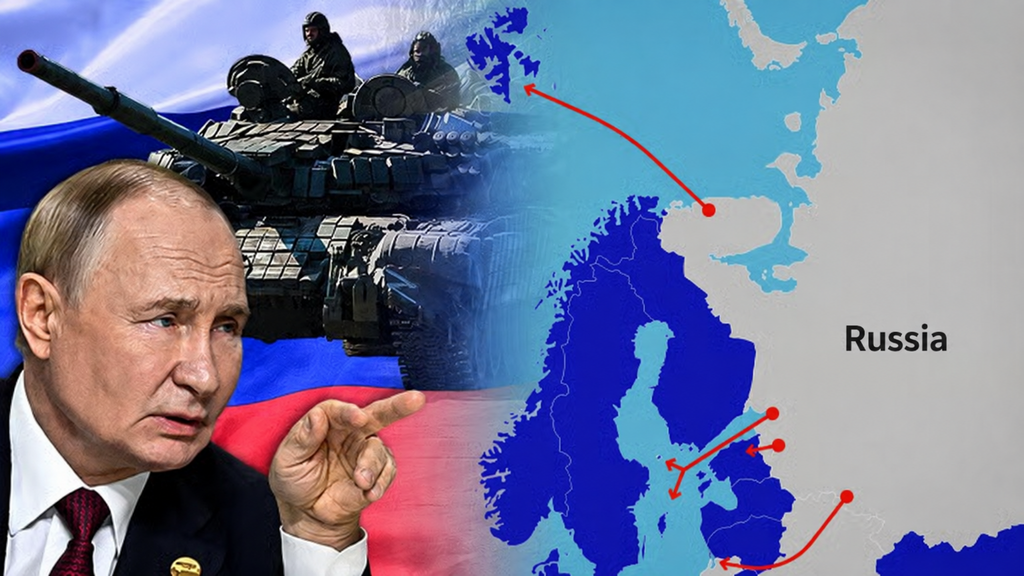
Voting began Friday and is being held over three days in the first State Duma election since Russia launched its full-scale invasion of Ukraine in February 2022. More than 111 million people are eligible to vote, but most prominent opponents of the war are absent from the ballot.
Putin’s ruling United Russia party is expected to retain control of the 450-seat Duma, while the federal list of the liberal Yabloko party, which has publicly criticized the war, was barred from the election. Parliamentary voting is also being held for the first time in occupied parts of Ukraine’s Donetsk, Luhansk, Kherson and Zaporizhzhia regions, a move condemned as illegal by Kyiv and the European Union.
For the Kremlin, the expected result carries significance beyond the distribution of parliamentary seats. Putin has portrayed the vote as a demonstration of public backing for the war, saying before polling began that it would show that “millions of people stand behind our fighters.”
Western officials and analysts believe a large victory for the ruling party could be presented by the Kremlin as evidence of public legitimacy for continuing the war, and potentially for steps it preferred not to take before Russians went to the polls. Russian state media, however, has shown little of the anxiety that has characterized discussion in Europe in recent days.
At the center of those concerns is the possibility of a new wave of mobilization. The British Telegraph reported, citing Western intelligence officials, that administrative preparations are being observed that would allow the Kremlin to rapidly expand recruitment if such a decision is made.
One intelligence source described preparations intended to ensure the move could be implemented “once a decision is made,” while Western officials believe Moscow is already increasing what they describe as “quiet mobilization,” expanding contract recruitment and identifying populations that can be pressured to enlist.
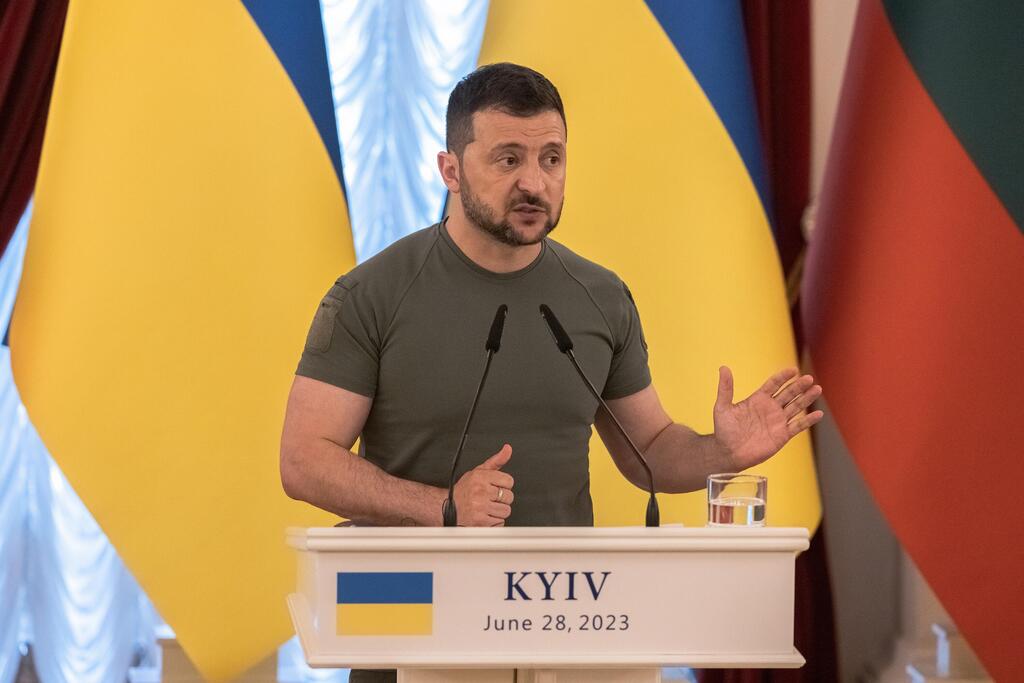
Volodymyr Zelensky
(Photo: Roman Pilipey/Getty Images)
Ukrainian President Volodymyr Zelensky warned last month that Ukrainian intelligence believes Russia plans to mobilize another 300,000 people after the September election. Ukrainian intelligence agencies later assessed that Russia’s General Staff had prepared a scenario involving 300,000 recruits this year and another 300,000 in 2027. The Kremlin has denied that a decision on another mobilization has been made, and Putin has said that “there is no scenario today that would require a mobilization.”
Concern has also reached parts of Russia’s elite. Bloomberg reported, in an account cited by independent Russian outlet Meduza, that senior Russian officials have in recent months sought to open foreign bank accounts and move assets abroad amid rumors of another mobilization. According to the report, some employees of military recruitment offices have done the same and advised relatives to leave the country.
The Telegraph reported, citing intelligence sources, that preparations for escalation are being driven in part by the relative deadlock on the front and heavy Russian military losses. Those sources estimated Russian casualties at about 1.5 million, including roughly 500,000 killed, figures that cannot be independently verified and are higher than some other Western estimates. European officials fear additional manpower would not necessarily be sent only to Ukraine, but could also allow Russia to expand forces and bases along its western frontier with NATO states.
The scenario worrying NATO: What if the Suwalki Gap is blocked?
Concern is also focused on one of the most sensitive areas on NATO’s eastern flank: the Suwalki Gap, the narrow stretch between Poland and Lithuania that separates Belarus from Russia’s Kaliningrad exclave and provides the Baltic states with their only land connection to the rest of NATO.
Belarus this week began four days of military exercises near its borders with Poland and Lithuania, involving mechanized forces and tanks and training in border defense and counter-drone operations. There is no public indication that Moscow and Minsk have decided to attempt to seize or close the corridor, but the scenario is openly discussed in NATO countries.
The British government was asked in Parliament this week whether it was prepared for a scenario in which Belarus and Kaliningrad sought to “close the Suwalki Gap,” and responded that Britain makes high-readiness forces available to NATO that can be deployed under the alliance’s defense plans.
At the same time, NATO this week published updated resilience requirements for member states, calling on them to prepare for physical attacks or sabotage against critical infrastructure, cyberattacks, population movements and disruptions to food, water, energy and transport during crises or conflict. NATO said the measures reflect a worsening security environment. The preparations fall under Article 3 of the North Atlantic Treaty, which deals with national resilience and defensive capacity, rather than indicating any imminent invocation of Article 5, NATO’s collective-defense clause.
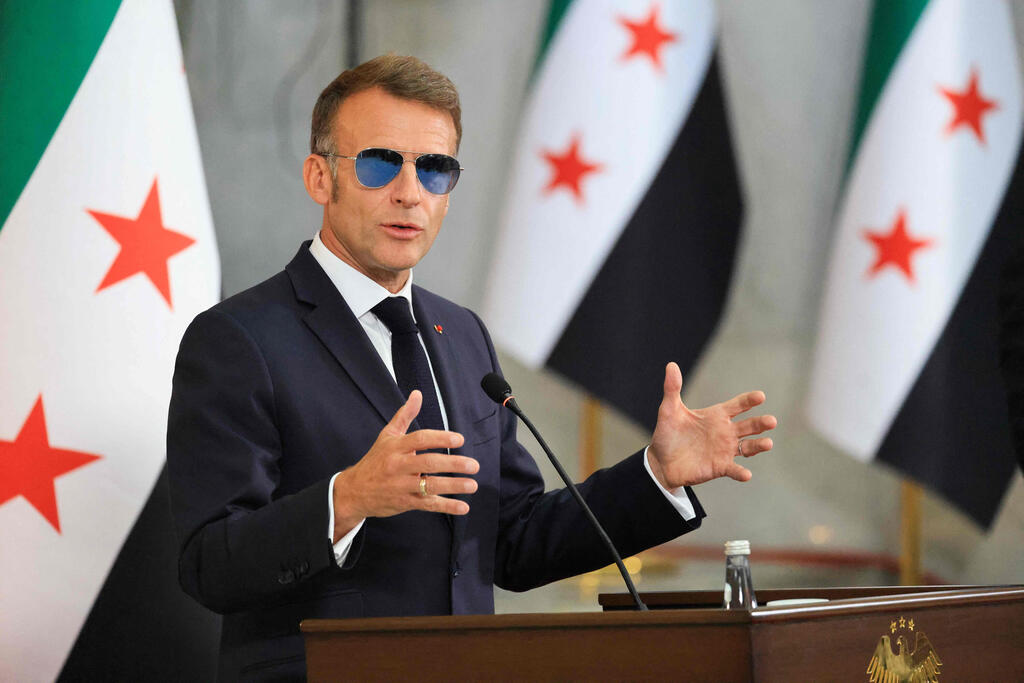
French President Emmanuel Macron
(Photo: Ludovic MARIN / POOL / AFP)
The warnings are already translating into action. French President Emmanuel Macron convened political leaders on Friday for several hours of briefings with senior intelligence and security officials. Afterward, he said he had ordered the government to draw up a plan to protect critical infrastructure and sensitive defense-industry sites from drones and cyberattacks.
“In recent weeks, the threat, particularly the Russian hybrid threat, against Europeans and France has intensified,” Macron said. He accused Moscow of trying to frighten European countries into reducing their support for Kyiv. “We are not intimidated,” he said, adding that Europe’s security “today and tomorrow” is also being decided in Ukraine.
Macron cited the threats posed by drones and cyberattacks and said France would mobilize government agencies to protect sensitive infrastructure. Guillaume Lacroix, one of the political leaders who attended the meeting at the Elysee Palace, later described the severity of the briefings, saying that after nearly three hours of discussions with the president and security services he left feeling “dizzy” at the scale of the situation in Ukraine and the Middle East and the risks facing France.
The tension is particularly evident in Poland, where military aircraft were activated again Saturday morning in response to Russian strikes on Ukraine. Poland’s military said it had launched “preventive operations” to protect the country’s airspace, while ground-based air-defense and radar systems were placed on high readiness. The military later said the operation had ended and that no violation of Polish airspace had been detected.
Saturday’s alert came only days after a similar incident in which Poland scrambled fighter jets and allied aircraft during another large Russian attack on Ukraine. Warsaw has stepped up F-16 and helicopter activity, strengthened its air-defense and rapid-response systems and prepared its forces to respond if drones cross the border.
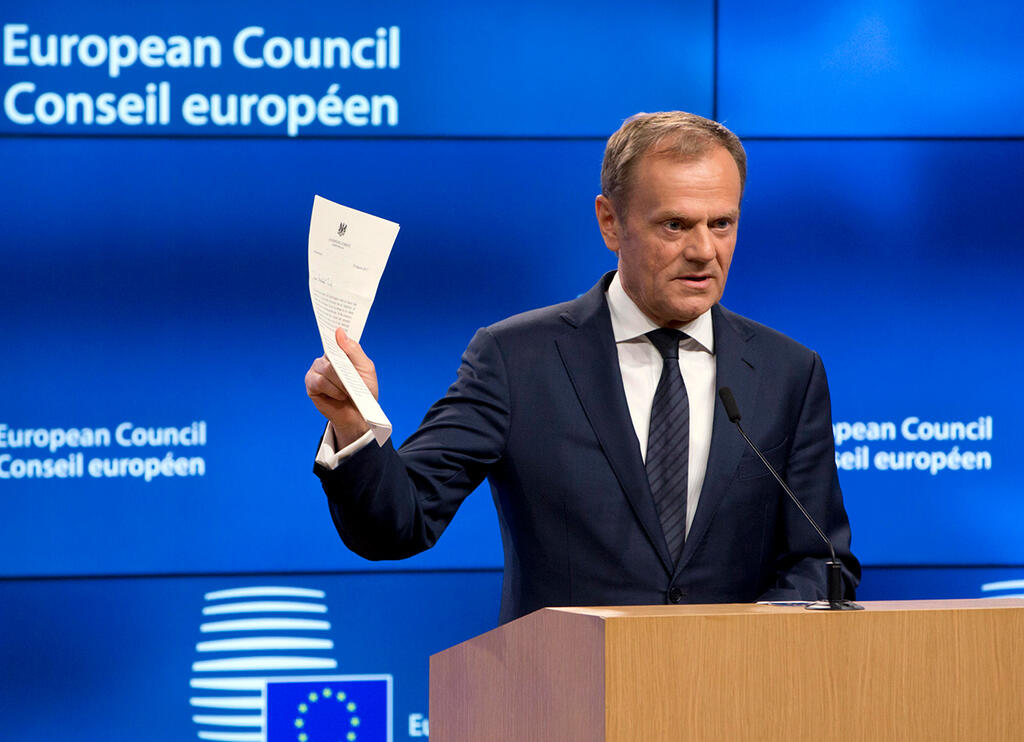
Donald Tusk
(Photo: AP)
Polish Prime Minister Donald Tusk has gone further, warning that intelligence held by Warsaw and its allies indicates Russia could attempt drone or missile attacks against NATO states supporting Ukraine and then portray them as “accidents.” Tusk said such attacks could be intended to test NATO’s response and its willingness to use collective-defense mechanisms.
Tusk also announced that Poland had joined a coalition with Ukraine and other states to develop an anti-ballistic missile system. He said Warsaw had prepared a new “significant” aid package for Kyiv but did not disclose its scope.
Washington also made a significant move this weekend, with the U.S. State Department approving a possible $2.68 billion foreign military sale to Ukraine focused on upgrading its air defenses. According to the notification to Congress, the package could include S-300 clone missiles, GAM-67 missiles, launcher upgrades and counter-drone radars.
The proposed sale would not be a conventional direct U.S. aid package. If completed, it would be financed through a combination of European contributions and Foreign Military Financing appropriated under the previous Biden administration. The sale remains subject to congressional review.
The United States has also moved toward approving Germany’s transfer of 10 U.S.-made Patriot interceptors to Ukraine, according to a State Department notification submitted to Congress.
U.S. President Donald Trump, meanwhile, increased economic pressure on Moscow on Friday by signing sweeping new Russia sanctions legislation. The law targets Russia’s energy and defense sectors and its “shadow fleet” of tankers used to circumvent sanctions, while giving the president authority to impose tariffs of up to 100% on major buyers of Russian energy.
At the same time, the US reviews its military footprint in Europe
Yet even as Washington continues to support Kyiv, European governments are watching uncertainty over the future U.S. military presence on the continent.
The Pentagon has been conducting a broad review of U.S. force deployments in Europe. NATO’s Supreme Allied Commander Europe, U.S. Air Force Gen. Alexus Grynkewich, took part Friday in a briefing for Pentagon officials on options under consideration. A document seen by Reuters showed that the review is expected to produce at least four alternatives on future deployment plans.

Trump
(Photo: Brendan SMIALOWSKI / AFP)
The Pentagon has not announced that U.S. forces will be reduced. Defense Secretary Pete Hegseth has said the review is intended to push Europe to assume greater responsibility for its defense while ensuring the U.S. military remains capable of meeting commitments elsewhere. About 80,000 U.S. troops are currently deployed in Europe.
The review comes as European countries confront a growing series of so-called gray-zone incidents. This week, NATO fighter jets shot down a drone that entered Lithuanian airspace, while Denmark said a Russian frigate fired two flares toward a Danish military helicopter that was photographing it in international waters, with one passing within meters of the aircraft. Russia accused the Danish helicopter of dangerous maneuvers near its ship.
Denmark responded by moving forward a roughly $276 million aid package for Ukraine, focused largely on air defense. Danish Defense Minister Jeppe Bruus said that if Moscow’s aim was to intimidate Denmark, the result would instead be faster support for Kyiv.
Latvian President Edgars Rinkēvičs also warned this weekend that large parts of Europe remain poorly prepared for the drone and missile warfare demonstrated in Ukraine. He said gaps remain in air defense, counter-drone capabilities and protection against ballistic missiles, while hybrid threats including sabotage, cyberattacks and airspace violations are already a present-day reality.