

The IDF on Thursday took the unusual step of publicly contradicting an Israel Police announcement that security forces had discovered a tunnel near the West Bank city of Qalqilya, saying an investigation found two deep shafts but no underground passage connecting them.
The IDF also sharply criticized the previous day's announcement, describing reports that a tunnel had been uncovered as “official and irresponsible” statements.
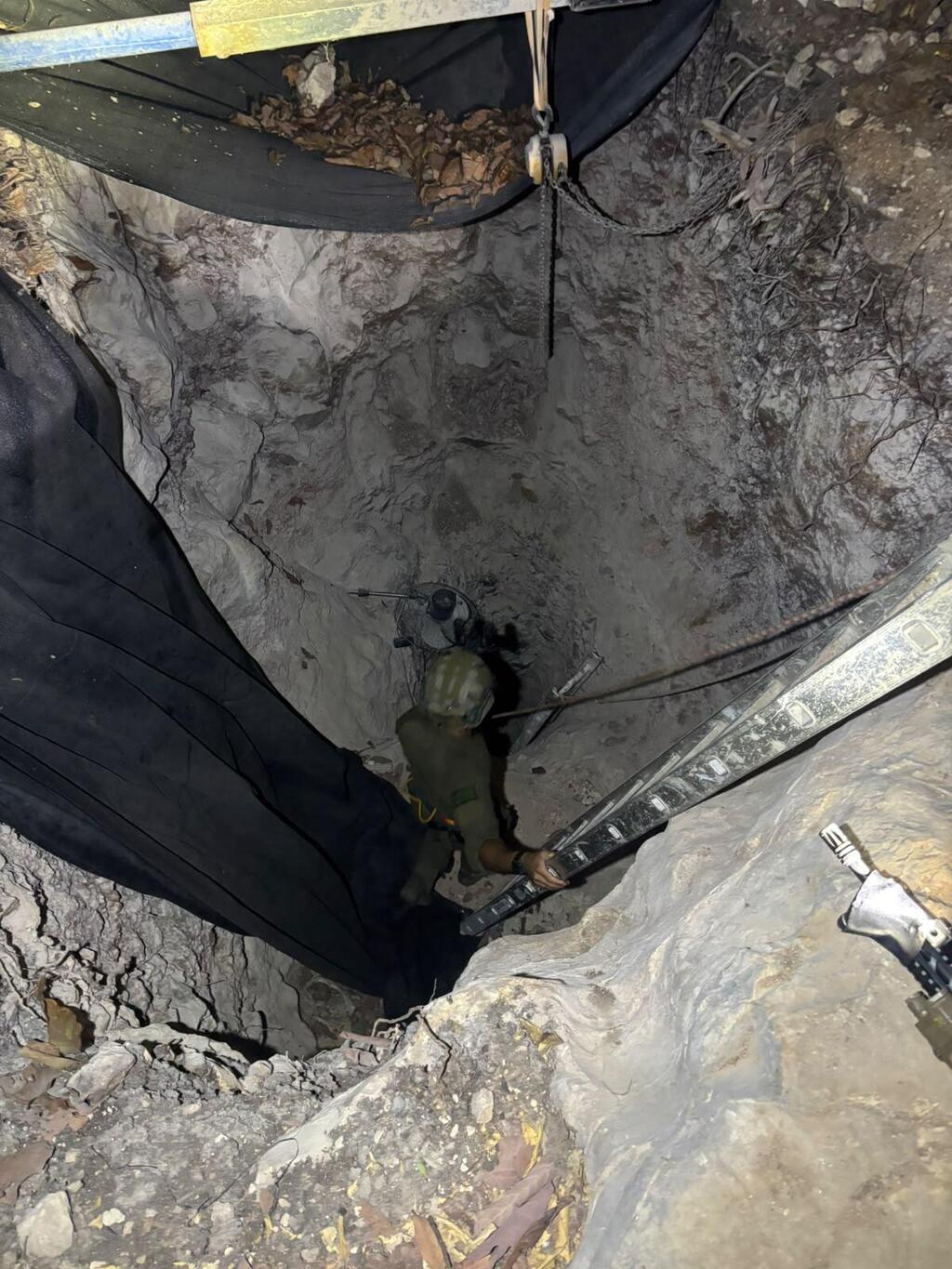
Police said Wednesday that officers and Border Police forces operating in Qalqilya had discovered a “tunnel in the process of being dug” that was at least 25 meters, or 82 feet, deep and contained numerous weapons. Police also said a second tunnel had been found in the initial stages of excavation and that four suspects had been arrested.
The military presented a substantially different account Thursday.
According to the IDF, troops, Border Police officers and Israel Police personnel operating under the Ephraim Brigade entered Qalqilya overnight following intelligence about weapons in the sector. They discovered two shafts about 12 meters, or 39 feet, deep and found an M16 rifle, a hunting rifle, a handgun and ammunition nearby. The weapons were confiscated.
Combat engineers from Yahalom, the IDF's elite unit specializing in tunnels and other underground threats, were called to examine the shafts.
“Contrary to official and irresponsible statements that emerged on the matter, following an examination of the shafts, the presence of a tunnel route was ruled out. It was also determined that the shafts were not located in proximity to the area of the security barrier,” the military said.
The IDF did not name the police in its criticism, but the statement was a clear reference to the police announcement issued the previous night.
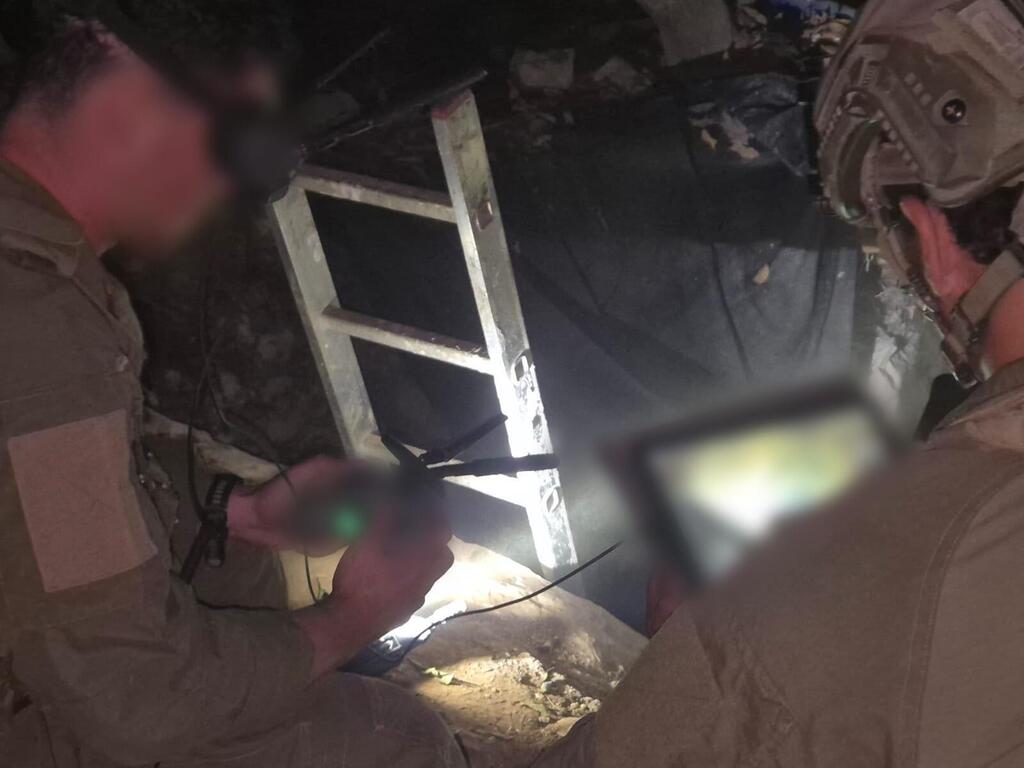
(Photo: IDF)
The “seam zone” refers to the area along Israel's West Bank security barrier, separating much of the West Bank from Israel. Qalqilya lies immediately east of the barrier and close to several communities inside central Israel, making reports of a possible underground infiltration route particularly sensitive in the aftermath of the Hamas-led Oct. 7, 2023, attack on southern Israel.
Security forces arrested four people suspected of involvement in terrorist activity during the operation. The detention of two Israeli citizens was extended until Tuesday, while two Palestinian suspects were expected to appear before a military court.
Security forces were continuing extensive searches in the area Thursday for additional shafts and weapons, the IDF said.
‘A tunnel here would change everything’
Before the military issued its clarification, the police announcement had prompted alarm among residents and local officials in the southern Sharon region, which lies just across the security barrier from Qalqilya.
“I didn't fall out of my metaphorical chair last night when they announced they had found a tunnel or weapons cave in Qalqilya,” said R., a farmer from one of the Israeli communities near the seam zone. “It even brought a cynical smile to my face.”
“It was only a matter of time and luck,” he added. “We're lucky they caught it in time, but everyone who said in the past that we were exaggerating when we assessed that they were planning something here too should apologize today.”
Roni, a student from northern Israel who lives in Kfar Saba, an Israeli city immediately west of Qalqilya, said the initial report had frightened her.
“This is supposedly a quiet city in central Israel,” she said. “You think it isn't like the north, where Hezbollah is on the border — or at least was before the war — and suddenly you discover that terrorism is here and raising its head. Now is the time to stop it before it's too late.”
Eran Beck, a farmer from Moshav Tzofit, about 1.5 kilometers, or less than a mile, from Qalqilya, said he had not been surprised either.
“Everyone expected it, and it shows us that what seems far away is getting closer quickly,” Beck said before the IDF ruled out the tunnel. “Who knows if there aren't more tunnels?”
He said several Israeli communities are only a short distance from Qalqilya and expressed concern that an armed cell crossing the barrier could reach communities such as Nir Eliyahu or Neve Yamin within minutes.
The residents' comments reflected the anxiety generated by the police announcement, even though the military later determined that no tunnel had been found.
Local officials said they, too, initially learned about the reported discovery through the media before receiving additional information from security officials.
Kfar Saba Mayor Rafi Saar, who also heads a forum representing Israeli communities along the seam zone, urged residents not to panic.
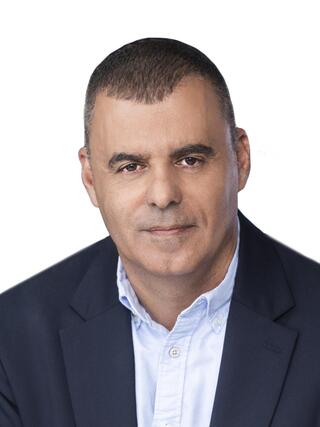 Kfar Saba Mayor Rafi SaarPhoto: Reuven Kapuchinsky
“It is important for me to reassure the residents of Kfar Saba,” Saar said. “We are prepared, we are in continuous contact with the security forces and there is no change in the instructions. There is no reason for panic. We are continuing our routine responsibly and calmly.”
Saar said he first learned of the incident from media reports and later spoke with military officials in the area, who told him that the situation differed from the initial description.
“From what I understood, it's more of a pit than a tunnel,” he said.
But Saar said the possibility of an underground infiltration from Qalqilya remains part of local emergency planning.
“The scenario of a tunnel beginning in Qalqilya and terrorists emerging from it in Kfar Saba is a scenario we think about all the time, just like a drone scenario or an infiltration above ground,” he said. “A tunnel here, in a seam-zone community, would change everything.”
Saar said residents should remain calm but vigilant and argued that communities along the West Bank barrier require security resources comparable to those provided to Israeli communities near the Gaza border.
“The state must treat us like the Gaza border communities,” he said. “That includes increasing the resources, as I said even before Oct. 7. We warned about this in the past.”
He said security in the area had improved because of increased military activity but called for additional equipment and resources throughout the region.
Local officials criticize conflicting accounts
Oshrat Gani Gonen, head of the Drom HaSharon Regional Council, welcomed the IDF's conclusion that no tunnel had been found but said the sharply conflicting official announcements exposed a broader coordination problem.
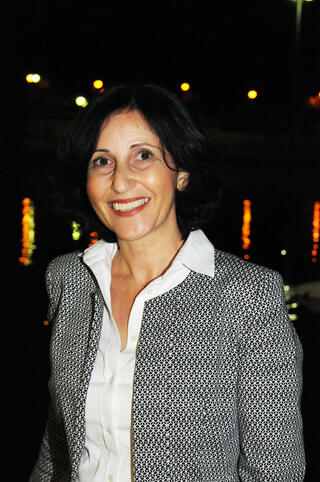 Drom HaSharon Regional Council head Oshrat Gani GonenPhoto: Yogev Amrani
“First of all, we're very happy that the suspicion of a tunnel was ruled out,” she said. “I wish every security concern troubling our residents ended this way.”
“But we cannot ignore what happened here over the past 24 hours,” she added. “Yesterday, an official Israel Police announcement said there was a tunnel 25 meters deep. Today, after an examination by the IDF and Yahalom, we're getting a different picture: two shafts, weapons, four suspects in terrorist activity, but no tunnel route and no proximity to the seam zone.”
Gani Gonen said the discrepancy demonstrated the need for closer coordination among the military, police, local authorities, community security coordinators and civilian emergency squads operating near the West Bank barrier.
“When two Israeli security bodies give the public such different information about the same incident, it only illustrates what we have been saying for years: Along the seam zone, there must be full coordination,” she said. “Everyone needs to see the same picture, share information and work as one system.”
She stressed that her earlier comments on the incident had been based on the official information released by police.
“Once updated information was received from the IDF, it is right and important to set the record straight,” she said, adding that the discrepancy between the two announcements required examination and better coordination, particularly in such a sensitive security area.
Hod Hasharon Mayor Amir Kochavi, meanwhile, said the incident should be viewed as part of a broader problem involving Palestinians crossing through gaps in the West Bank security barrier.
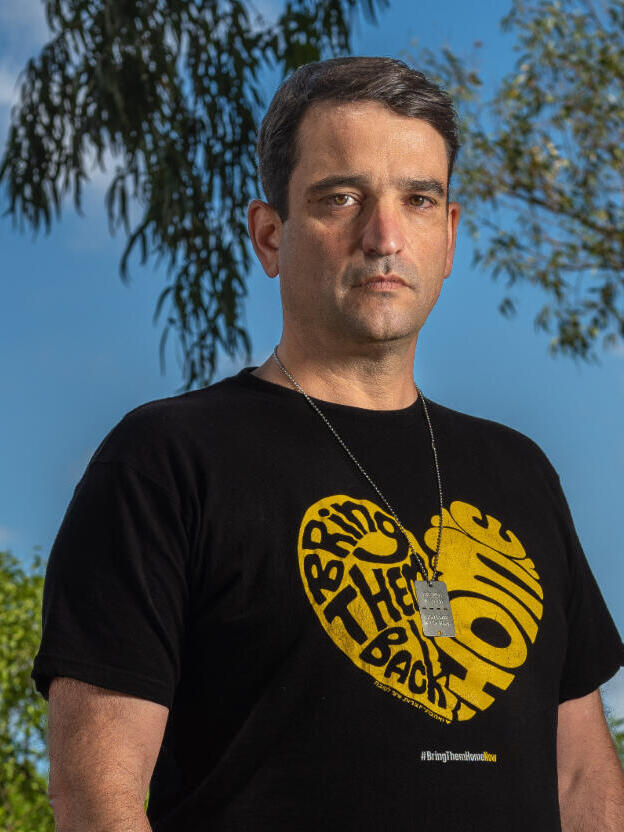 Hod Hasharon Mayor Amir Kochavi Photo: Yuval Chen
“The state allows the illegal and unregulated passage of Palestinians every day,” Kochavi said. “Most come here to work, and that is supposedly good for the state because of the labor shortage, so it turns a blind eye. Most Palestinians who cross the fence come to earn a living, but there are also those involved in crime and those planning the next attack.”
Kochavi called for a coherent government policy on crossings, whether through tighter restrictions, regulated entry into Israel or a combination of the two.
“It's good that they uncovered what they uncovered, but you have to look at everything holistically,” he said. “When the state turns a blind eye, only bad things can happen.”