

On December 8, 2024, exactly one year ago, the “Syrian rebels”, the opposition movement at the time, completed their takeover of Damascus, marking the final collapse of President Bashar Assad’s regime. In the year since, Abu Mohammad al-Julani, then known as the leader of the rebel group Hay'at Tahrir al-Sham, has assumed the civilian name Ahmad al-Sharaa and become Syria’s new president.
Over the past year, he has traveled the world, garnered international support, including from U.S. President Donald Trump, and spoken publicly about possible negotiations with Israel. At the same time, he has faced accusations from various groups of involvement in bloodshed across Syria, including massacres of Alawites in coastal cities and of Druze in the Sweida province. These are the major milestones that have defined al-Sharaa’s first year in power.
Syria Marks One Year Since Assad’s Fall: The Victories and Setbacks of President al-Sharaa


Leadership changes
Immediately after the fall of the Assad regime, the rebel forces that had taken control of Syria announced the formation of a transitional government to serve for three months, until March 1, 2025. Mohammed al-Bashir, who had headed the rebels’ “Salvation Government” in Idlib in northern Syria, was appointed as interim prime minister. Ahmad al-Sharaa formally assumed the presidency only at the end of January 2025, after two months of unofficial leadership. The new regime then declared him “interim president” — a title that, in retrospect, appears to be permanent.
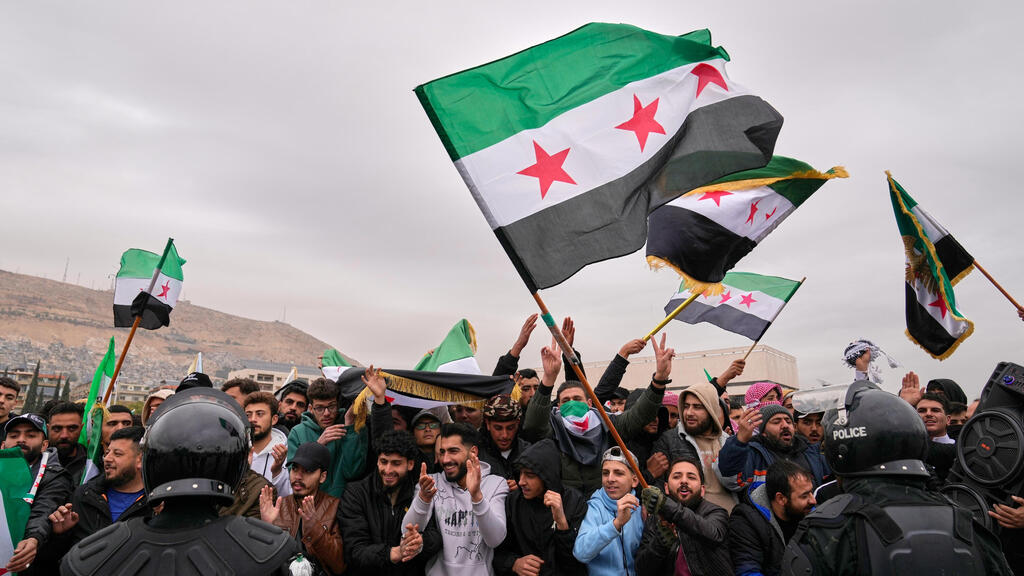
Al-Sharaa’s appointment was announced at a special ceremony in Damascus, where he outlined the priorities of his new administration: “Filling the power vacuum, preserving civil peace, building state institutions, establishing a developmental economic structure, and restoring Syria’s international and regional standing.” At the end of March, al-Sharaa announced the formation of a new government, retaining only two ministers from the previous cabinet — Foreign Minister Asaad al-Shaibani and Defense Minister Murhaf Abu Qasra.
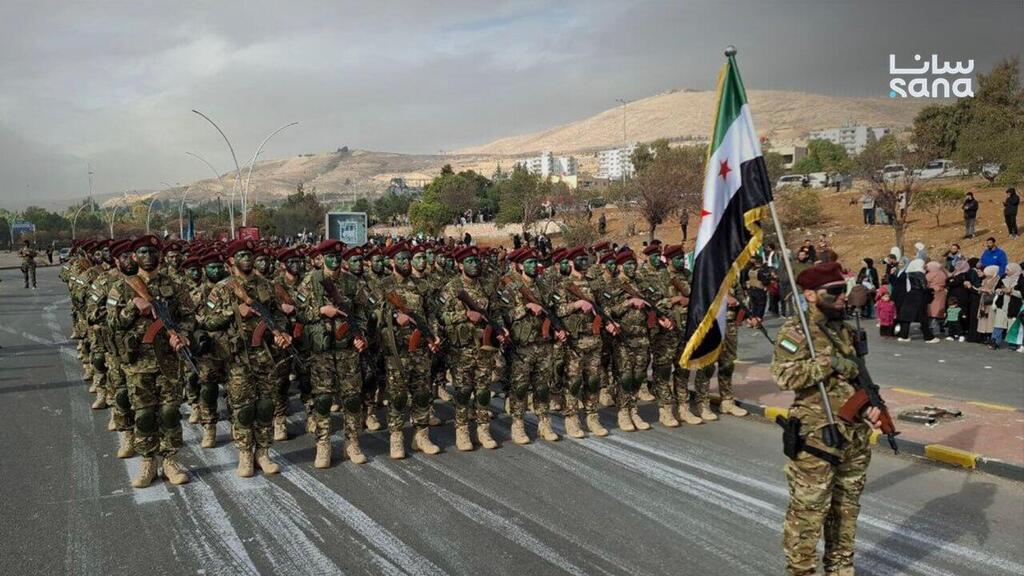
Military parade held this morning to mark 'Liberation Day' on December 8
(Photo: SANA)
Foreign visits
Ahmad al-Sharaa’s first official trip abroad as Syria’s president was to Saudi Arabia on February 2–3, 2025. During the visit, he met with Saudi Crown Prince Mohammed bin Salman. He also performed the Umrah pilgrimage to Mecca and was seen at the holy site with his wife, Latifa al-Droubi, who had not previously been known to the public.
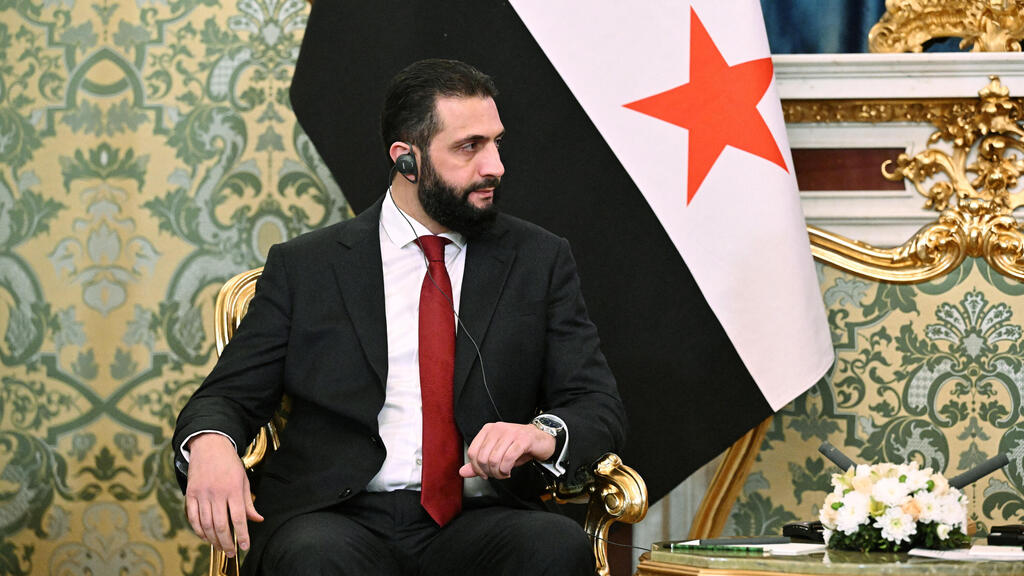
'Interim president'
(Photo: Sputnik/Sergey Bobylyov/Pool via REUTERS)
Since that trip, al-Sharaa has traveled abroad nearly every month, sometimes more than once, visiting Turkey, Jordan, Egypt, the United Arab Emirates, Qatar, France, Bahrain, Russia, Azerbaijan, Brazil, Kuwait and the United States. He has already made return visits to several of these countries.
One of his most memorable trips was his first visit to the U.S., during which he became, on September 24, the first Syrian president to address the United Nations General Assembly since 1967. His second trip to the U.S., this past November, was also historic: Al-Sharaa became the first Syrian president to make an official visit to Washington since the country’s founding in 1946, meeting with President Trump during his stay.
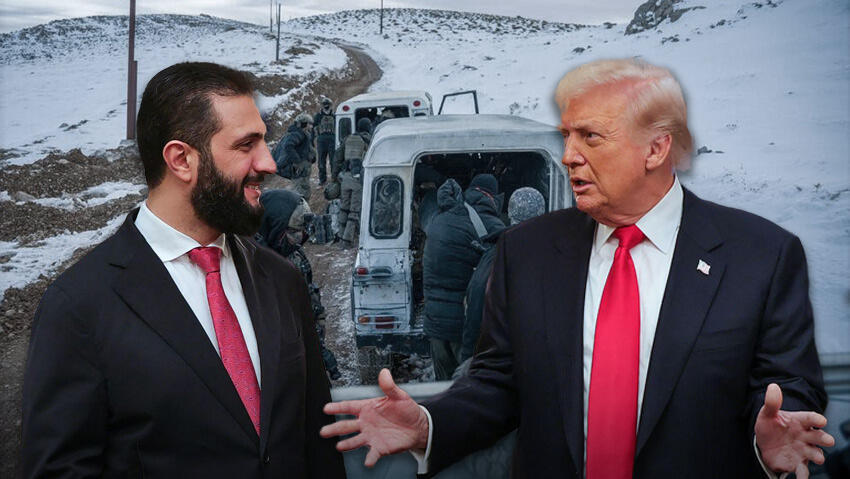
Trump and al-Sharaa
(Photo: AFP/ SANA, IDF)
Bloodshed in Syria’s coastal region
In early March, reports emerged of attacks against members of Syria’s Alawite minority in the country’s coastal cities. Opposition media claimed that the attackers were sent by forces aligned with President al-Sharaa’s regime. The violence followed a rebellion by former military officers loyal to the ousted Assad government, who clashed with security personnel from the new administration. According to reports, the clashes left around 1,500 people dead, most of them Alawites, though some were members of the security forces.
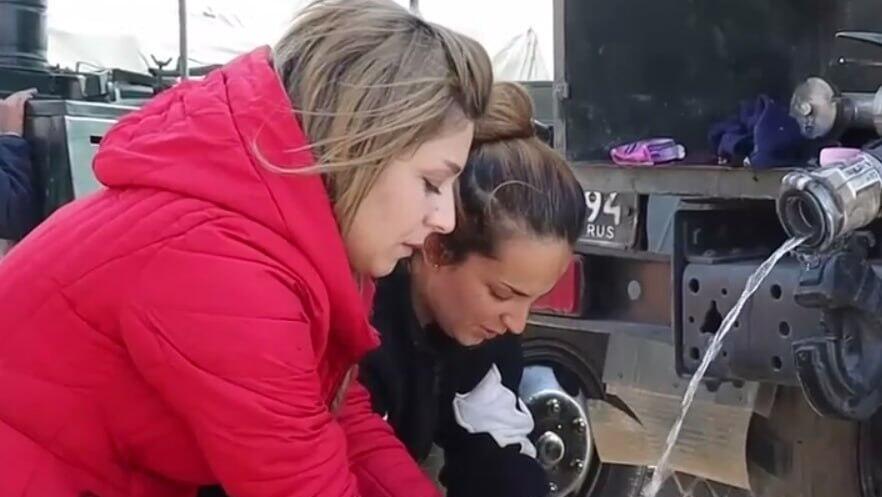
Alawite refugees fill water at a Russian military base where they have taken shelter
Graphic videos of the attacks were widely circulated on social media, with some victims seen appealing to Israel for assistance. In response, the Syrian government established an investigative committee and pledged to prosecute anyone found to have broken the law. On November 18, the first day of public trials related to the massacre was held in the city of Aleppo, drawing dozens of residents to observe the proceedings. Tensions between the new regime and Syria’s Alawite community have remained high in the months since.
The Druze massacre
In July, violent clashes broke out between armed groups and local Druze communities in Syria’s As-Suwayda province. Videos from the region showed executions of Druze civilians and the destruction of entire villages. Pro-government media claimed that the regime was trying to protect the Druze population by deploying its own forces, and reported attacks by lawless militias. Opposition outlets, however, accused regime-aligned actors of targeting Druze villages. In August, the Syrian Observatory for Human Rights reported that more than 1,700 people had been killed in the violence, including 484 civilians executed on the spot.
Israel intervened in response to the events in Sweida, taking the rare step of striking the Syrian military headquarters in Damascus, near the presidential palace, on July 16. The strike followed an Israeli threat to escalate its actions if Syrian regime forces did not withdraw from the province.
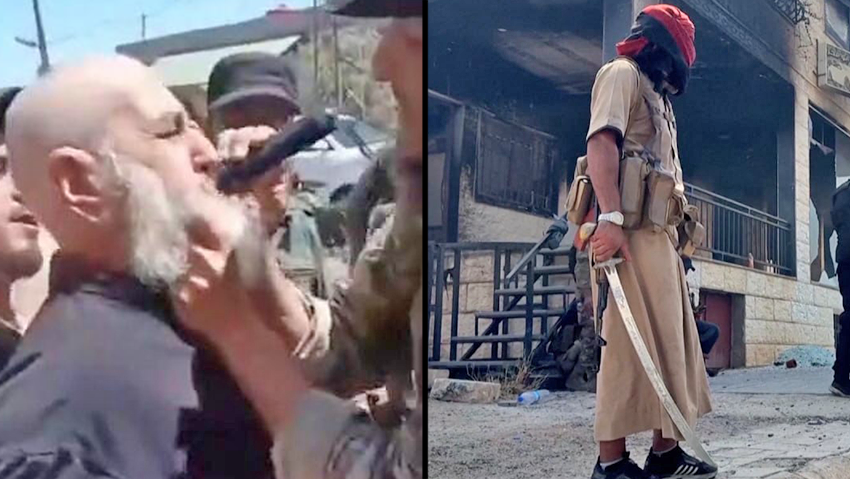
Islamist supporters of al-Sharaa assault Druze Civilians and Shave their beards during July’s massacre
(Photo: Reuters)
Tensions in the region remain unresolved. Divisions have also deepened within the Druze community itself, between groups advocating cooperation with al-Sharaa’s government and those opposed to the current regime. The opposition is led by Sheikh Hikmat al-Hijri, a prominent Druze spiritual leader in Syria who has called for self-determination.
An official committee was also established to investigate the events in As-Suwayda. On November 16, it announced that it had conducted interviews with survivors and eyewitnesses and said the inquiry was ongoing “to uncover the full truth and prevent future violations.” Sporadic reports of renewed clashes in the province have continued.
The Kurdish minority
Tensions with Syria’s Kurdish population also remain unresolved. On March 10, President al-Sharaa announced a deal with Mazloum Abdi, commander of Kurdish forces in Syria, aimed at integrating Kurdish representatives into state institutions and the Syrian military. Despite the agreement, that integration has yet to take place. On October 16, Abdi said, “The events in As-Suwayda and on the Syrian coast contributed to the delay in implementing the agreement.”
On Sunday, Abdi posted on the social media platform X: “A year ago, Syria entered a new phase with the fall of the previous regime — a historic moment that ended decades of tyranny and division. We congratulate the Syrian people on this anniversary and reaffirm our commitment to the March 10 agreement.”
Nevertheless, gatherings were banned Sunday and Monday in northern and eastern Syria — the anniversary of the coup — citing “security conditions.” Some within the Kurdish community have expressed dissatisfaction with the post-Assad alternative.
Negotiation with Israel
Over the past year, al-Sharaa and Syrian Foreign Minister Asaad al-Shibani have made numerous statements regarding relations with Israel, often expressing frustration over Israeli airstrikes and its military presence in Syria. Speaking at the Doha Forum last weekend, al-Sharaa said: “Israel exports its own crises to other countries in order to distract from the massacre it is committing in Gaza, justifying everything with security concerns. Meanwhile, Syria, since its liberation, has sent positive signals aimed at laying the groundwork for regional stability. Israel has responded with extreme violence, launching more than 1,000 airstrikes and 400 incursions into our territory.”
“We are working with influential countries around the world to pressure Israel to withdraw from the territories it occupied after December 8, 2024. All nations support this demand. Syria insists that Israel comply with the 1974 agreement. Negotiations with Israel are underway, with the United States playing a role. Any agreement must protect Syria’s national interests,” he said. At the same event, al-Sharaa also announced that presidential elections will be held in four years.
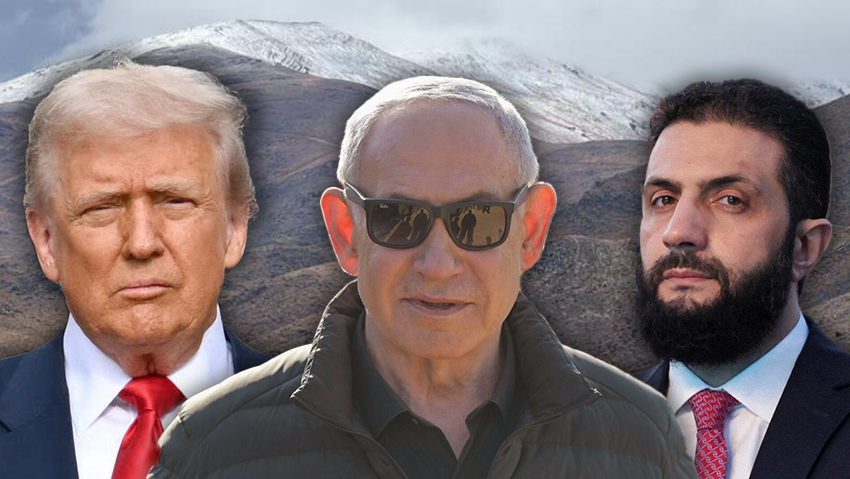
'Israel is committing massacre in Gaza'
(Photo: IDF, Khalil Ashawi/ Reuters, AP/ Alex Brandon)
Syria’s new leadership faces no shortage of challenges, but it is undoubtedly enjoying growing international support. Last week, U.S. envoy Thomas Bush visited Syria and delivered a personal letter to President al-Sharaa from Donald Trump, which read: “You will be a great leader, and the United States will help,” alongside a photo from their meeting in Washington.
The anniversary celebrations in Syria are spread over several days and include rallies, sports events, exhibitions and performances. This past October, the new government officially designated national holidays for the new Syria. As part of that, December 8 — the date the Assad regime was overthrown — was declared a public holiday to be marked each year as “Liberation Day.”