



In a potential development toward restarting U.S.-Iran negotiations, U.S. President Donald Trump is sending his envoys, Steve Witkoff and Jared Kushner, to Pakistan for talks with Iranian Foreign Minister Abbas Araghchi, sources told CNN. Araghchi himself is expected to arrive in Pakistan overnight Saturday, according to Iran’s state media.
CNN also reported that U.S. Vice President JD Vance will not travel to Pakistan at this stage but will remain on standby in case the talks make progress.
Gallery
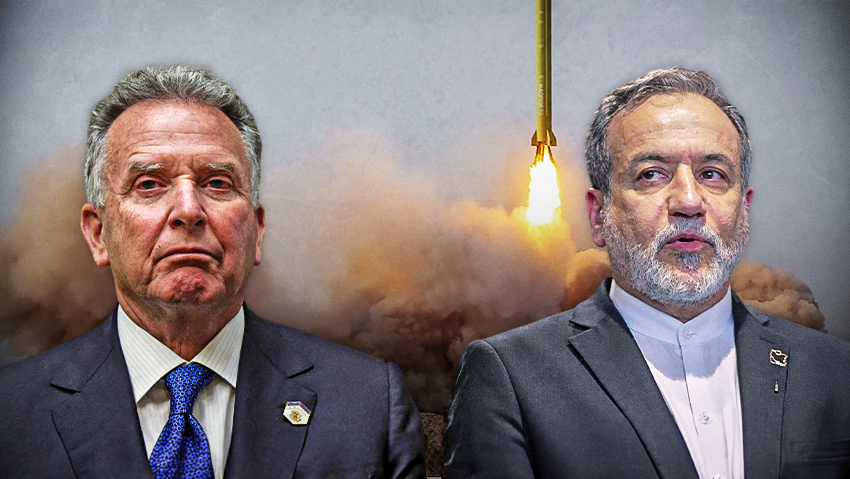
Steve Witkoff and Abbas Araghchi
(Photo: RS/Dawoud Abu Alkas, REUTERS/Evelyn Hockstein, AP/Hassan Ammar)
According to Iranian reports, Araghchi’s visit to Pakistan is expected to be brief and was initially intended for meetings with senior Pakistani officials to discuss Iran’s proposals for negotiations with the United States. However, following reports of Witkoff and Kushner’s arrival, his plans may change and his stay could be extended. Pakistani sources said a U.S. logistical delegation is already in Islamabad preparing for the possibility of talks in the near future.
Meanwhile, U.S. Defense Secretary Pete Hegseth told reporters at a briefing that Iran is aware it still has an opportunity to make what he described as the right choice. He said Tehran would need to abandon its pursuit of nuclear weapons, warning that otherwise its already fragile economy would face mounting pressure from U.S. power. He stressed that Washington’s position remains unchanged — Iran will not be allowed to obtain a nuclear bomb — and said the decision ultimately rests with Tehran, though time is working against it under the current pressure.
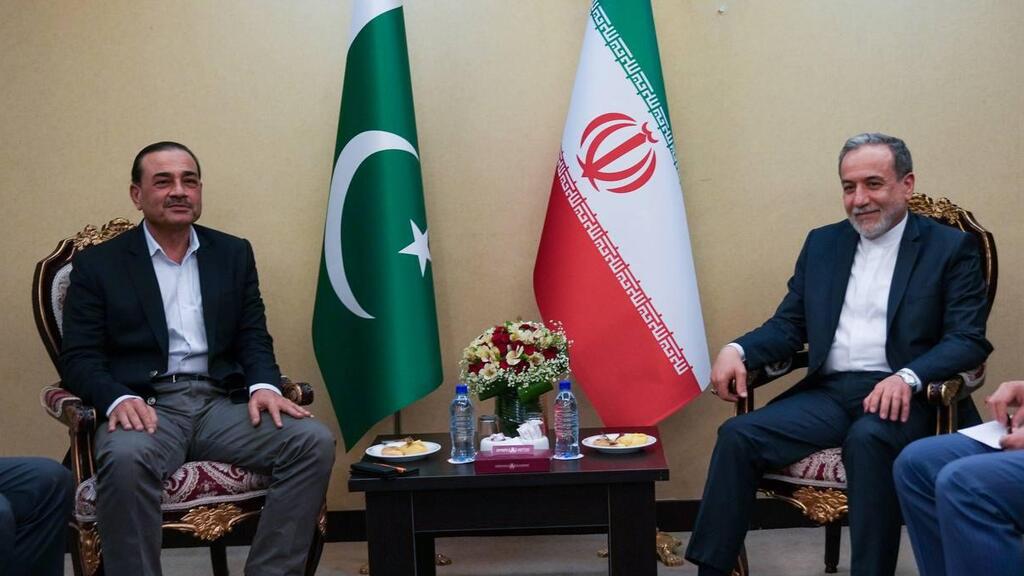
Asim Munir meets Abbas Araghchi during previous round of talks
Hegseth said the U.S. blockade of Iranian ports is widening in scope and taking on a global dimension, adding that 34 ships have already been turned back. Echoing President Donald Trump’s criticism of Western European countries, he said the United States is not relying on Europe, but argued that European nations depend far more on the Strait of Hormuz. He suggested they should spend less time on rhetoric and high-profile conferences and instead take more practical action.
At the same time, CNN reported that the United States is continuing to develop military options in case the talks fail. According to the report, the options under consideration include strikes focused on “dynamic targets” tied to Iran’s capabilities in the Strait of Hormuz, the Arabian Gulf and the Gulf of Oman. Sources told the network these include small, fast attack boats, mine-laying vessels and other assets that have enabled Tehran to effectively disrupt traffic in the key waterway and use it as leverage against the United States.

US Defense Secretary Pete Hegseth
(Photo: REUTERS/Jonathan Ernst)
Another option raised by planners is for the U.S. military to follow through on Trump’s earlier threat and strike dual-use targets and infrastructure, such as energy facilities, to force Iran back to the negotiating table. A further possibility is targeting Iranian military leaders and other “spoilers” within the regime who U.S. officials say are working against the talks. One of them is Ahmad Vahidi, recently appointed as the new commander of the Islamic Revolutionary Guard Corps, replacing Mohammad Pakpour, who was killed at the start of the campaign.
A U.S. official said Thursday that the U.S. Navy now has 19 ships in the Middle East, including two aircraft carriers, and seven ships in the Indian Ocean. The United States began enforcing the blockade on Iranian ports on April 13, using a significant portion of these forces, and had blocked at least 33 vessels as of Thursday. U.S. forces have also boarded at least three ships, including two in the Indian Ocean about 3,200 kilometers (2,000 miles) from the Persian Gulf. Still, the expected arrival of Iran’s foreign minister in Pakistan offers a potential opening to restart the negotiations.
First published: 16:47, 04.24.26