

Syrian interim President Ahmad al-Sharaa arrived Saturday in Baku, the capital of Azerbaijan, where he met with Azerbaijani President Ilham Aliyev. This is al-Sharaa’s first visit to the country, which in recent months has hosted talks between Israel and Turkey regarding Syria.
According to a diplomatic source in Damascus familiar with the talks between the two neighbors, Israeli and Syrian officials are expected to meet on the sidelines of al-Sharaa’s visit. “There will be a meeting between a Syrian official and an Israeli official on the sidelines of Shareh's visit to Baku,” the source told Agence France-Presse, speaking on condition of anonymity due to the sensitivity of the issue. The source added that al-Sharaa would not attend the meeting.
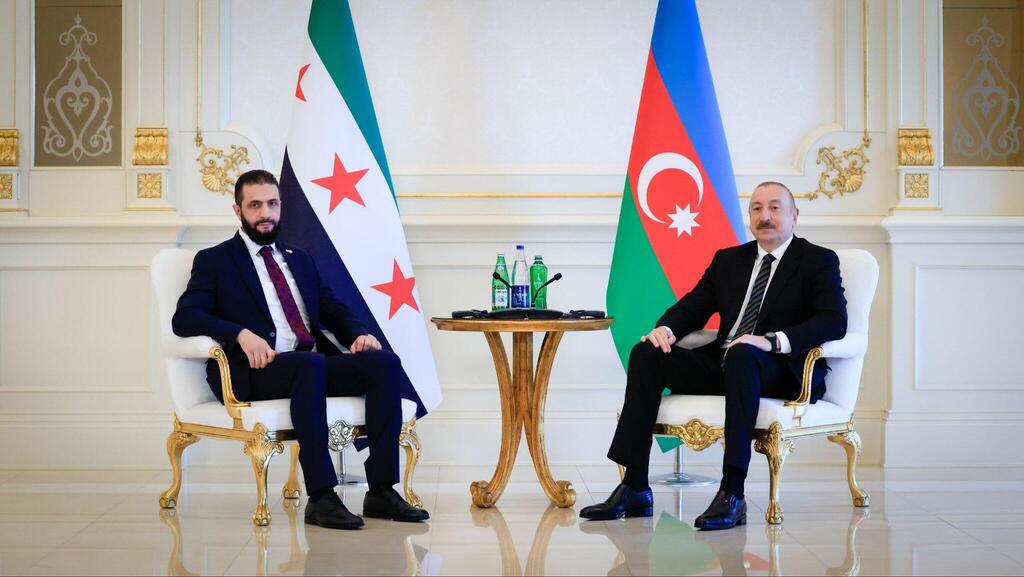
The discussions are expected to focus on “the recent Israeli military presence in Syria,” referring to areas where Israel has deployed troops following the fall of Syrian President Bashar al-Assad in December.
Azerbaijan is considered a close ally of both Israel and Syria and has played a key role in mediating between Turkey’s ambitions in Syria and Israel’s security concerns. Earlier this week, reports suggested that Israeli National Security Adviser Tzachi Hanegbi had met with al-Sharaa in Abu Dhabi. However, Hanegbi was in Washington at the time and later denied the meeting. It remains possible that another senior Israeli official held talks with the Syrian president.
Syria appears to be the country closest to reaching an agreement with Israel. Al-Sharaa is seeking foreign investment and the lifting of international sanctions, while Israel is focused on securing its northern border. The emerging agreement would not amount to full normalization or the opening of embassies, but rather a security arrangement. “Anyone dreaming of dipping pita in hummus in Damascus should keep dreaming,” an Israeli official told Ynet about a week and a half ago. The deal could include security guarantees and a Syrian commitment to act against terrorism.
No withdrawal from the Golan Heights
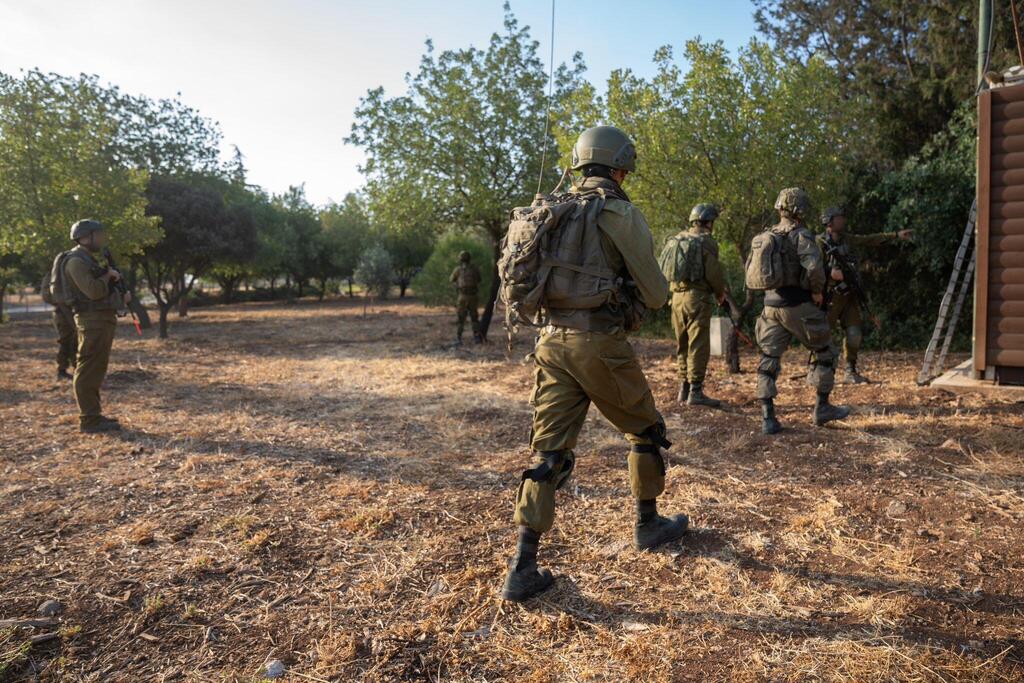
Potential understandings between Israel and Syria would not involve any change to Israeli sovereignty over the Golan Heights. Rather, they would focus on gradual steps within Syrian territory—such as preventing Iranian entrenchment, distancing terrorist operatives and maintaining quiet along the border. According to foreign reports, Israel has already used Syrian airspace to carry out strikes in Iran, suggesting informal understandings already exist.
The basis for a possible agreement is the 1974 disengagement accord that ended the Yom Kippur War and the subsequent war of attrition. The agreement set the ceasefire line, troop deployments and monitoring mechanisms and has held even during times of heightened tension. Israeli officials believe the accord could be updated to meet current security challenges, if Syria demonstrates restraint and distances itself from direct Iranian influence.
(Photo: IDF Spokesperson's Unit)
About two months ago, al-Sharaa also met with U.S. President Donald Trump. It was the first meeting between a Syrian and American president in 25 years and came shortly after Trump announced he would lift sanctions on Syria in a dramatic gesture to aid the country’s recovery. After the meeting, the White House said Trump had urged al-Sharaa to join the Abraham Accords with Israel and to expel Palestinian terrorist operatives from Syria.
Get the Ynetnews app on your smartphone: Google Play: https://bit.ly/4eJ37pE | Apple App Store: https://bit.ly/3ZL7iNv
Speaking to reporters after the meeting, Trump said Washington was exploring the possibility of normalizing relations with Syria’s new government and that the process had begun with his talks with al-Sharaa. He emphasized that lifting sanctions was meant to give Syria a fresh start.