


A reversal appears to be taking shape in the pace of strikes in Iran. During the first five days of the war, the United States carried out more than three times as many attacks as Israel, according to data from the Institute for National Security Studies (INSS).
In that period, U.S. forces struck about 2,000 targets in Iran, compared with roughly 600 Israeli strikes.
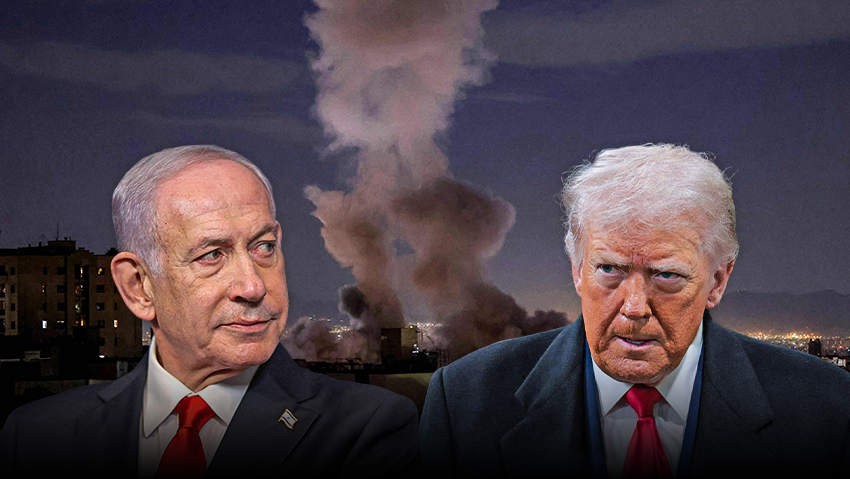
Shift in Iran war strikes?
(Photo: Atta Kenare/ AFP, Joe Raedle/ AFP, Anna Moneymaker/ AFP)
Over the weekend, however, after both Israel and the United States announced a transition to the “next phase” of Operation Roaring Lion, the trend shifted. Since then, the Israel Defense Forces have carried out nearly three times as many strikes as the U.S. military, hitting about 2,800 targets compared with roughly 1,000 American strikes.
Overall, according to INSS figures, the United States has attacked about 3,000 targets in Iran since the start of the operation. Israel has struck around 3,400 targets in Iran, in addition to about 600 more in Lebanon.
The data suggest that after the transition to the new phase of the campaign, Israel sharply accelerated its strikes in Iran, while the United States has largely maintained the operational tempo it set earlier in the war.
Behind the numbers may lie a broader story reflecting different approaches by Israel and the United States to managing the conflict.
Possible limits on US strike pace
One possible reason the United States has not significantly increased its strike rate may involve munitions supplies and interceptor inventories.
Days before the war broke out, according to a report in The Washington Post, U.S. Joint Chiefs Chairman Gen. Dan Caine warned President Donald Trump and senior administration officials that U.S. weapons stockpiles were not large.
Separately, the Financial Times reported that Israeli intelligence had concluded the U.S. forces deployed in the Middle East have only a limited ability to sustain prolonged strikes against Iran.
According to the report, which cited an Israeli intelligence official, the United States could conduct an intensive air campaign for “four to five days,” or sustain a lower-intensity strike pace for about a week.
In the early days of the conflict, concerns were also raised about the U.S. supply of interceptor missiles. Trump quickly rejected those claims, saying the United States had an “almost unlimited” supply of critical munitions, and Pentagon officials also sought to reassure the public, stating that U.S. forces have sufficient ammunition.
US reinforcing forces in the region
Since then, the United States has moved additional military assets toward the Middle East, some of which are still en route.
These include the aircraft carrier USS George Bush and its strike group, which includes three destroyers.
In recent days, four U.S. B-1 bombers have also arrived in Britain. At RAF Fairford in Gloucestershire, the massive C-5M Super Galaxy transport aircraft has also been spotted. The aircraft is capable of carrying two M1 Abrams tanks, six Apache helicopters or 36 military vehicles.
Israel accelerating operations
From Israel’s perspective, the shift in strike tempo as the campaign enters its next phase may reflect progress in the fighting. It may also indicate concern that Trump could halt the operation due to public opinion in the United States.
Israeli officials reportedly understood early in the war that it would be important to maximize operational gains quickly.
At the same time, Trump has said several times that the war could last a month or even longer, and there are signs the campaign is far from over.
U.S. Defense Secretary Pete Hegseth said overnight that “this is only the beginning.”
Trump also said the final decision on when the war ends will ultimately rest with him, though Israeli Prime Minister Benjamin Netanyahu will have influence over the timing.