

At the beginning of her career as a counselor at a halfway house for formerly incarcerated women, Talia (a pseudonym) would occasionally run into women she knew from prison. They were still under supervision as parolees, while she had become a member of the staff.
Talia, 29, served nearly five years in prison after being convicted of manslaughter for an offense she committed as a teenager under extremely difficult life circumstances. After spending nearly a year in the halfway house as part of her rehabilitation, followed by about two years working in a factory while maintaining close contact with the home's treatment staff, she was offered a job there as a counselor.
Gallery
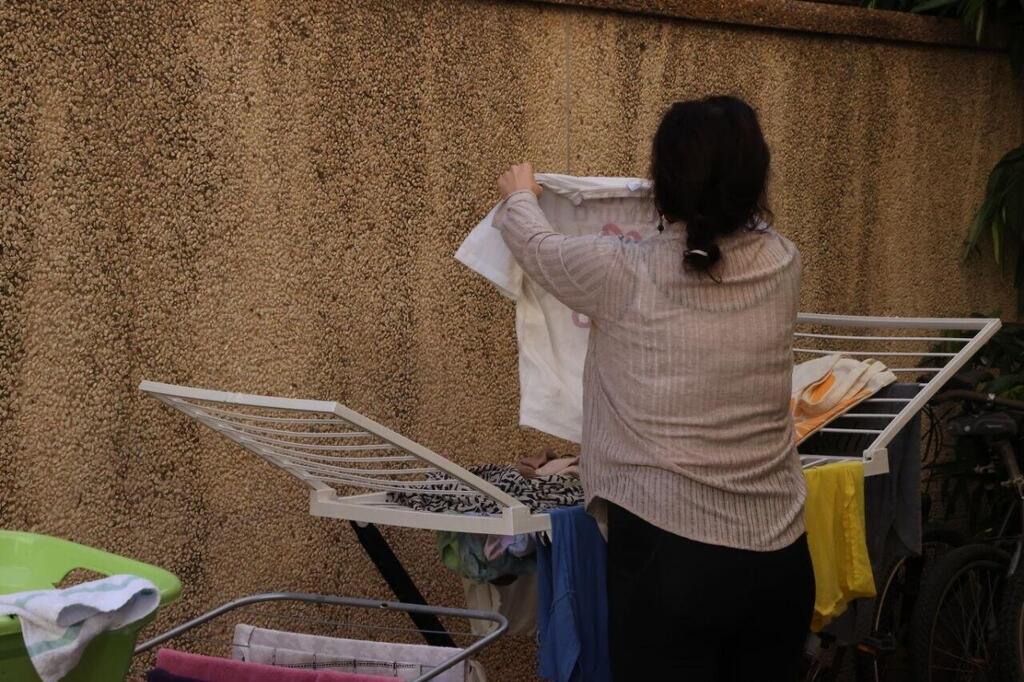
'I started to feel like a woman again'. Peimot, Israel's only treatment center of its kind for formerly incarcerated women
(Photo: Moti Kimchi)
"I was surprised," she admits. "I asked myself whether I had anything to teach anyone, whether I had the strength to help other women."
The transition from former inmate to counselor supporting other formerly incarcerated women was far from easy.
"I could feel their resistance," Talia says. "It was difficult because they didn't accept my authority. But I decided I couldn't give up. I told myself: Today this is happening to me in the halfway house. Tomorrow it could happen somewhere else. I knew it was something I had to deal with."
Today, six years after she began working at Peimot, Israel's only treatment center of its kind for formerly incarcerated women, Talia still asks herself many questions and still carries the weight of her past. She remembers a difficult childhood spent moving between facilities for at-risk girls, entering prison as a minor and leaving as an adult.
"But emotionally, I still felt like I was 13," she says.
She also remembers trying to build an independent life from scratch.
"I didn't know what it meant to work. I'd never had a job before."
Today, however, she is more confident in her ability to help women taking their first steps outside prison.
"Now I know I have something to offer, and something others can take from me."
The conversation with Talia takes place in the bright, immaculate living room of the Peimot halfway house, operated by Israel's Prisoner Rehabilitation Authority.
Like male inmates, women released on parole before completing their sentences are required to participate in rehabilitation programs until the end of their official prison term. But while men are referred to various rehabilitation frameworks based on factors such as age, place of residence and the nature of their offense, all women are sent to the same villa in central Israel regardless of their age, offense or hometown.
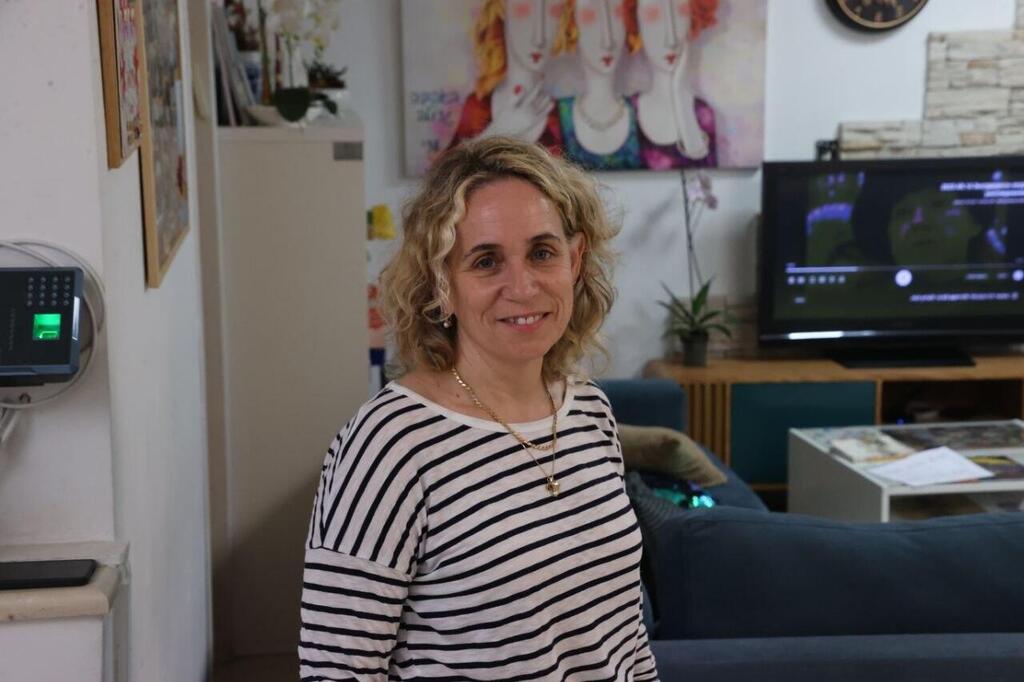
Arnat Ormian-Rabino, director of the halfway house
(Photo: Moti Kimchi)
The reason is simple: Women account for only about 2% of the roughly 6,000 prisoners released from Israeli prisons each year.
'Survival crimes'
The numbers may be small, but the challenges are enormous.
Research over the years has shown that most women who end up in prison experienced abuse during childhood and adulthood, particularly sexual abuse. Many have backgrounds in prostitution. Many also suffer from mental health disorders at rates far higher than the general population.
"These are women who have suffered tremendously throughout their lives," says Arnat Ormian-Rabino, director of the halfway house. "Women who end up in prison are, in many ways, an extreme reflection of the status of women in society."
As a result, their earning potential is typically much lower than that of male inmates.
"They often arrive here with absolutely nothing," she says.
Most of the women enter prison as mothers, adding another layer of complexity.
"Even if she was in a relationship beforehand, very often once she goes to prison, the man disappears and she's left completely alone. If her family wasn't already falling apart, this is often when it does."
Beyond the separation from their children during incarceration, the women also face intense public judgment.
"When a woman breaks the law, society sees her as having failed not only legally but also in the traditional roles assigned to her. There's a tremendous amount of anger and shame surrounding that."
Ormian-Rabino says many women commit crimes out of overwhelming desperation.
"I call them 'survival crimes.'"
Sometimes, she says, they are trying to protect someone else.
"Even women convicted of murder often killed the person who had abused them. That doesn't make it acceptable, but it helps explain what happened."
Women convicted of fraud frequently committed the offenses to protect or assist a family member. One of Israel's best-known cases is that of Eti Alon, who embezzled millions from the now-defunct Trade Bank.
In drug-related cases, "the women were usually working for dealers rather than dealing drugs themselves or making the money," Ormian-Rabino says.
Some of the women at the halfway house spent nearly their entire lives homeless and arrive without basic life skills, such as knowing how to use Israel's public transportation payment system or operate a smartphone.
The profile of female offenders has also changed over the years.
"When I started working here, most of the women were drug addicts involved in prostitution," Ormian-Rabino says.
They still make up the largest group, but others have joined them over time: more women convicted of fraud and, in recent years, a growing number of former day care workers convicted of abusing children. There are also women convicted of violent crimes, including domestic violence.
"It's a wide spectrum of offenses and backgrounds," she says. "Our challenge is to provide care for all of them."
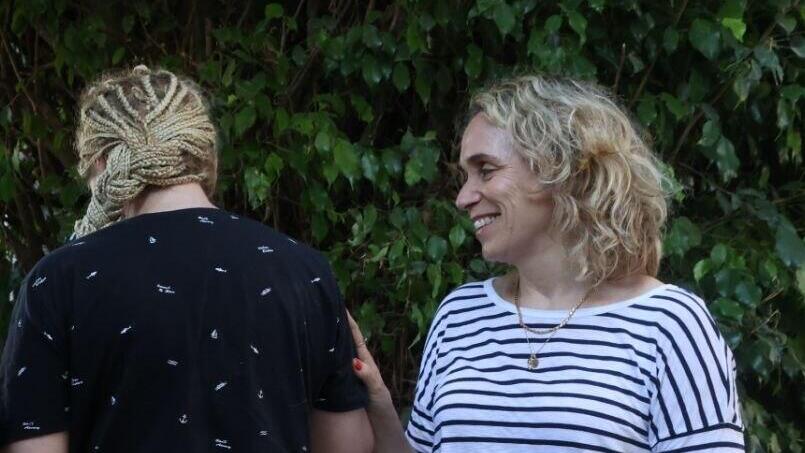
When social work students come here, they often say, 'Don't tell us what offenses they committed. We want a blank slate'
(Photo: Moti Kimchi)
'There are no princesses here'
Irina speaks softly, almost in a whisper.
She talks about immigrating to Israel, making a wrong turn that led to drug addiction and failed attempts at rehabilitation. She describes the thefts she began committing to finance her addiction, which eventually became an addiction in themselves. She recalls repeated prison terms, being rejected by her family and her son being placed with relatives in foster care, whom she barely saw during the years she cycled in and out of prison.
"You don't think about it very much," she says. "When you're in that situation, all you think about is the drugs."
Her story reflects, in many ways, the tragedy experienced by many formerly incarcerated women: hardship leading to addiction, untreated mental illness that worsened over time, estrangement from children and family, and repeated incarceration simply because there was nowhere else to go.
Today, after spending time at Peimot, she feels she is beginning to rebuild her life, slowly and cautiously.
She is paying off debts, receiving dental treatment and caring for a body damaged by years of drug use.
"I've started feeling like a woman again," she says.
Gradually, she is also rebuilding her relationship with her son.
Among the roughly 50 women treated at the facility are women convicted of murder, manslaughter, fraud and property crimes. Some committed very serious offenses. Yet the staff tries to look beyond the crime itself to understand what led to it, not to excuse it but to help prevent it from happening again.
That is the central challenge of rehabilitating formerly incarcerated women: remembering the offense while also looking toward the future.
To outsiders, this can seem contradictory. How can society imagine a future for women who stole, embezzled money, abused children or even killed?
"When social work students come here, they often say, 'Don't tell us what offenses they committed. We want a blank slate,'" says social worker Aliza Nissan-Rozen.
"But the whole point is to know what the woman did, to talk about it and at the same time succeed in seeing the other parts of her. To see the little girl nobody wanted."
"We know who we're working with. There are no princesses here, okay?" Ormian-Rabino adds.
"But the crime doesn't define the woman. It can shed light on her characteristics and what she's been through. That's the complexity of life."
Rehabilitation, for society's own sake
The world outside the halfway house often struggles with that complexity.
Unlike programs for men, the women's halfway house devotes the first several months entirely to treatment, without requiring residents to work.
"Prison is such a traumatic experience that the transition needs to be softened," Ormian-Rabino explains.
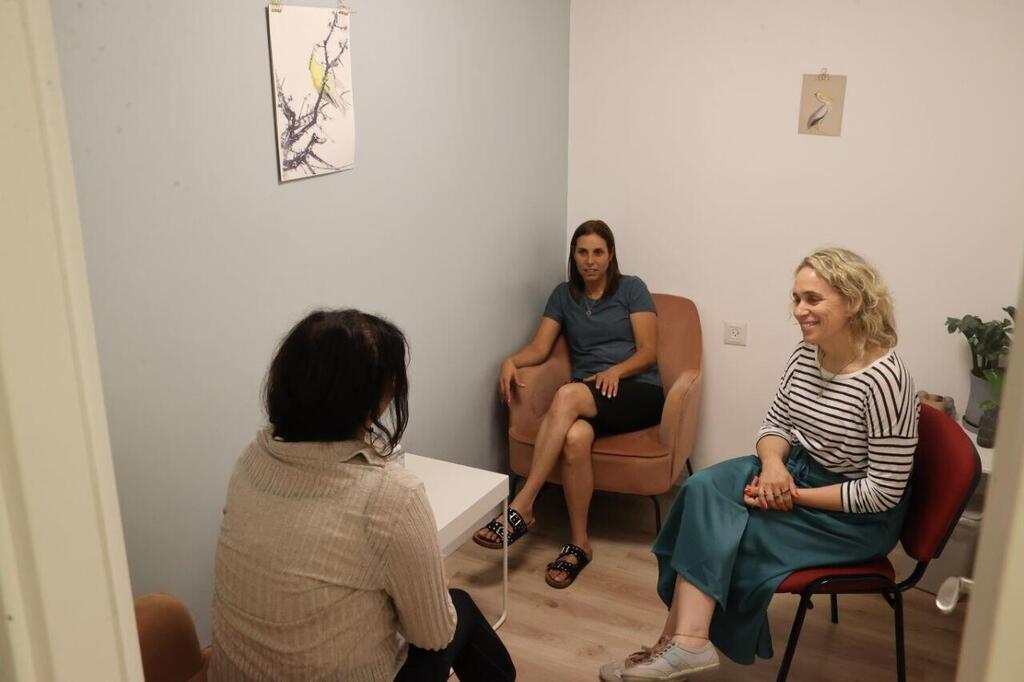
Ormian-Rabino alongside Merav Rakhimov, and a resident of Peimot
(Photo: Moti Kimchi)
For women, perhaps even more than for men, physical appearance also plays an important role.
"Many arrive after years of severe physical neglect. We try to help them reach a basic starting point from which they can reenter the world."
But once they do, they often face another major obstacle.
Outside the halfway house, very few organizations are willing or able to accept women with criminal records, many of whom are also recovering from addiction.
"It's difficult to get the system to support these women," Ormian-Rabino says.
Often, the hesitation stems from their history of addiction.
"The moment a woman falls into drugs, people say, 'Bye-bye,'" Nissan-Rosen says.
Finding employment is another challenge.
"I understand employers and I don't judge them," Nissan-Rosen says. "But there's a great deal of fear that comes from ignorance and from not believing people can change."
"People don't realize they themselves could end up in the same place," Talia adds.
"Some people become addicted later in life. You could be driving, hit someone and suddenly find yourself there. People don't have the courage to look at themselves and understand how easily they, too, could end up in those situations. Being here at the halfway house first and foremost means understanding that we're all human, and human beings naturally make mistakes."
Even those who struggle to see it that way, the staff says, should support rehabilitation.
"The court judged them. They served their sentences. Now what?" Ormian-Rabino asks.
"Society needs to understand that it's in its own interest for both women and men to rebuild their lives, even from the most self-interested perspective. These women are returning to society. They'll be our neighbors again, whether we like it or not. So let's help them become good citizens."