


Joint List chairman Prof. Yousef Jabareen said Wednesday that his party was prepared to use its growing political strength to help remove Prime Minister Benjamin Netanyahu's government from power, as preliminary election results pointed to significant gains for Israel's Arab parties and a political deadlock between the country's two main blocs.
"The Netanyahu and Ben-Gvir government has made the lives of every Arab citizen miserable," Jabareen said in a statement to the media. "We will know how to leverage our political strength to advance the values we believe in."
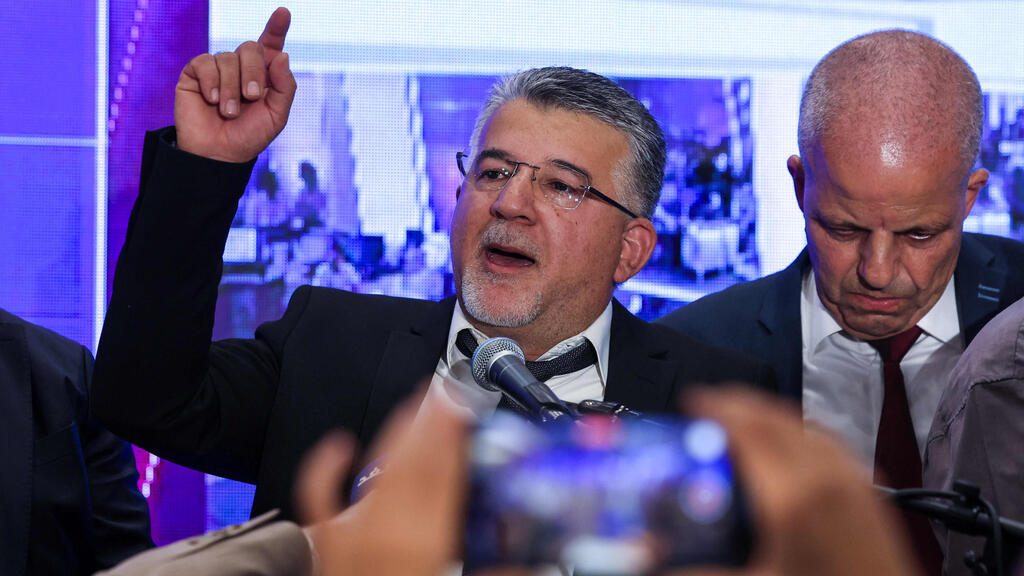
"We will be ready to pave the way for removing the Netanyahu, Ben-Gvir and Smotrich government and sending them home," he added.
Joint List parliamentary faction chairman Ahmad Tibi echoed that position in an interview with the Saudi-owned Al-Hadath television channel, describing the election as crucial and different from previous contests. Tibi said there was a real chance to replace Netanyahu's government and that, based on the figures available, Gadi Eisenkot was the candidate best positioned to form the next government.
Tibi also said the Joint List could win 10 seats and potentially push far-right parties below the electoral threshold, preventing them from entering parliament. The latest partial results, however, put the Joint List at 13 projected seats.
Jabareen's remarks came as the Joint List emerged as one of the main beneficiaries of the ongoing vote count. At the time of his statement, the party was projected to win 12 seats, a substantial parliamentary presence that could give it considerable influence over attempts to form Israel's next government.
In a subsequent update, after 70.7% of votes had been counted, the Joint List climbed to 13 projected seats, gaining one at the expense of Eisenkot's Yashar! party. The Islamist Ra'am party was projected to win another six seats, bringing the combined representation of the Arab parties to 19.
The same results placed Netanyahu's right-wing and religious bloc at 54 seats, seven short of the 61 required for a parliamentary majority. Eisenkot's bloc stood at 47 seats, with neither main camp able to form a government independently.

Joint List parliamentary faction chairman Ahmad Tibi
(Photo: AHMAD GHARABLI / AFP)
Jabareen's statement came amid growing calls from parts of the opposition to cooperate with Arab parties to replace Netanyahu. Earlier Wednesday, Democrats chairman Yair Golan urged the formation of a government of change with the participation or support of Arab political factions.
"We have a majority, we have a responsibility, and we have an opportunity to establish a government of change in partnership with Israel's Arab citizens," Golan wrote on X.
Golan rejected attempts to distinguish between Jewish and Arab votes, arguing that every Israeli citizen's ballot carries equal democratic weight. He called on opposition leaders to act quickly to form an alternative government.
While Jabareen and Tibi both signaled a willingness to help bring about a change in government, neither outlined a specific coalition arrangement. Tibi's assessment of Eisenkot's prospects also came despite Netanyahu's bloc holding more seats than Eisenkot's in the partial count.
With the final distribution of seats still uncertain and hundreds of thousands of special ballots awaiting counting, the Joint List's growing strength has added another dimension to the political negotiations that will determine Israel's next government.