

U.S. Secretary of State Marco Rubio and White House envoy Steve Witkoff met Saturday in Miami with Qatari Prime Minister Mohammed bin Abdulrahman Al Thani as part of efforts to advance talks on a deal to end the war with Iran, according to two sources familiar with the matter cited by Axios. The U.S. State Department later confirmed that Rubio and Al Thani had met.
The United States is still waiting for Tehran’s response to its latest proposal. Pakistan has been seen in recent weeks as the lead mediator in the talks, but Qatar is also playing an important role in contacts between the sides, working largely behind the scenes. U.S. officials said the White House views the Qataris as highly effective in talks with Iran.
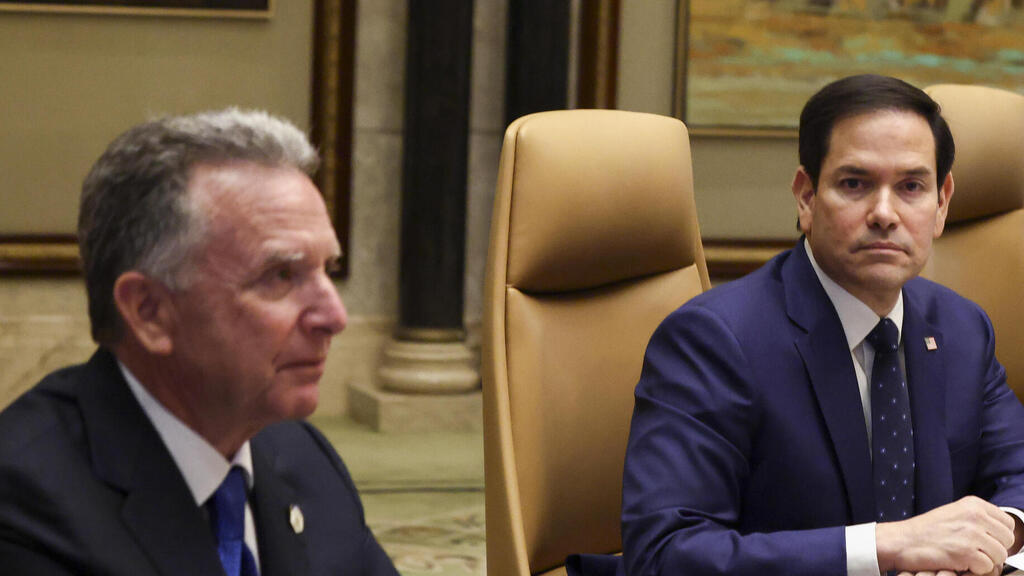
Al Thani met a day earlier with U.S. Vice President JD Vance and was expected to return immediately to Doha, but changed his plans and continued to Miami. According to one source, while in Miami he also spoke with the Saudi foreign minister about the mediation effort.
The sources said the meeting between Qatar’s prime minister, Witkoff and Rubio focused on the path toward a memorandum of understanding that would lead to an end to the war. One source said Qatar, Pakistan, Turkey and Saudi Arabia are working together to push for an agreement. “The mediators are urging both parties to de-escalate and focus on getting a deal,” the source said.
Meanwhile, amid the exchanges of fire in the Strait of Hormuz in recent days, the commander of the Revolutionary Guards’ navy was quoted in Iranian media as saying that any U.S. attack on Iranian oil tankers or commercial vessels would be met with a “severe attack” on one of the American bases in the region and on “enemy ships.”
“Our missiles and drones are trained on the enemy, and we are waiting for the order to fire,” he said.
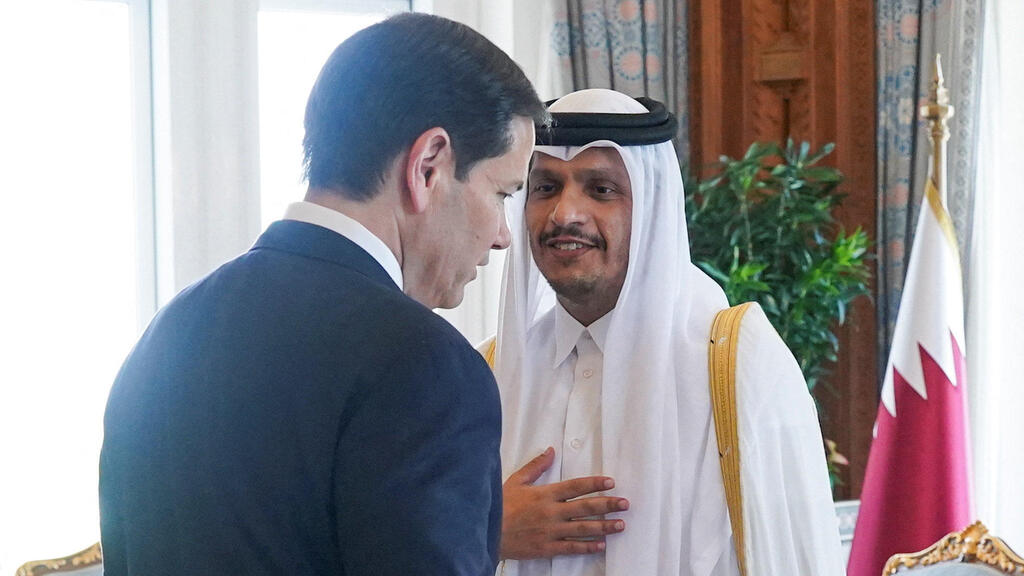
Rubio and Mohammed bin Abdulrahman Al Than
(Photo: Nathan Howard/ Reuters)
According to current U.S. intelligence assessments, Iran’s Supreme Leader Mojtaba Khamenei is “playing a critical role” in shaping the war strategy alongside senior Iranian officials, CNN reported Saturday, citing several sources familiar with the intelligence. The reports indicate that the division of authority within Iran’s leadership, described as “fractured,” is unclear. Still, officials believe Khamenei is likely helping guide how Iran conducts negotiations with the United States to end the war.
The younger Khamenei has not been seen publicly since he was seriously wounded in the strike that killed his father and other senior officials in the opening blow of Operation Lion’s Roar. Since then, multiple reports have circulated about his medical condition and his role in the Islamic Republic’s new leadership structure. Sources who spoke with CNN said the U.S. intelligence community has still not been able to visually confirm Khamenei’s current location. He was declared his father’s successor on March 8. The Times of London reported last month that Khamenei had been hospitalized in serious condition in the city of Qom.
One source told CNN that part of the uncertainty stems from the fact that Khamenei does not use any electronic means to communicate. Instead, he interacts only with those who can visit him in person, or through messages delivered by couriers. The sources said Khamenei remains isolated while continuing to receive medical treatment for his injuries, which include severe burns on one side of his body affecting his face, arm, upper body and leg.
Iranian President Masoud Pezeshkian told Iranian state media last week that he had held a two-and-a-half-hour meeting with Khamenei. If true, CNN noted, it would be the first reported face-to-face meeting between a senior Iranian official and the supreme leader. Sources familiar with current U.S. intelligence said what American officials know about Khamenei’s condition is based on information gathered from people who communicate with him.
At the same time, U.S. intelligence analysts are questioning whether certain figures in Iran may be claiming access to Khamenei in order to appropriate his authority and advance their own agendas.
While intelligence assessments indicate that Khamenei is involved in helping shape Iran’s negotiating strategy for a diplomatic end to the war, one source familiar with the latest intelligence told CNN there is also evidence that he is fairly removed from the decision-making process and is accessible only “rarely.”