

Israel is planning a significant expansion of its ground operation in Lebanon, with the aim of taking control of all territory south of the Litani River and dismantling Hezbollah’s military infrastructure, Israeli and U.S. officials told Axios.
“We’re going to do what we did in Gaza,” a senior Israeli official said, referring to flattening buildings used by Hezbollah to store weapons and launch missile attacks.
The scene of the impact near Hatzor HaGlilit overnight



The Trump administration supports a broad Israeli operation to disarm Hezbollah, but is also pressing Israel to limit damage to the Lebanese state and is calling for direct talks between Israel and Lebanon that would lead to an agreement at the end of the war.
Israeli officials said that until a few days ago Israel was still trying to avoid escalation in Lebanon in order to focus on the Iranian arena. That changed after Hezbollah fired more than 200 rockets in less than 24 hours in what officials described as a coordinated attack with Iran.
“Before this attack we were ready for a ceasefire in Lebanon, but after it there is no way back from a large-scale military operation,” a senior Israeli official said.
Overnight Saturday, Hezbollah again fired rockets toward northern Israel, and Iran’s Islamic Revolutionary Guard Corps officially announced that the attack had been coordinated, including missiles launched from Iran. Heavy damage was reported in the Hatzor HaGlilit area in that combined barrage.
According to Axios, three infantry and armored brigades have been stationed along Israel’s northern border since the start of the war with Iran, with some of the forces carrying out “limited incursions” over the past two weeks.
The IDF said Friday it was reinforcing troops and transferring reservists to the north as part of preparations for the possible expansion of the ground operation.
“The goal is to seize territory, push Hezbollah forces north and away from the border, and dismantle the military positions and weapons depots in the villages,” the senior Israeli official said.
Footage of the strike on the bridge over the Litani River
(Video: IDF)
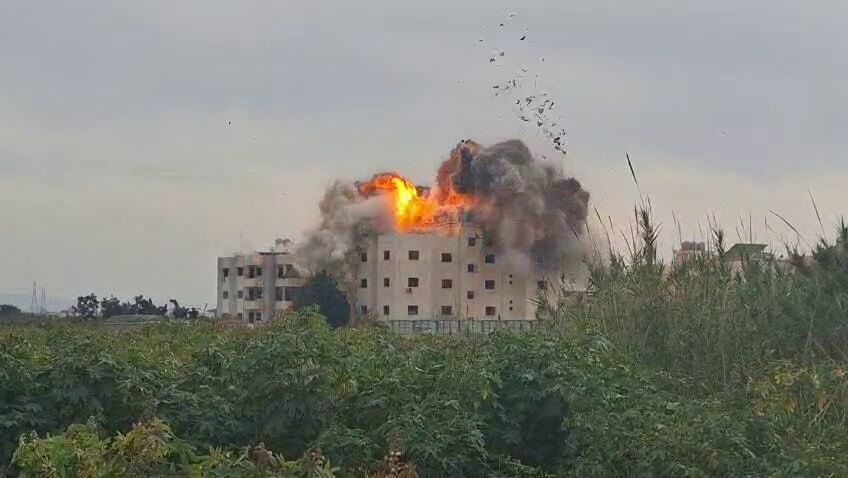
A strike in the Tyre area
In a speech Friday, Hezbollah leader Naim Qassem said the diplomatic track pursued by the Lebanese government had failed to secure sovereignty or protect Lebanon’s residents.
“Therefore there is no solution but resistance,” he said. “When the enemy threatens a ground invasion, we tell it — this is not a threat, but one of the traps you will fall into.”
Immunity for the airport, not for other infrastructure
Israeli and U.S. officials said the Trump administration asked Israel not to bomb Beirut’s international airport and other infrastructure belonging to the Lebanese state.
Israeli officials said Israel had effectively agreed to grant immunity to the airport, but had not committed to avoiding strikes on other infrastructure.
On Friday, a bridge over the Litani River was bombed for the first time. Defense Minister Israel Katz said: “This is only the beginning. We will strike Lebanon’s national infrastructure.”
“We feel we have full U.S. backing for this operation,” an Israeli official told Axios, adding that consultations with Washington would take place on a case-by-case basis.
A senior U.S. official echoed that message, saying: “The Israelis need to do what they need to do to stop Hezbollah’s rocket fire.”
According to Israeli and U.S. officials, Prime Minister Benjamin Netanyahu has appointed former minister Ron Dermer to manage the “Lebanon file” during the war. Dermer will be responsible for contacts with the Trump administration and will lead negotiations with the Lebanese government if direct talks begin in the coming weeks.
On the U.S. side, Trump adviser Massad Boulos is in charge. Boulos, a Lebanese-American Arab Christian businessman, also serves as the U.S. envoy to Africa. He is Trump’s in-law — his son Michael is married to Trump’s daughter Tiffany.
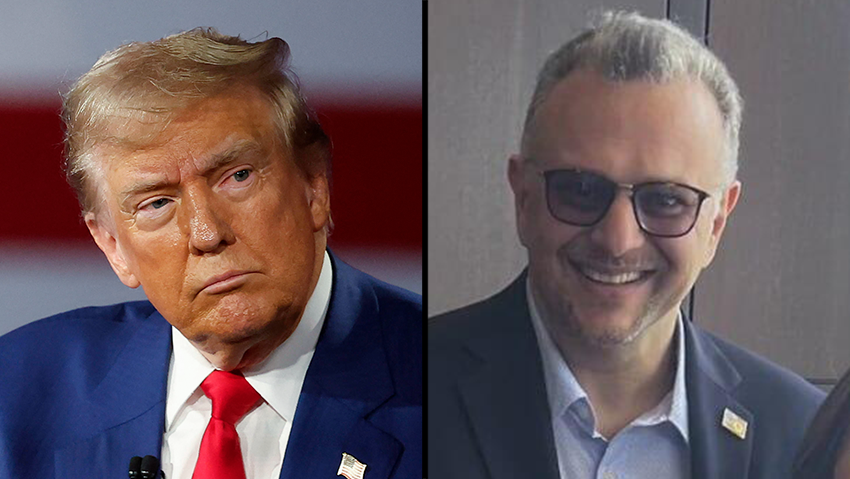
Donald Trump, Massad Boulos
(Photo: AP, Kevin Dietsch/AFP)
Boulos has been in contact in recent days with Israeli, Lebanese and Arab officials in an effort to advance direct talks. The Lebanese government has expressed willingness for such talks, and Trump administration officials said they want to use them to lay the groundwork for a broader agreement between Israel and Lebanon.
Meanwhile, the Israeli military continues its strikes in Lebanon alongside evacuation warnings. On Thursday it dramatically expanded those warnings, for the first time calling on all residents of southern Lebanon living south of the Zahrani River to move north.
This came alongside continued evacuation warnings to residents of Beirut’s Dahieh district, a Hezbollah stronghold in the southern suburbs.
About 800,000 Lebanese have been displaced from their homes since the start of the war, and according to the Lebanese government the death toll has reached 773.