

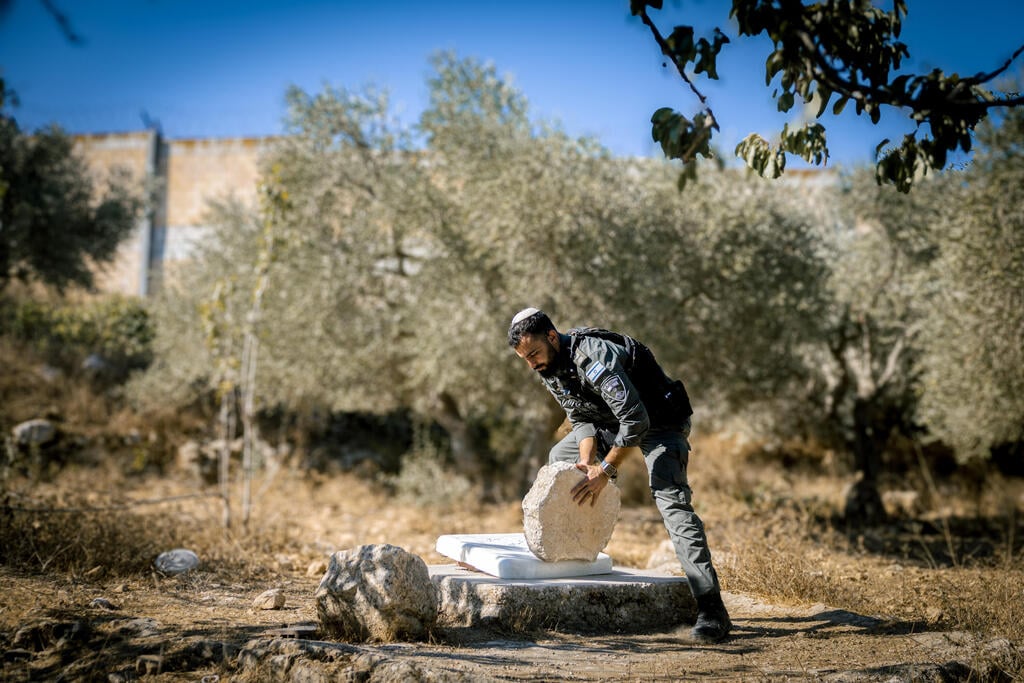
A tunnel discovered last month near the West Bank security barrier outside Jerusalem was sealed Wednesday night by Border Police and IDF forces, authorities said.
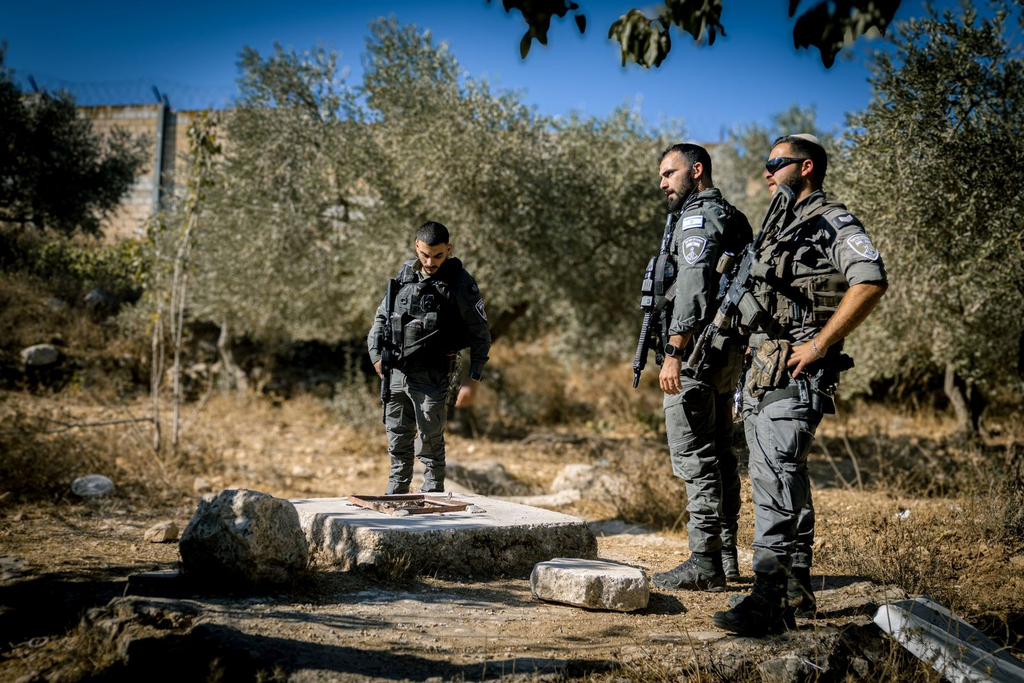
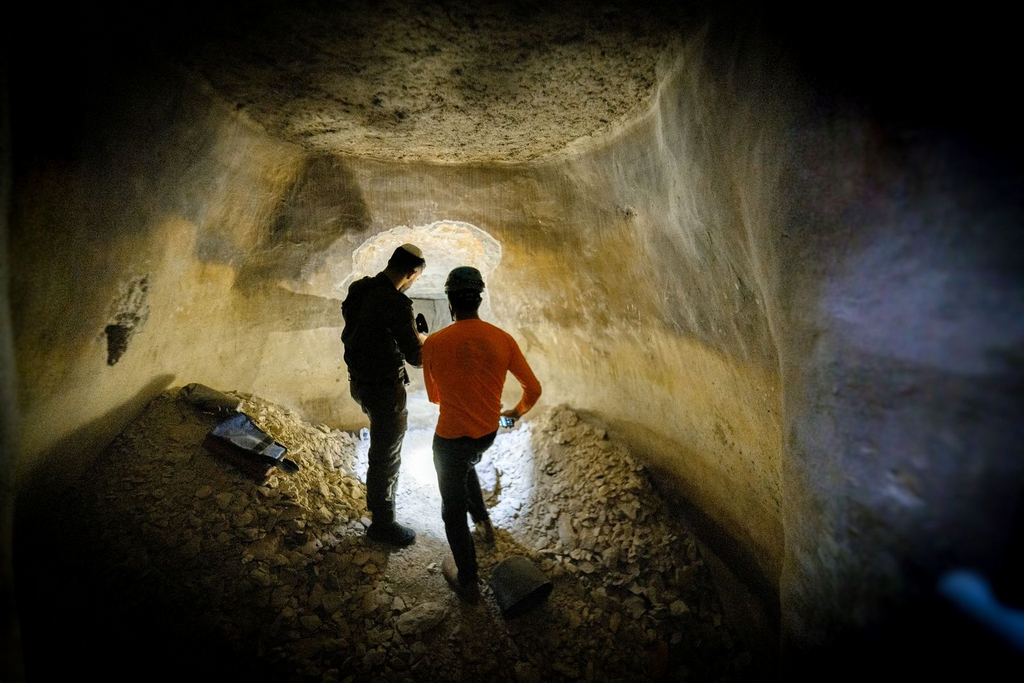
The tunnel was found near the communities of Givon and Givat Ze’ev, northwest of Jerusalem. Its entrance had been concealed inside an ancient, dried-up water cistern near the Palestinian village of al-Jib. An examination found that the tunnel was at an advanced stage of excavation.
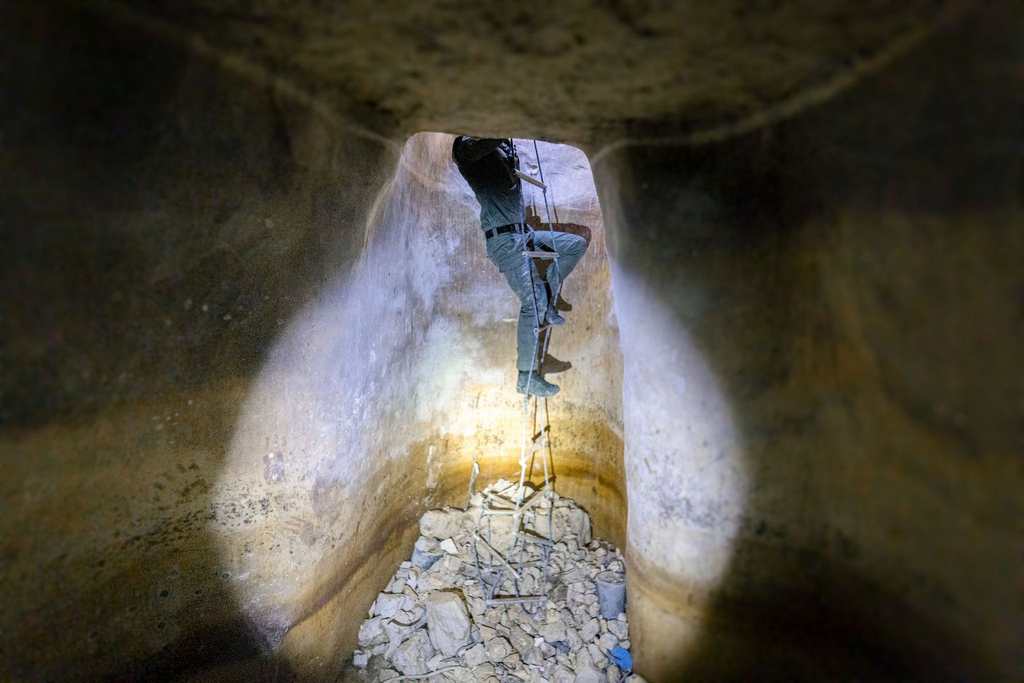
Following intelligence and operational activity after the tunnel was discovered Aug. 28, Border Police officers conducting surveillance in the area arrested a suspect carrying digging tools.
Chief Superintendent Eliyahu Tubul, commander of the northern battalion of the Jerusalem-area Border Police, told ynet that authorities treat attempts to cross the barrier illegally as potential security threats rather than merely attempts by Palestinians to enter Israel for work.
“From my perspective, this isn’t an illegal worker who wants to work in Israel. Anyone like this is an infiltrator who could be the next terrorist to carry out an attack inside Israel,” Tubul said.
He said the latest discovery was not an isolated case and described several other attempts to dig beneath or through the barrier around Jerusalem.
“Ten months ago, we received precise intelligence and uncovered a sewage pit through which they were digging a tunnel into Israeli territory beyond the wall,” he said. “Not long ago, we identified digging along the Qalandiya route, and suspects were arrested while digging. Two weeks ago, officers identified crumbling in the wall in Kafr Aqab and heard digging. We entered through the hole that had been carved out and arrested two suspects during the activity.”
(Photo: Israel Police)
In the latest case, Tubul said, the suspects took advantage of the dried-up water cistern near al-Jib to conceal their excavation.
“We marked the location and left it. We conducted surveillance and intelligence work and kept watch on it,” he said. “Two days ago, we spotted a young man arriving and digging, and we caught him in the act on the village side. We examined the tunnel and discovered they had dug deep and reached within 5 meters,” or about 16 feet, “of the barrier from their side.”
‘Looking for every possible way’
Tubul said authorities were concerned not only about Palestinians attempting to enter Israel illegally for employment but also about the possibility that tunnels could be used by terrorists or to smuggle weapons.
“Alongside infiltration for work in Israel, we have previously seen terrorists enter this way,” he said. “These are also potential routes for transferring weapons into Israel. Our operating assumption in the Border Police is that anyone attempting to infiltrate could be the next terrorist, particularly ahead of the Jewish High Holiday season.”
Tubul said a lucrative smuggling industry had developed around Palestinians seeking to enter Israel without permits from the West Bank.
(Photo: Israel Police)
“This is driven by greed among those running the infiltration industry from the West Bank, an industry that generates large sums of money,” he said. “A West Bank resident who infiltrates Israel pays an operator 800 to 1,200 shekels,” about $265 to $400, “sometimes just to put up a ladder so he can climb over the wall.”
Tubul said such attempts to scale the barrier have become far less common over the past year because of the danger involved. He said Border Police officers may open fire at people attempting to cross in certain circumstances.
Since the Hamas-led Oct. 7, 2023, attack that triggered the Gaza war, Israel has sharply restricted the entry of Palestinian workers from the West Bank, leaving many who previously worked inside Israel unable to cross through regular channels.
“The smugglers who bring in infiltrators are looking for every possible way to get West Bank residents into Israel,” Tubul said. “They disguise themselves as women or ultra-Orthodox Jews at crossings and we uncover them. They hide in garbage trucks or behind false compartments in trucks. The smugglers know we are applying heavy pressure at the crossings, so they are looking to tunnels.”
Tubul said authorities now regard sewage pits, water cisterns and areas of easily excavated soil along the barrier as potential locations for tunnels leading from the West Bank to the Israeli side.
(Photo: Israel Police)
“Any sewage pit or ground that is easy to dig through has the potential to be used for a tunnel from the West Bank that emerges beyond the wall,” he said.
Border Police conduct foot patrols along the route and use surveillance cameras and drones in an effort to identify signs of tunneling, Tubul said.
Until about a year ago, he said, Palestinians seeking to enter Israel without permits frequently climbed over the barrier near Highway 60, with the number at times reaching into the hundreds.
“Border Police managed to shut down the phenomenon after about a year,” Tubul said. “That is forcing them to look for alternatives.”