

After 14 straight months of combat, the members of the “Hineni” Zionist task group of the Nahal Brigade did not go home to rest. Instead, they headed straight to the Jordan Valley for a full year of agriculture, education, and building up the land. Gilad rose at three in the morning to milk cows in the dairy barn, Liran mentored at-risk teens at the Neve Sraya youth village, and Naveh, who split his days between the orchard and the fields, sums it up: “We experienced the devastation of the war, and now it is time to bloom and to grow”
There is one moment that Gilad, 22, will never forget: the moment he climbed onto the truck that took him out of Gaza for the last time, after 14 straight months of combat. But the truck did not head home; it headed to the Jordan Valley, carrying him and his friends, armed with assault rifles on one side and with spades and pruning shears on the other.
Gallery
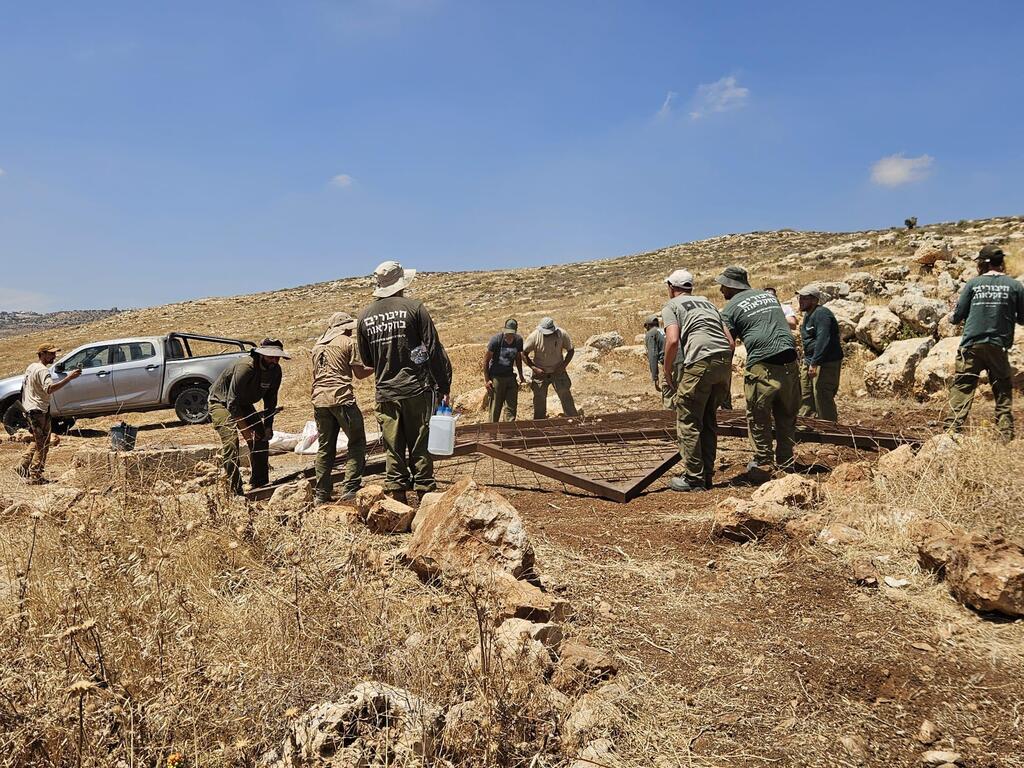
'You come straight out of the war to build the next story of the pioneering enterprise with your own hands.' Members of the Zionist task group in the fields of the Valley
(Photo: Courtesy of Chiburim BaChakla’ut)
“You come straight out of the war to build the next story of the pioneering enterprise with your own hands,” he recalls, “and you feel that you have found the right piece of the puzzle.”
This is how, about a year ago, the “mission chapter” of the Hineni Zionist task group began. It is the first pioneer-oriented Nahal Zionist task group of the Bnei Akiva movement, in partnership with the organization Hiburim B’Haklaut, established to strengthen the eastern border in the wake of the Swords of Iron war.
The members of the Zionist task group, who enlisted together even before October 7, and who fought shoulder to shoulder in a battalion of the Nahal Brigade, reached the final year of their service and dedicated it, as part of their track, to settlement missions along the borders.
This month, the circle was closed with a festive ceremony in the Jordan Valley, one that also marked the revival of the original Nahal model - combat alongside working the land - which had not existed for several decades.
'An awesome view for your morning coffee'
And back to Gilad: for an entire year, at an hour when most of us were still deep in sleep, he was already deep into his workday at the dairy barn of Shadmot Mechola.
“The moments that will forever stay with me are those of the sunrise over the mountains of Gilead, which are clearly visible from the barn,” he says. “After you have gotten up at three in the morning and prepared the milking area, the sunrise is an awesome view for your morning coffee.”
It is hard to imagine a situation more distant from the place he came from, together with his fellow group members. “We had been fighting and standing guard for hundreds of days in heavy vests in the heat, and for a far longer stretch than we had ever imagined,” he recalls. “On the one hand, we want to get to the part of building and developing the country, to share in the ideal of ‘do good.’ On the other hand, these are years in which active combat soldiers who will do the ‘grunt work’ and keep guard even when it is hard and hot are perhaps needed most.”
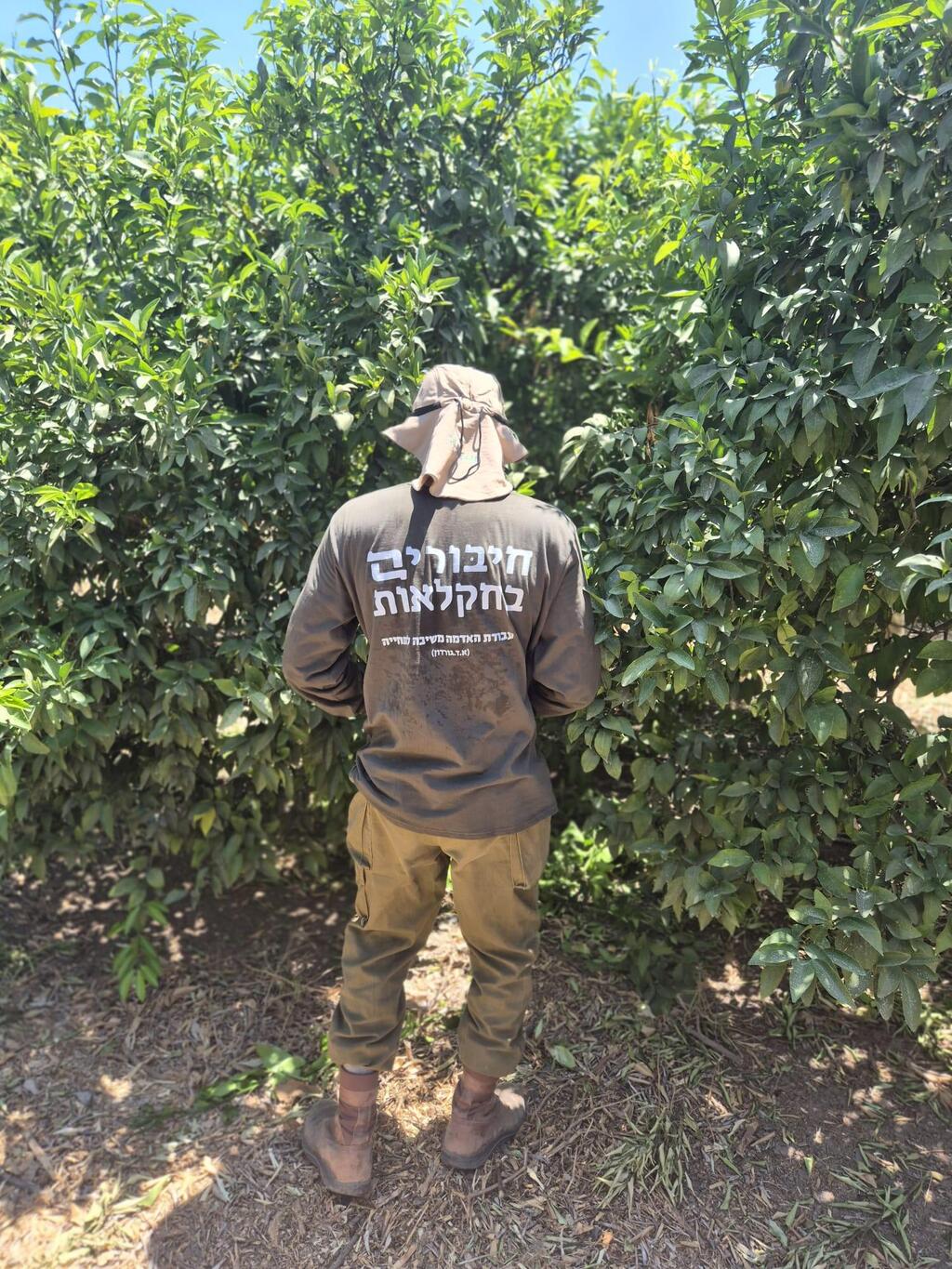
'People who decided to settle where they are needed, not where it is comfortable'
(Photo: Courtesy of Chiburim BaChakla’ut)
In the end, this dissonance was resolved by the new routine. “All the guys get up at six in the morning and go to pray, and whoever is smart has already prepared his tuna sandwich and cold water in advance, and everyone heads out to their missions, each to the track he built himself together with the Zionist task group coordinators and the heads of the institutions, whether on the agricultural farms, at the youth village, or in the dairy barn.”
But it was not only the work that left its mark on him; the residents of the Valley themselves did too. “These are idealistic people building their home in the Valley, a region with a difficult climate, out of love for the land and the soil,” he says. “Every movement a person makes here, every new car driving through the area, all of it is felt immediately, because the place is relatively desolate, and the residents here settled where they are needed, not where it is comfortable to live.”
'The shared home was my anchor'
Unlike Gilad, who milked cows, Liran, 23, was not sent to the fields or to the barn, but to the Neve Sraya youth village in Brosh HaBika’a, a location that began its life as a Nahal outpost in the 1980s and which today, closing a circle of its own, once again took in Nahal soldiers who traded combat for building, agriculture, and education.
“Taking off the uniform after intense combat and arriving in the Valley is a kind of shock, in the deepest sense of the word,” he says. “My mission was not agricultural but educational, and it took me time to make the switch in my head and move from a combat state of being, alert and operational, to a state of listening, patience, and educational work.”
What helped you make that transition?
“Thanks to the ‘mission chapter,’ I was finally able to live together with my wife, Shir. Up until then, we had largely been apart because of the war. That landing together into a shared home, in the middle of all the madness, was an anchor that allowed me to leave the memories of the war behind and focus on the present.”
That home, in Shadmot Mechola, was surrounded by community as well. “Every couple or group member was placed with an adoptive family. We were blessed with an amazing family, Shulamit and Arnie Kaminsky. They invited us for Shabbat meals, opened their door for us for any reason in the middle of the week, and never gave up on us. Their embrace was an inseparable part of the experience.”
(Photo: Courtesy of Hiburim B’Haklaut)
That embrace is what he brought with him every morning to the teens who arrived at Neve Sraya after dropping out of the regular high school system, their home communities, and sometimes from their families. The village offers them a second chance, and it is right at that juncture that Liran stepped in.
“I am there with them, accompanying, supporting, pushing them to take an active part both academically and socially, to learn, not to let themselves off the hook, and to grow,” he says. “I am not a teacher or a commander, but really like a big brother.”
But the truly moving moments, it turns out, do not appear on any schedule. They happen precisely during the breaks, in downtime between activities. “That is where the magic happens,” he says, “in the knowledge that they have a listening ear and support, and in the informal conversations, when they share with me something that is weighing on them, something they do not feel comfortable sharing with anyone else.”
Is there something in particular from this year that stays with you?
“The ‘Personal Journey,’ a unique project at Brosh designed for students who need a small push forward. We build out an entire journey for the teen, personally tailored to them, with the goal of drawing out their hidden potential. I was privileged to take part in several such journeys, and it is just amazing to see a teen who is dealing with challenges succeed in proving to everyone, and above all to themselves, how much strength they actually have inside themselves. And the moment this kid understands that on their own? That’s worth the whole year.”
'Now it is time to grow'
While his friends speak of a sharp transition, for Naveh, 23, this year felt entirely different. “I did not experience two separate processes with a break between them, but the opposite: continuity, two sides of the same coin,” he says.
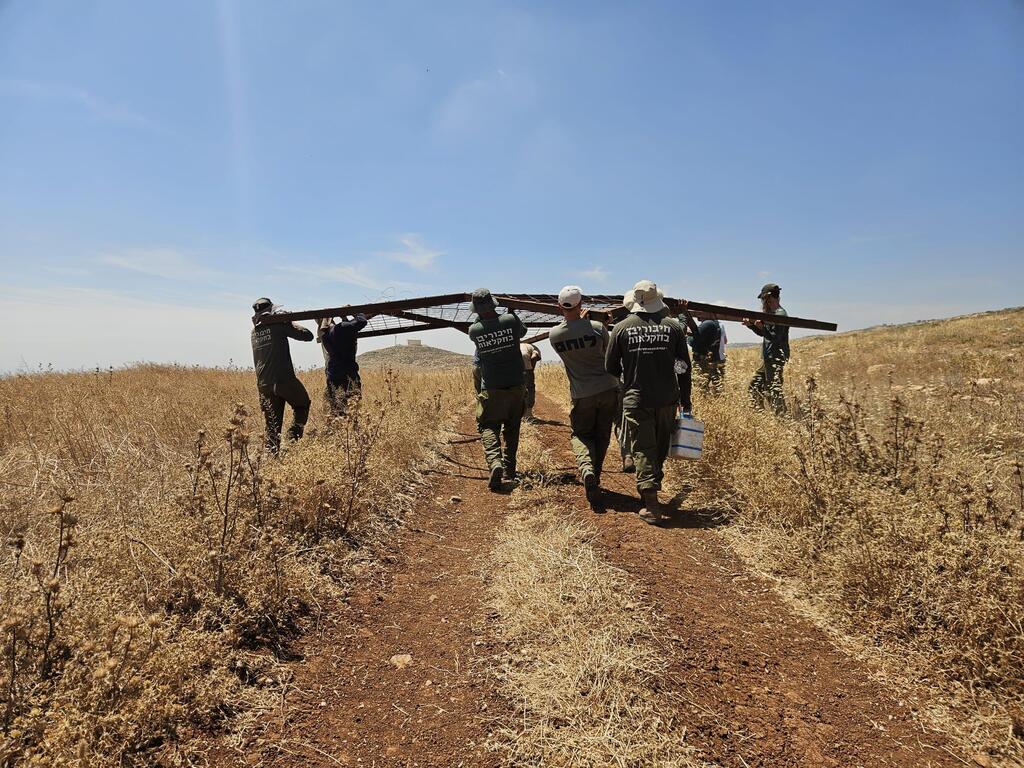
“We talked about it a great deal among ourselves back in Gaza. We experienced the devastation of the war, and now it is time to bloom and to grow, to engage with the land and with education. It might have been a sharp transition for some of us, but in the end the process is one and the same: a natural, healing continuation of the war.”
'We experienced the devastation of the war, and now it is time to bloom and to grow'
(Photo: Courtesy of Hiburim B’Haklaut)
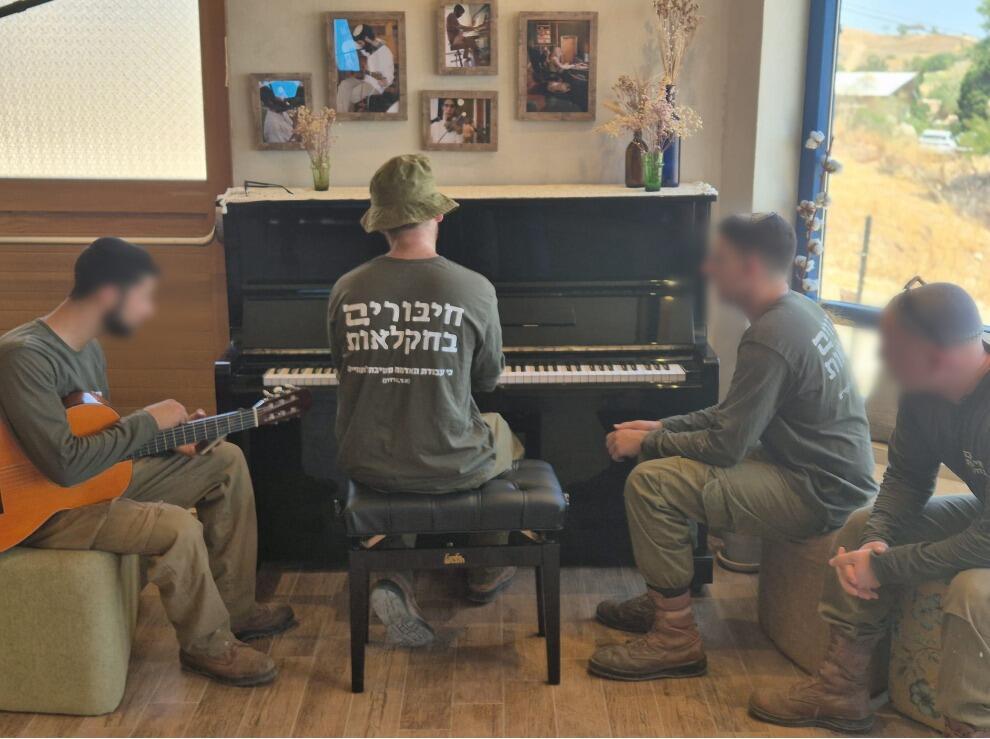
The days began with the morning prayer at 6:00 a.m., continued with work in the field crops, the orchard, and the dairy barn, and in the evenings, with group activities with the youth of the community. But when Naveh looks back on this year, he speaks mainly about what happened in between. “There were plenty of jokes in the middle of the work, over breakfast out in the field or just around a coffee kit,” he recalls. “And in our free time we would play music together at Beit Naaran.”
Beit Naaran is not just a music room: the building was erected by the Yeshivat HaBik’a in Shadmot Mechola in memory of Rabbi Naaran Eshchar, a musician and combat soldier who fell in the Swords of Iron war. And it was precisely there that Naveh received the answer to the question of what he was doing here at all.
“One of the residents gave us a Tanach class at Beit Naaran,” he recalls, “and in the middle of the class he pointed out the window at the desert landscape and spoke about our forefathers who walked here, lived and fought, about the Six-Day War and the capture of the Jordan Valley, and suddenly it all came together for me. It was an inner, honest feeling of understanding why we are here.”
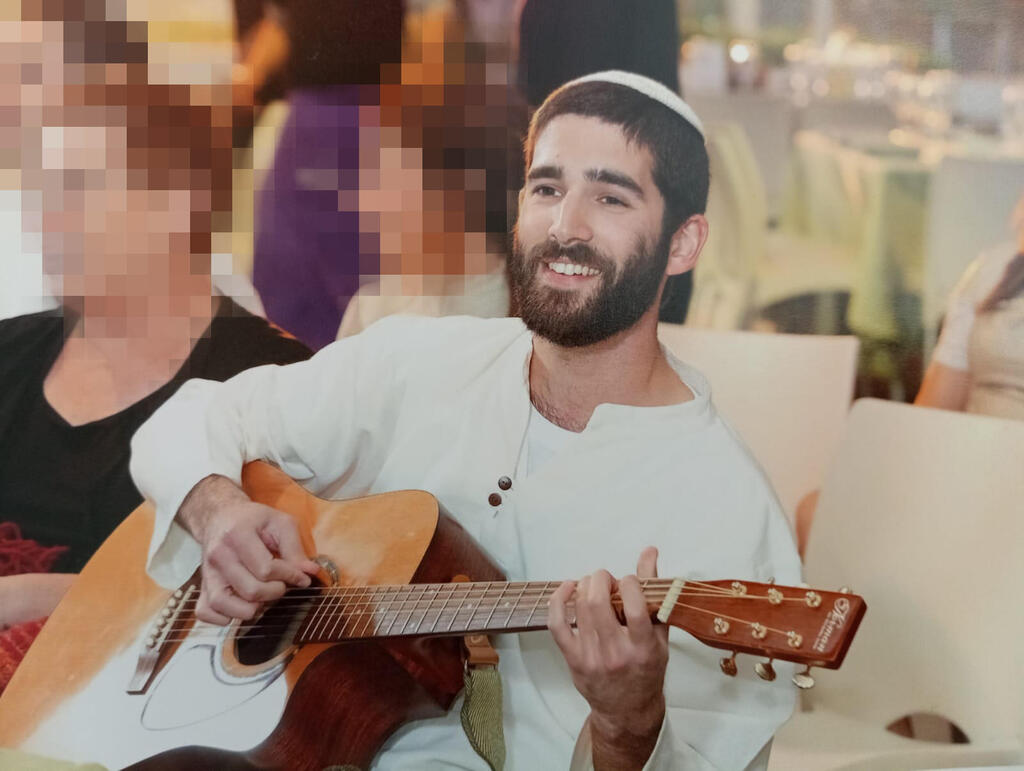
Rabbi Naaran Eshchar
(Photo: Courtesy of the family)
But when he sums up the year, Naveh does not speak about the land or the beautiful view, but about the people with whom he shared it. “Our platoon was made up of two Zionist task groups: our group, from Bnei Akiva, and a group from the Tarbut movement. These groups come from completely different backgrounds, different opinions, different ways of thinking.
“During the war, we fought together at the front, and we argued together back home. Despite the disagreements, we are friends and love each other deeply, and throughout the whole journey, we were accompanied by the feeling that there is something special here, something all of Israel needs to experience as well.”
At the closing ceremony held this month in the Valley, the partners of the initiative also summed up the year. “We have proven that the pioneering spirit is alive and kicking,” said Yigal Klein, Secretary General of the Bnei Akiva movement, and Barry Rosenberg, Executive Director of Hiburim B’Haklaut, added: “Together we all turned a vision into reality and added a story to the building of the Land.”
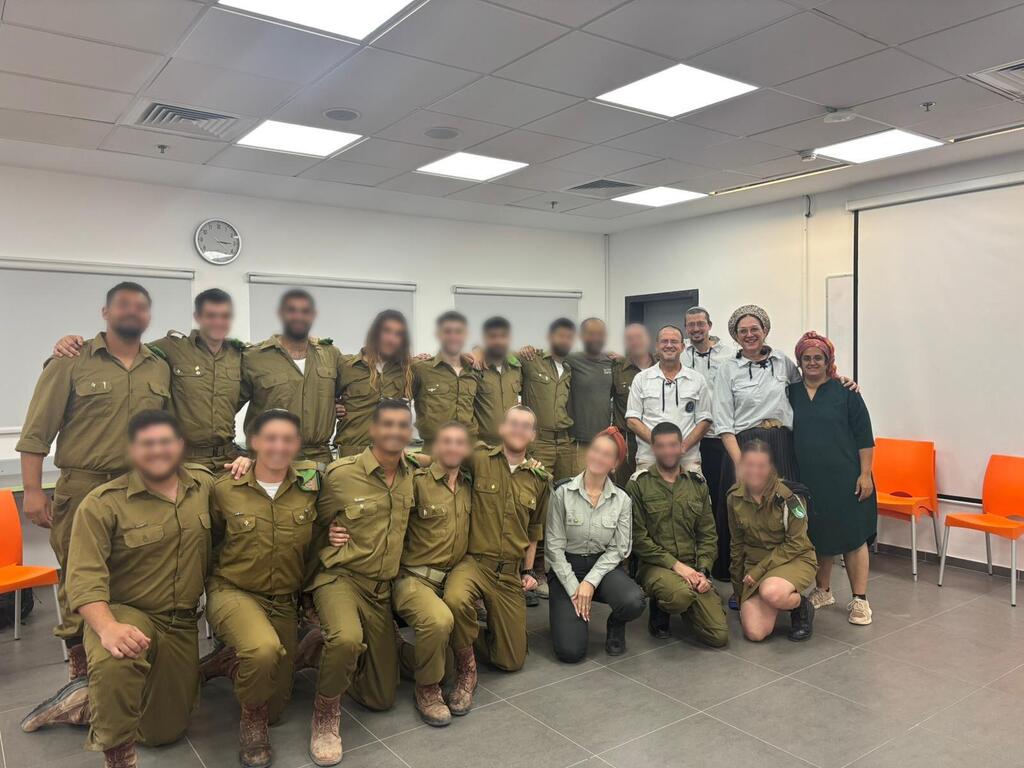
'A natural, healing continuation of the war.' Members of the pioneering Nahal Zionist task group
(Photo: Courtesy of Hiburim B’Haklaut)
And Gilad? He already knows what he will take with him from this year. Not the ceremonies and not the speeches, but 3:00 a.m. in the dairy barn, the milking facility, and the morning coffee against the view of the sunrise over the mountains of Gilead.
“For me it was a privilege to take part in this process,” he concludes, “and I hope that more Nahal Zionist task groups will come to the Valley and strengthen the agriculture and the residents there. They deserve our support.”