



The disturbing images of Or Levy, Ohad Ben Ami and Eli Sharabi—frail and visibly malnourished after 491 days in Hamas captivity—have sparked outrage in Israel. However, officials acknowledge that Israel’s options for an immediate response are limited as the hostage release process continues.
While reducing humanitarian aid to Gaza or delaying the release of Palestinian prisoners have been raised as possible responses, both would constitute a violation of the cease-fire deal. Another option—terminating the agreement altogether—is seen as unlikely, as Israel remains committed to securing the release of more hostages beyond the 33 scheduled in Phase I.
Hamas parades hostages in central Gaza before their release


The anger toward Hamas is growing, but officials say that rather than breaking the deal, it is likely to pave the way for a return to fighting once the current phase ends, unless an extension is reached.
A senior Israeli official confirmed that Prime Minister Benjamin Netanyahu has ordered a negotiation team to travel to Doha to discuss the technical aspects of the agreement. Upon his return from the United States, Netanyahu is expected to convene a Security Cabinet meeting to discuss the next phase of the hostage deal.
Following reports that the cabinet meeting will only take place next week, the Hostages and Missing Families Forum issued a sharp response, questioning why Israel’s leaders were not convening immediately.
"How, after the shocking images of Eli, Ohad and Or, is the Cabinet not meeting right away?" the group said in a statement. "What more proof is needed for decision-makers to grasp the critical urgency of rescuing the remaining 76 hostages? The prime minister must send the negotiating team to Qatar with a clear and full mandate—to finalize the deal swiftly and secure the return of every last hostage with a defined plan and timeline."
Gallery
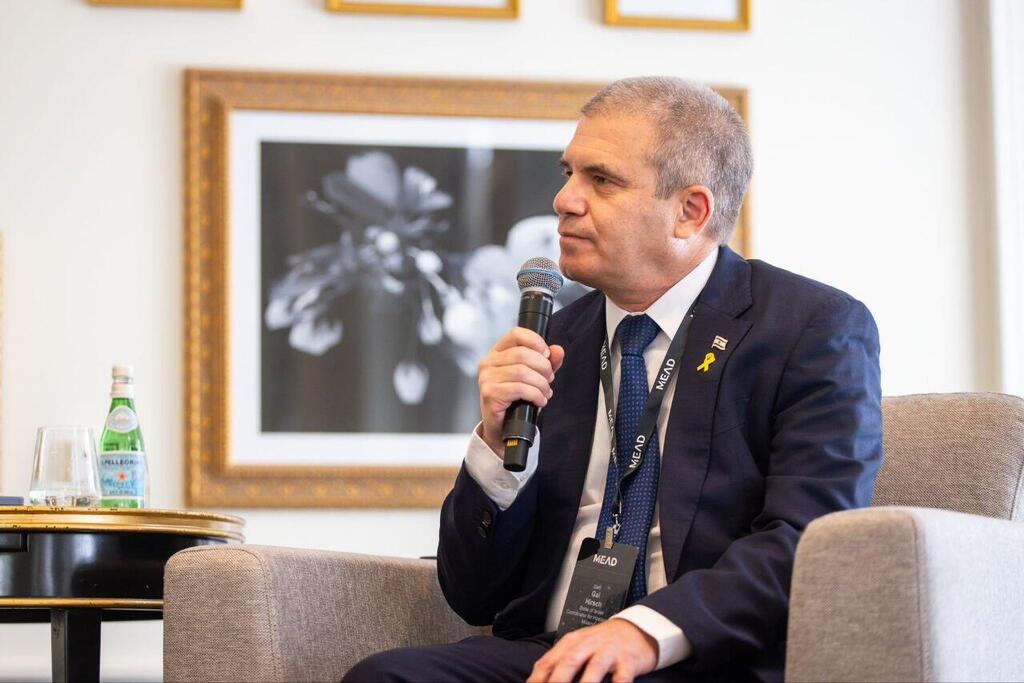
Hostage and Missing Persons Coordinator Brig. Gen. (res.) Gal Hirsch
(Photo: Itzik Belenitzki)
As part of Netanyahu’s new approach to negotiations, Hostage and Missing Persons Coordinator Brig. Gen. (res.) Gal Hirsch will travel to Doha for the first time. He will be joined by M., the former deputy head of the Shin Bet, whose participation was strongly advocated by Shin Bet Director Ronen Bar. Another senior official from the Shin Bet director’s office, who was involved in previous negotiation rounds, will also be part of the team.
Get the Ynetnews app on your smartphone: Google Play: https://bit.ly/4eJ37pE | Apple App Store: https://bit.ly/3ZL7iNv
The talks in Doha will focus solely on finalizing Phase I of the deal, with negotiations on Phase II set to begin only after Israel’s position is approved by the Cabinet.
Meanwhile, a senior Hamas official warned in an interview with AFP that the agreement is at risk of collapse, saying that Hamas "does not want to resume the war" and is "ready" to continue negotiations. He also called on Arab nations to refrain from normalizing ties with Israel.
Meanwhile, National Unity Party MK Gadi Eisenkot suggested an alternative approach—"compressing" the deal timeline to secure hostage releases more quickly.

Hamas parades hostages in central Gaza before their release
(Photo: REUTERS/Hatem Khaled)
"The horrific images of Or, Eli and Ohad returning to Israel are yet another painful reminder of the unbearable cost of waiting and delays," Eisenkot said.
He criticized the government for approving Netanyahu’s proposed three-phase deal only after months of delay and called for immediate action.
"The government’s duty is clearer than ever in light of today’s images—grant the delegation a clear and immediate mandate to travel to Qatar and shorten the timeline for implementation. The Israeli people are paying an unbearable price, minute by minute, with extreme suffering and ongoing life-threatening risks."