

The government on Sunday again failed to adopt a unified policy to implement a High Court ruling that ordered the state to begin drafting ultra‑Orthodox yeshiva students into the IDF, exposing a growing constitutional and political crisis over military conscription.
The High Court of Justice ruled in November that the government must formulate an effective policy by Sunday to draft yeshiva students who have received military draft notices. The court said the longstanding exemption for many in the ultra‑Orthodox community — known as Torato Umanuto (“Torah study is his profession”) — had created “an inequality that is burdensome and egregious,” worsened by the security realities following the Hamas terror attacks of Oct. 7.
Gallery
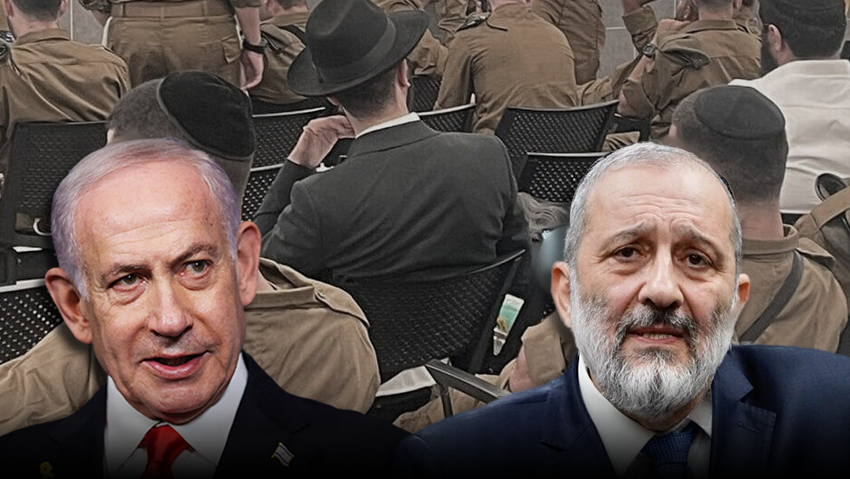
Prime Minister Benjamin Netanyahu, Shas leader Arye Deri
(Photo: IDF, Shalev Shalom, JOE RAEDLE / GETTY IMAGES NORTH AMERICA / AFP)
Under Israeli law, most Jewish citizens are subject to compulsory military service at age 18, but ultra‑Orthodox men have historically received deferments to continue full‑time religious study. The court ordered the government to present a plan within 45 days that would include enforcement mechanisms and address economic and civil impacts on those drafted.
Instead of a policy, however, ministers held a discussion that an official acknowledged produced no concrete outcome. Deputy Attorney General Gil Limon, one of the senior legal advisers to the government, sharply criticized the ministers after the Cabinet meeting. “A discussion with the participation of six ministers is a constitutional crisis. The government is violating a High Court ruling,” Limon said.
Limon said the legal deadline had already passed and that the government’s continued delay amounted to a breach of the court’s directive. Cabinet Secretary Yossi Fuchs countered that “the government’s policy is to approve the draft law,” referring to separate legislation expected to govern conscription rules.
The conscription debate has long been one of Israel’s most divisive political issues, and it intensified after the October 7 attack, when Israel faced severe manpower shortages in its military.
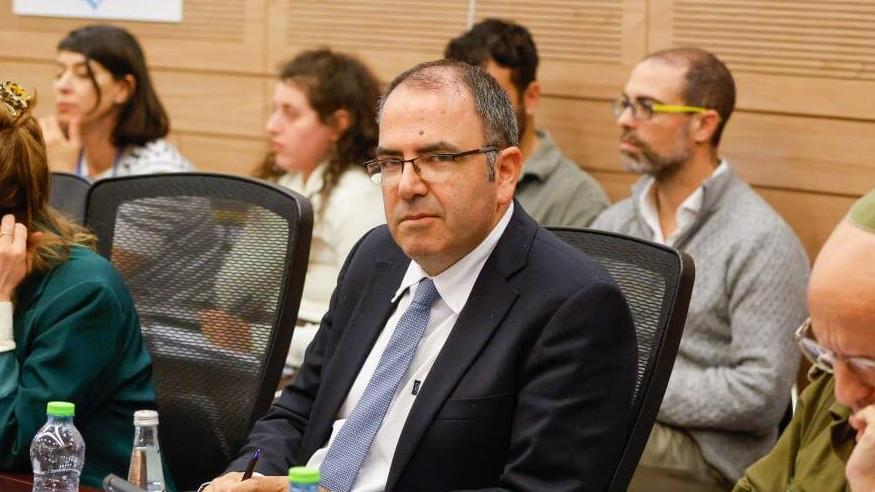
Deputy Attorney General Gil Limon
(Photo: Knesset)
The meeting also touched on proposed measures to compensate or assist those drafted, including economic relief, but ministers did not agree on any steps.
Limon also criticized the government’s proposed investigative committee into the failures of the Oct. 7 attack, saying its structure risked full political control rather than independent scrutiny. The Knesset is considering a bill to establish a “national” committee rather than a state commission with broader powers and independence.
“The primary purpose is to investigate the truth. The public has the right to know what the failures were and who should bear responsibility,” Limon said. “The law already provides a mechanism for that — a state commission of inquiry that allows an independent and professional examination. In a state commission, the government decides to establish it and defines the issues to be examined, and then its influence ends. The proposed law sets up a mechanism under full political control over the committee’s makeup and scope of investigation. You’re turning the investigation into a political event.”
The session also saw unusual tension between Prime Minister Benjamin Netanyahu and Limon. During a heated exchange, Netanyahu stood up, approached Limon and said, “I want to hear him up close — he says simply amazing things.”
'There won’t be drafts, there’ll be 17,000 prisoners'
Earlier, Knesset Foreign Affairs and Defense Committee Chairman Boaz Bismuth sharply criticized the opposition during a debate on the draft bill. “If I listen to you, there won’t be a draft of 17,000 Haredim — there will be 17,000 prisoners and 5,000 soldiers forced to guard them. You don’t want to draft anyone,” he said.
Knesset Member Sharon Nir of Yisrael Beiteinu confronted Bismuth over the absence of Likud lawmakers from the discussion, to which he replied: “It’s enough for one person to tell the truth. You need twenty just to repeat lies.” MK Meir Porush protested a proposed sanction to strip day‑care benefits from yeshiva students who fail to show up for enlistment, saying, “Does this align with the UN Charter that Israel is a signatory to? Starving young children?”
Shas: 'No law, no vote on the budget'
The ministerial committee on Haredi education and budget regulation also convened Sunday, with representatives from the ultra-Orthodox Shas and United Torah Judaism (UTJ) parties present.
Shas spokesman Asher Medina told Kol Barama Radio that “this is a purely political event. The most powerful figure in the Haredi public is [Shas leader Arye] Deri, and so all the pressure is directed at Shas, from both the arrest of the Sephardim and attacks from the [Ashkenazi Lithuanian Jerusalem] Faction. They see Deri as the figure on whom pressure should be focused. He is the one who holds the government together. Shas will not vote on the state budget without the draft exemption law passing its second and third readings.”
“For the Haredi public, the draft law is the most far‑reaching thing one can imagine," Medina added. "With God’s help, we will support the law because it is the only thing that will save the world of Torah. The only thing that will stop the arrests is not demonstrations, it’s the law.”
The Finance Ministry is expected to present the budget between Jan. 12 and 14, when it will be brought to a government vote. Until then, Shas is demanding either a draft exemption law or it will bring down the budget, which is key to keeping the government stable. Shas has 11 coalition members in the Knesset, and Netanyahu’s office is expected to try to persuade them to vote in favor of at least the first reading, even without a draft exemption.
Last week, UTJ lawmaker Moshe Gafni said, “Netanyahu wants to pass the law, he is serious about it. If there is no progress in the Foreign Affairs and Defense Committee, we will not vote for the budget, not even in the first reading, and if that means the government falls, then let the government fall.”