

It is considered “Israel’s Ohio” — but it is not the only city where election results resemble those of the country as a whole: Less than two months before the election, an analysis by real estate data company Madlan, based on the 2022 election results in every city with more than 50,000 residents, shows that Rehovot is once again the city whose results most closely resemble those of Israel overall.
And Rehovot is not alone. Petah Tikva, Haifa, Hadera, Netanya, Holon and Rosh HaAyin also showed strong similarities between their results and those of the general election, after which the fully right-wing government took office and survived a full term despite the October 7 massacre. At the other end of the table are mainly Haredi and Arab cities.
The cities at the top
But first, the leaders. Like the neighborhood analysis, which found that central Rehovot was the neighborhood whose results most closely resembled those of Israel as a whole, the city long regarded as an election bellwether ranks first.
Gallery
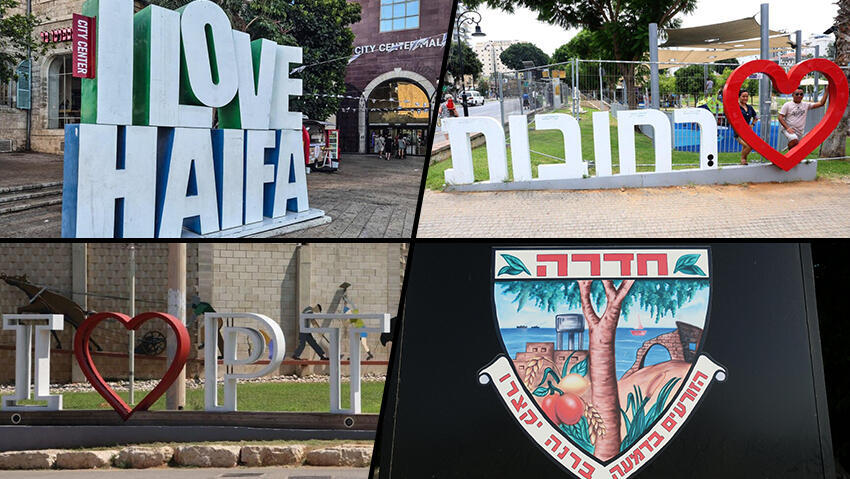
These cities each have a little oif everything
(Photos: Motti Kimchi, Shaul Golan, Gil Nehushtan, Elad Gershgurן)
In Rehovot, as in every city in the top 10 except Haifa, there is almost no Arab population, so support for Arab parties is negligible. But aside from that, the city’s demographics produce voting percentages for the various parties that are very similar to those nationwide.
For example, 25.7% of voters in Rehovot backed Likud, compared with 23.4% nationally. Yesh Atid received 23.1%, compared with 17.8% nationwide. Religious Zionism won 13%, compared with 10.6% nationally, while National Unity received 10.5%, compared with 9% nationwide.
The gaps in support for Shas, Yisrael Beytenu, Labor and Meretz were even smaller — less than one percentage point. Overall, the average difference between Rehovot’s vote share and the national result among the 13 parties that received the most votes in that election was extremely low, at 2.05 percentage points, indicating a high degree of similarity.
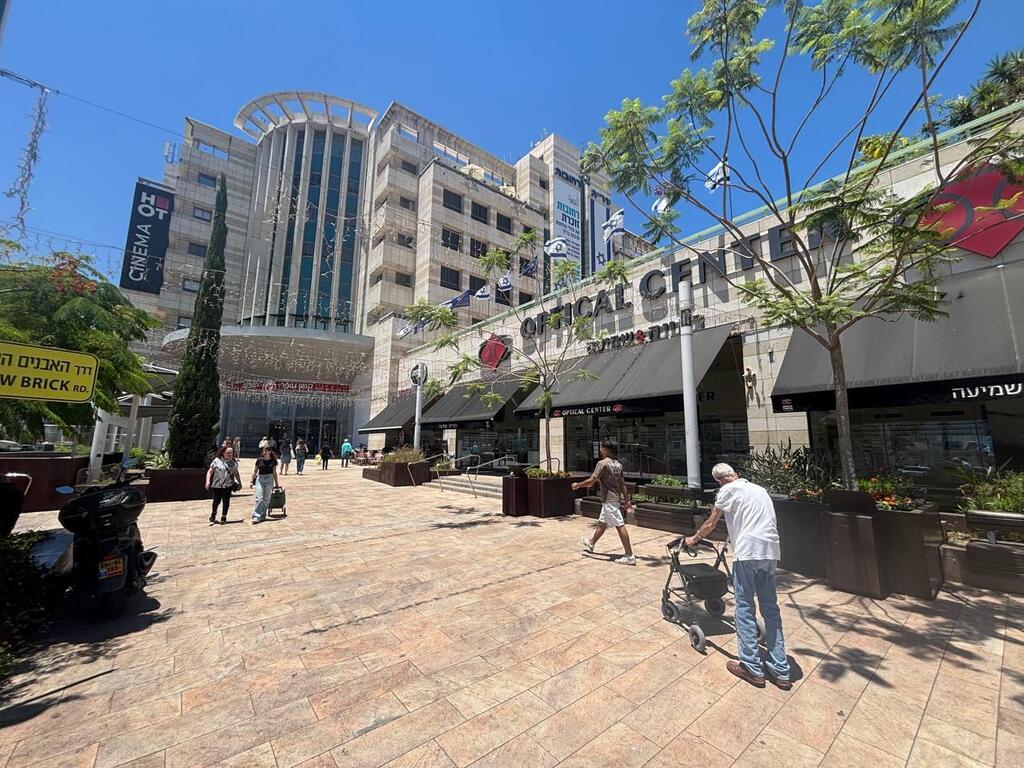
Voters in Rehovot most closely reflect the country as a whole
(Photo: Meir Turgeman)
Rehovot was known for years as “Israel’s Ohio.” The Midwestern state of Ohio voted for the winner in every U.S. presidential election from 1964 through 2016. It was considered a swing state throughout those years, and the streak ended only when most of its voters backed Donald Trump in 2020 but Joe Biden was elected the 46th president.
Over the past decade, Ohio has come to be regarded as a Republican state rather than a swing state, meaning its reputation as a predictor of the winner is unlikely to return. Similarly, Rehovot was for years considered a city whose results predicted the winner nationwide, but the succession of inconclusive elections at the end of the previous decade and beginning of the current one put an end to that claim as well.
Petah Tikva comes next on the list, where support for Likud was higher, at 28.4%, while Yesh Atid’s 19.7% was lower and closer to its national share.
In Haifa, the only city in the top 10 where Yair Lapid’s Yesh Atid beat Likud, by 26.3% to 20.9%, Hadash-Ta’al received 5.7%, higher than its national vote share.
The Sharon-area cities of Hadera and Netanya round out the top five. In both, Benjamin Netanyahu’s Likud won more than 35% of the vote, reaching 38% in Hadera, but there was a very high degree of similarity in support for other parties.
In Hadera, the difference between the city and the country as a whole was less than one percentage point for Yesh Atid, National Unity, Religious Zionism and Shas — the four parties that received the most votes after Likud. In Netanya, Yesh Atid received 17.4%, less than half a percentage point away from its national result.
Among those 10 most similar cities, Rosh HaAyin had the highest vote share for Bezalel Smotrich and Itamar Ben-Gvir’s Religious Zionism, at 14.8%, largely because of the city’s relatively large religious population. At the same time, Rosh HaAyin also had the highest support for Benny Gantz’s National Unity, at 14%. Gantz is a resident of the city.
Israel in the middle
In the country’s two largest cities, Jerusalem and Tel Aviv, the results were far from similar to the national picture.
In Jerusalem, United Torah Judaism was the largest party in 2022 and Shas received 2.5 times as many votes as Yesh Atid. In Tel Aviv, Yesh Atid received almost twice as many votes as Likud, while Meretz, which failed to cross the electoral threshold nationally, was nearly the city’s third-largest party.
Tel Aviv and Jerusalem ranked 28th and 29th, respectively, on the similarity list, ahead of Hod Hasharon, where support for Yesh Atid was the highest among the cities examined, at 40.4%.
The seven cities whose results were classified by the analysis as “very different” from the national outcome are all Haredi or Arab.
In Elad, nearly half the population voted for Shas and 35% backed United Torah Judaism. In Bnei Brak and Beitar Illit, 59% voted for the Ashkenazi Haredi party and 30% for Sephardic Shas. In Modi’in Illit, 77.4% voted for United Torah Judaism, compared with 6% nationally.
Modi’in Illit ranked second to last in similarity, while the most different city of all among those with more than 50,000 residents was Umm al-Fahm. There, 40.5% voted for Hadash-Ta’al, 37.8% for Balad and 17.5% for Ra’am, while all Jewish parties combined received less than 5%.
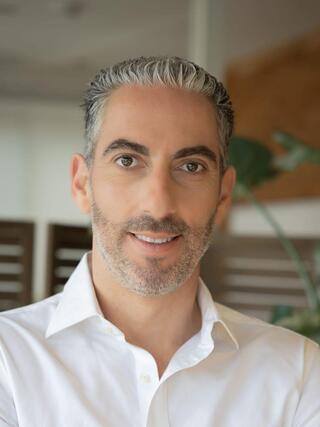 Tal Kopel, CEO of MadlanPhoto: Merav Rigler
Tal Kopel, CEO of Madlan, explained: “In each of the cities that vote similarly to the actual national results, there is ‘a little bit of everything’: Likud around the national average, Yesh Atid, Religious Zionism, Shas, Haredim, the left — and no single bloc swallows up the rest.
“By comparison, the cities at the bottom of the ranking are precisely those with a clear sectoral identity: Jerusalem, with United Torah Judaism; Tel Aviv, Herzliya, Ra’anana and Kfar Saba, with Yesh Atid and the center-left; Ashdod, Kiryat Gat and Tiberias, with Shas and traditional-religious voters; and Acre, Lod and Ramla, mixed Jewish-Arab cities. The cities that vote ‘like Israel’ are exactly those where no single sector has a majority.”
He added: “We see that these are medium-to-large, established cities in central Israel and along the coastal plain — not at the heart of one bloc and not in the far periphery. They are also neither the wealthiest cities nor the most disadvantaged. In other words, they represent middle Israel, the country’s geographic and socioeconomic center.
“In short, the cities that vote like Israel are precisely the cities that are Israel in miniature.”