

Classified documents provided to Congress include an assessment by the U.S. intelligence community that Saudi Arabia has not ruled out the option of developing a nuclear weapons program, The Washington Post reported Friday evening.
The report comes amid concerns raised by numerous experts over an agreement reached in July between the U.S. administration and Riyadh that would allow the kingdom to develop a civilian nuclear program under less stringent safeguards than are customary. Unlike similar agreements with other countries, the deal also opens a path for Saudi Arabia to enrich uranium domestically, potentially to the relatively high level of 20%.
Gallery
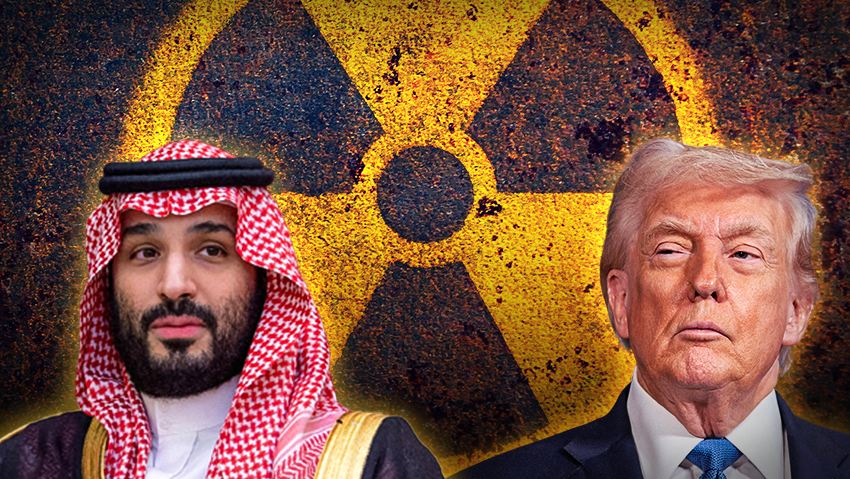
(Photo: Hamed Jafarnejad/ISNA/WANA (West Asia News Agency) via Reuters; Reuters/Jonathan Ernst; Shutterstock; Bandar Algaloud/Courtesy of Saudi Royal Court/Handout via Reuters)
The agreement, signed in July after years of negotiations between Washington and Riyadh, provides the legal framework for U.S. companies to operate in Saudi Arabia and develop nuclear facilities, including civilian power plants. Saudi Arabia, whose crown prince and de facto ruler Mohammed bin Salman said in 2018 that the kingdom would pursue a nuclear weapon if Iran developed one, refused during negotiations with the United States to relinquish the ability to enrich uranium domestically or sign a stringent safeguards agreement with the International Atomic Energy Agency, known as the Additional Protocol. The United Arab Emirates, by comparison, accepted such restrictions as part of its 2009 civilian nuclear agreement with the United States, which has since been regarded as the "gold standard" for agreements of this kind.
Instead, the July agreement includes U.S. safeguards that Washington has said will be sufficient to prevent Saudi Arabia from using its civilian program to develop nuclear weapons in the future. But details subsequently reported about the agreement have raised significant concerns among experts and Democratic lawmakers in Congress, who have sharply criticized it.
According to The Wall Street Journal, the agreement would not immediately allow Saudi Arabia to enrich uranium itself. Initially, as the United Arab Emirates does, it would have to import enriched uranium from abroad. During the first two years, however, the two countries would conduct a study examining the "economic feasibility" of enriching uranium on Saudi soil and the safeguards that would be required to prevent such a program from being used to develop a nuclear weapon, or at least the capability to do so. The Washington Post has also reported that the agreement calls for a two-year study into whether enrichment in Saudi Arabia is feasible and necessary.
The Journal reported that if the United States and Saudi Arabia determine that domestic enrichment is necessary, U.S. companies and their foreign suppliers would build a facility where enrichment would initially be limited to 5%. A further study would then examine the possibility of raising enrichment to 20%, a relatively high level. While experts note that uranium enriched to that level also has civilian uses, they say reaching 20% completes much of the technical work required to enrich uranium to weapons-grade levels of about 90%.
Experts have raised concerns about the possibility that some enriched material could be secretly diverted for military purposes. The Trump administration, by contrast, argues that the involvement of U.S. companies in the program would prevent that risk. Administration officials also argue that the agreement is important because it keeps Riyadh from turning to China or Russia for help developing its nuclear program. Under the agreement as described by people familiar with it, any Saudi enrichment would be controlled by U.S. companies using technology that would not be shared with the Saudis.
The Washington Post reported Friday that, in addition to the intelligence assessment warning that Riyadh has not ruled out developing nuclear weapons, the classified documents sent to Congress last month also included the State Department's assessment. People who spoke with the newspaper said the State Department appeared more confident in the safeguards established under the agreement and in assurances provided by the Saudi government.
The Saudi government did not respond directly to the Post's request for comment but referred the newspaper to an earlier statement by Energy Minister Abdulaziz bin Salman, who said the kingdom's nuclear program would be peaceful and developed with the highest levels of responsibility and transparency.
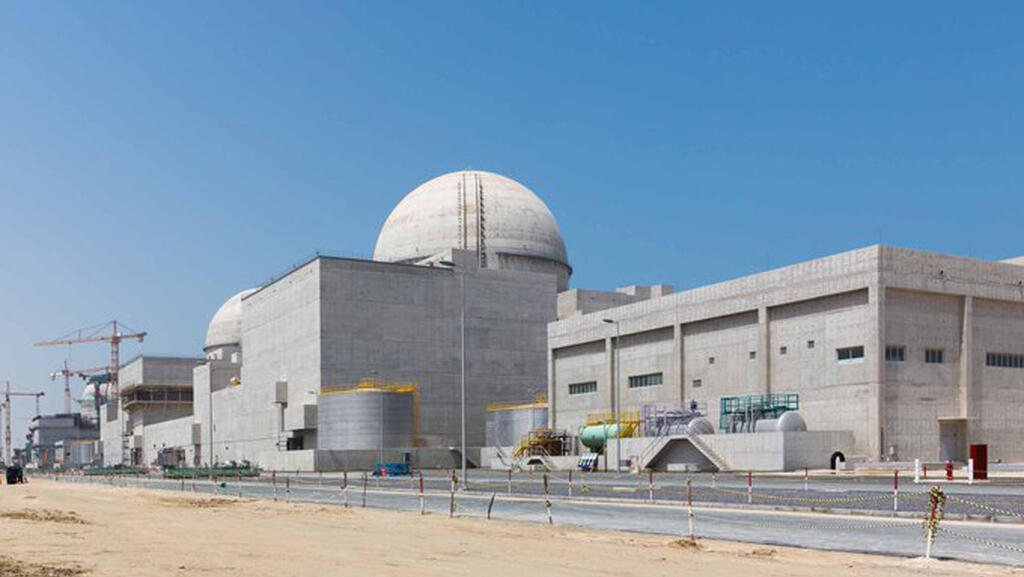
A nuclear power plant in the United Arab Emirates; the UAE signed the 'gold standard' agreement for stringent international oversight
President Donald Trump has said the agreement with Saudi Arabia will not take effect unless the kingdom joins the Abraham Accords and normalizes relations with Israel. The agreement has nevertheless already been submitted to Congress for review. Under U.S. law, Congress has 90 days while in session to review it. Lawmakers seeking to block the agreement would ultimately need sufficient support to overcome a presidential veto.
Democratic Sen. Jeff Merkley of Oregon told the Post that the United States should not rely on Saudi assurances on an issue of such importance.
"It’s bogus as hell," he said, arguing that Saudi demands to retain the ability to enrich uranium domestically indicate an ambition to develop a program that would not be entirely civilian.
"If they’ve given up the intent to develop a nuclear weapon, then they’d give up domestic enrichment and reprocessing power, right? They’d accept massive inspections from the IAEA," Merkley added.
Merkley and other Democratic senators sent a letter to Secretary of State Marco Rubio on Friday criticizing the agreement. They argued that the Trump administration was departing from precedent by accepting looser restrictions and agreeing to a process they said would almost certainly allow Riyadh to acquire uranium enrichment capabilities and potentially develop a nuclear weapon.