

In the living room of the Joubran family home in Nahariya stands a display cabinet filled with figurines of Christian saints, photographs of bearded Maronite clergymen, a depiction of the Last Supper and a Lebanese flag. Among these objects, which reflect the family's faith and origins, lies something you might not expect to find there: a booklet of teachings by Rabbi Nachman of Breslov.
But perhaps that should not be surprising. The family of George Joubran, a former artillery officer in the South Lebanon Army (SLA), navigates several identities. They are Lebanese, but also Israeli Christians who attend church while remaining deeply rooted in Jewish society.
Gallery
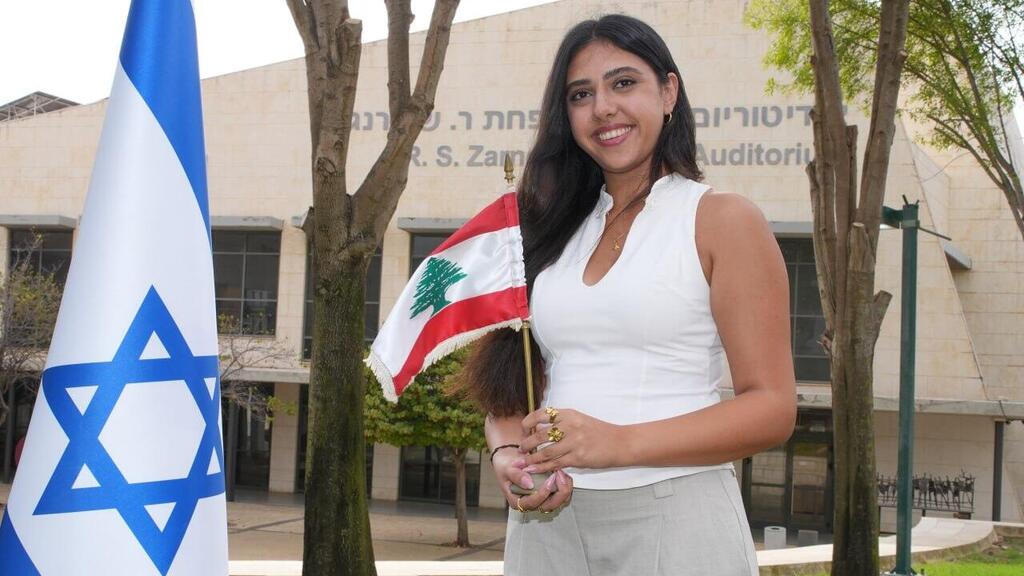
Sonia Joubran, 24, whose father was an officer in the SLA, was elected chair of the student union at Kiryat Shmona University
(Photo: Efi Sharir)
Sometimes, those identities clash. "Jews see us as Arabs, and some Arabs see us as traitors," explains Sonia Joubran, 24, the eldest daughter of Adeline and George, who was elected chair of the student union at Kiryat Shmona University about three months ago.
Like her younger sisters, Lia, 22, and Joelle, 20, Sonia was born in Israel and has never visited her family's homeland. Yet she is convinced that peace is within reach.
"Most Lebanese want peace, and I believe that within a year I'll be able to visit. And who knows, maybe one day I'll be Israel's ambassador to Lebanon," Sonia told ynet.
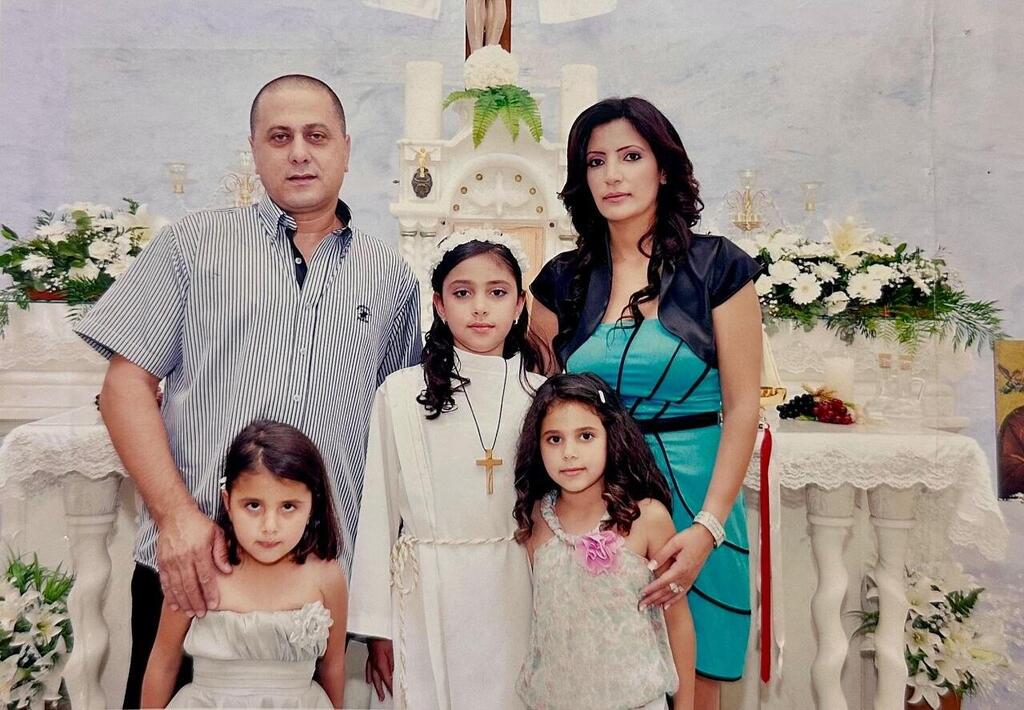
Sonia with her parents and siblings
(Photo: Family album)
We met Sonia and her mother ahead of the start of the academic year at Israel's northernmost, and newest, university.
George, 58, owns a company that brings workers from Jordan to Israel. He spends most of his time in Eilat and returns home every two weeks. He grew up in the village of Mazraat al-Mathaneh, near the Christian town of Jezzine. The Jezzine enclave was not part of Israel's security zone in southern Lebanon, but it was controlled by an SLA battalion that cooperated with Israel and fought Hezbollah.
Adeline, 48, a medical secretary at the Galilee Medical Center in Nahariya, grew up in Beirut. When she was 12, she moved with her family to the village of Burj al-Muluk (al-Khirbeh), along the road between Marjayoun and Metula. Her father worked as a cook, preparing meals for IDF and SLA soldiers, which made him, in Hezbollah's eyes, a collaborator with Israel.
'We thought we'd be back in two weeks. We've been here 26 years'
Adeline remembers May 24, 2000, the day the IDF withdrew from Lebanon, as though it were yesterday.
"I was 21, a psychology student and a teacher at a school in the village of Houla," she recalls. "In the middle of class, the principal came into the room and said, 'What are you doing here? Get out now! Hezbollah has entered the village.'
"I started fleeing on foot. My father picked me up along the way, and when we got home, he said, 'We're leaving for Israel.' I said, 'What do you mean, leaving? I have an exam at university.' And my father said, 'Forget the exam. We're leaving.' Hezbollah had threatened that the moment the IDF withdrew, they would enter our homes and slaughter us in our beds."
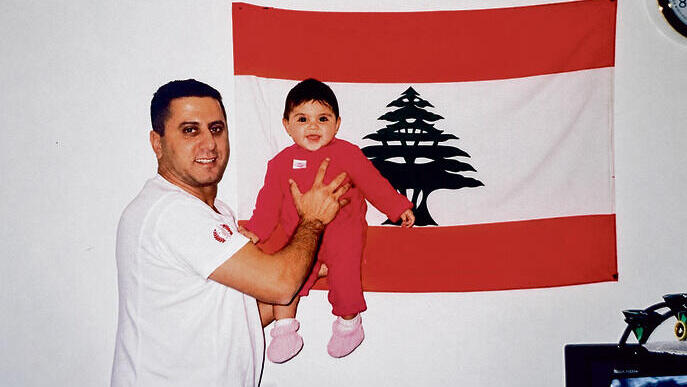
Sonia an her dad, George
(Photo: Family album)
Just four kilometers separate Burj al-Muluk from the border crossing at Metula. "We waited there for seven or eight hours before they let us enter. We thought we'd be back home within two weeks, a month at most. And here we are, 26 years later."
Adeline met George at Kibbutz Shomrat, where she lived with her parents. Their eldest daughter was born in Nahariya, and when she was a baby, the family moved to Eilat. They returned north when Sonia was 4.
"There's an SLA community in Nahariya, and it was easier to adjust here. In Eilat, my kindergarten teacher didn't know how to deal with me because I didn't speak Hebrew," Sonia recalls. "Here, I learned the language, and my mother learned alongside me."
At elementary school, however, she once again felt like an outsider. "I was subjected to a kind of social boycott. I was the only SLA child in the class, and the other children didn't know what that meant. There was a Druze boy in my class, and they would always push us toward each other and shout, 'Arabs!' at us. Instead of dealing with it, the principal would remove both of us from the classroom."
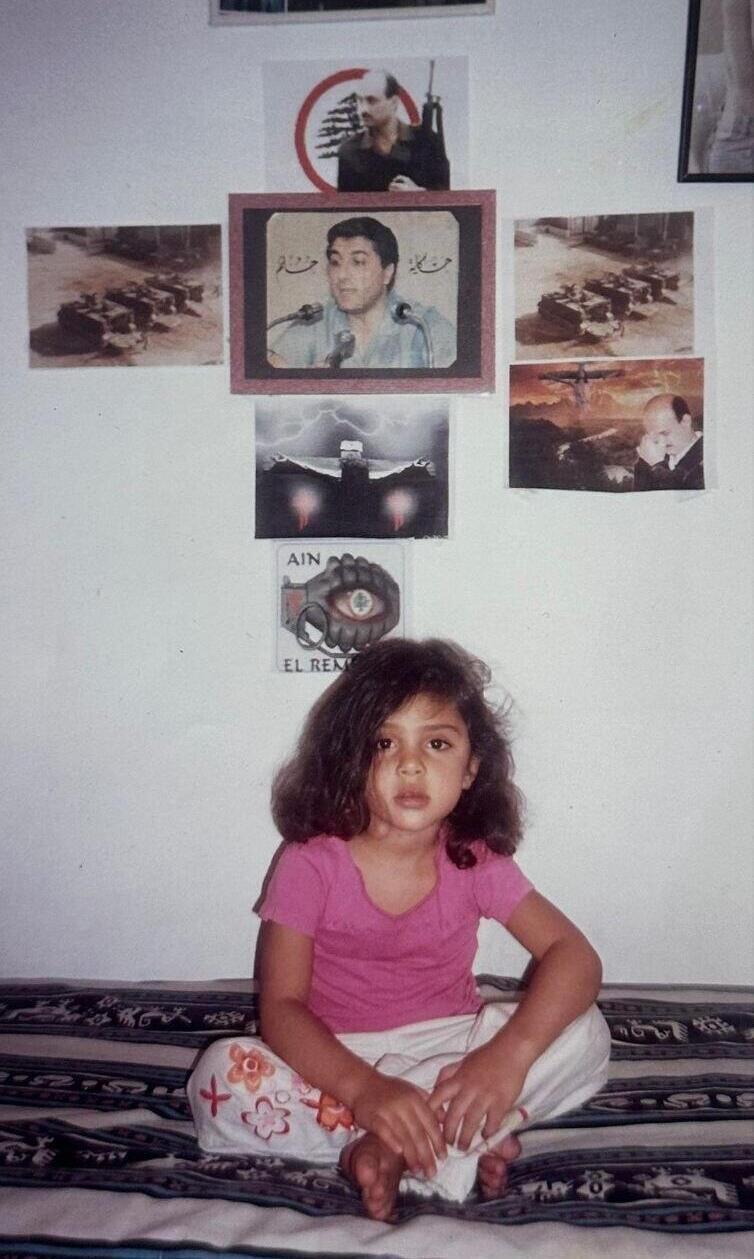
The only SLA kid in the class, whe was shunned
(Photo9: Family album)
In high school, Sonia studied Arabic in an intelligence-track program whose graduates are intended for IDF Unit 8200. "I also attended an 8200 preparatory program, but in the end I didn't enlist and received an exemption because I was the daughter of an SLA veteran.
"I have family in Lebanon, my paternal grandmother in Jezzine and an aunt on my mother's side in Beirut, and I was afraid that if Hezbollah discovered I had joined the IDF, they would harm them. Instead, I did national service at the hospital in Nahariya as a medical assistant," she said.
'They crossed out Israel and wrote Palestine instead'
After completing her national service, Sonia was accepted to study medicine at New Vision University in Tbilisi, Georgia, alongside students from around the world. She enjoyed her studies and made friends, but on the morning of October 7, 2023, during the second semester of her first year, everything changed.
"I found out about October 7 from an Instagram Story posted by an Arab Israeli student who uploaded videos of Hamas terrorists inside Israel and mockingly wrote, 'They're playing PUBG with them.' That's a game about shooting and killing. I'm not saying everyone is like that. There are extremists on every side."
The atmosphere on campus suddenly became hostile. "They turned the library into a mosque. There was a map of the world's countries at the university, and suddenly I saw that someone had put an X over Israel and written 'Palestine' instead.
"No matter how hard I tried to explain that our people had been massacred and murdered, they didn't understand. I had friends who were murdered, and I have friends who survived the Nova festival. It was difficult. I decided to stop studying and return to Israel," Sonia said.
Wanting to continue in a field involving care and treatment, she decided to enroll in psychology studies at Tel-Hai College, shortly before it became Tel-Hai Kiryat Shmona University.
Alongside her studies, she volunteered with the Rashi Foundation's Ma'aleh initiative, supporting the Ma'alot-Tarshiha municipality and helping develop strategic plans and programs for young people. She was also active in the Rothschild Foundation Ambassadors program, which trains young social leaders. Becoming involved in student leadership was therefore a natural next step.
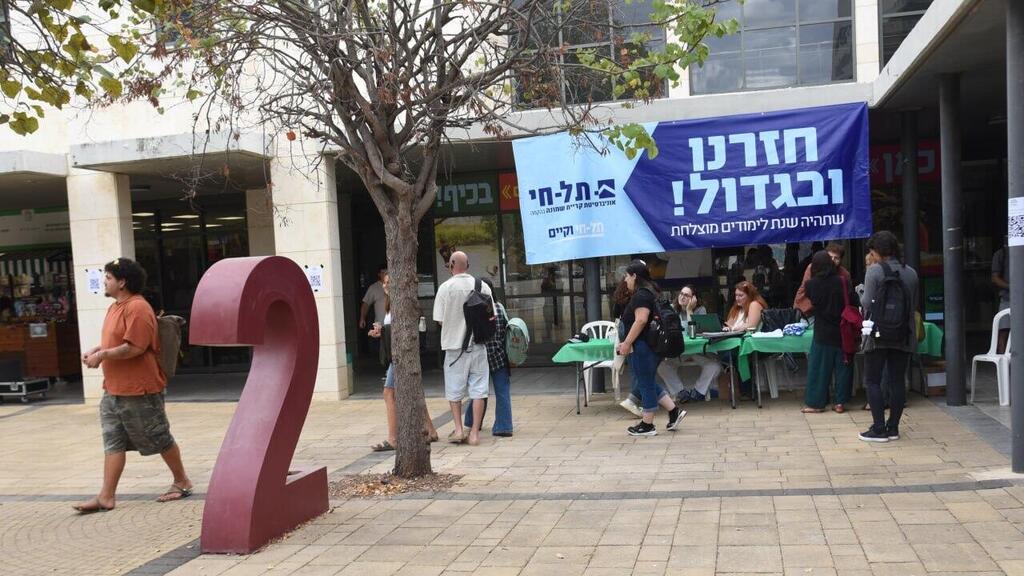
The start of the school year at Tel Hai-Kiryat Shmona University
(Photo: Avihu Shapira)
Elections for the Kiryat Shmona University student union were held in June. "I decided to run at the very last minute and registered just a few hours before the deadline. I was stunned when I was elected because I hadn't run a major campaign, and I'm not Jewish," Sonia explains.
As chair of the student union at Tel-Hai Kiryat Shmona University, Sonia also serves on the general assembly of the National Union of Israeli Students.
Although she entered the race at the last minute, she has a clear vision. "It's important to me to work toward the rehabilitation, development and strengthening of communities in the Upper Galilee, especially Kiryat Shmona, after three difficult years of war. Twenty percent of our students are Arabs, Druze and Circassians, and it's important to me that minority populations feel part of the community and contribute to it.
"We met with Mayor Avichai Stern, and we're advancing social initiatives that will turn Kiryat Shmona into a vibrant city where young people choose to live."
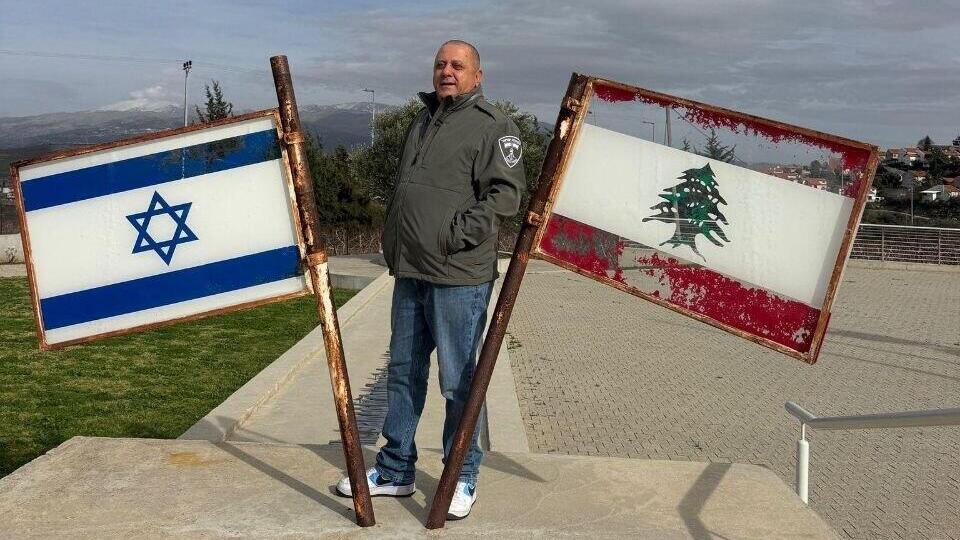
George Joubran, closing the circle
(Photo: Private album)
One of the most significant days for Sonia in the past three years was September 27, 2024, when Hezbollah leader Hassan Nasrallah was killed.
"We were so happy. We opened champagne and put up a sign downstairs for all our religious neighbors announcing that Nasrallah had been killed, because it was Shabbat. It was a moment of closure for my parents and the entire SLA community. But there's still a lot of work to be done to rid Lebanon of terrorist strongholds."
So far, Sonia has met her relatives from Lebanon mainly at the home of her uncle, who lives in Canada, or in nearby countries such as Jordan. But she believes that one day, and not in the distant future, visiting her aunt in Beirut will require nothing more than a 90-minute drive.