


Bazan said Friday in a filing to the Tel Aviv Stock Exchange that “infrastructure critical to the group’s operations” was damaged by an Iranian cluster missile strike in the Haifa area a day earlier.
The company stressed that the damage occurred outside its main complex — which was also hit, with a fire breaking out at its refineries — and that the affected infrastructure is external and owned by a third party. According to an initial assessment, the infrastructure, which was not specified, is expected to return to operation within several days.
Gallery
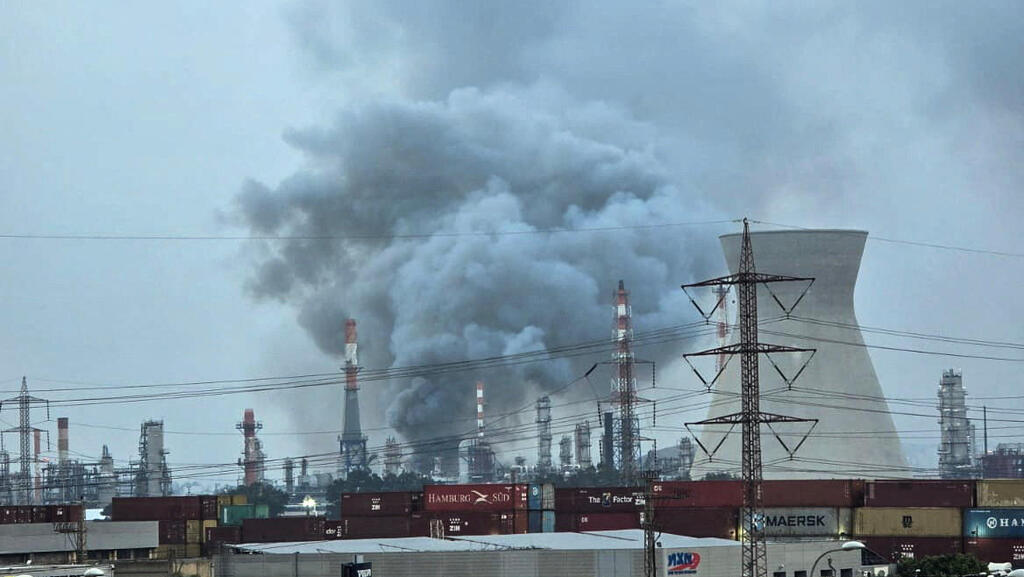
The fire that broke out yesterday at the Haifa refineries
(Photo: REUTERS/Sharon Sztrozenberg)
An Iranian missile carrying a cluster warhead struck multiple sites in Haifa on Thursday, sparking a fire at Bazan’s refining facilities. Footage from the scene showed several explosions, though Energy Minister Eli Cohen said the damage to the refineries was “not significant.” About 20 firefighting teams worked to extinguish the blaze and ruled out any hazardous material leak. Power outages were reported in the area but were resolved shortly afterward.
It remains unclear what exactly caused the damage. Military and defense analyst Ron Ben-Yishai said it could have been a large interceptor fragment or one of the submunitions from the cluster missile. In both cases, he said, the object — traveling at speeds exceeding Mach 5 — would be extremely hot and capable of igniting fires upon impact.
He noted that this explains the flashes seen in impact footage, even when submunitions do not explode, and why interceptor debris landing near vehicles often sets them ablaze due to the presence of fuel, plastics and upholstery.
Footage of the strike at the Haifa refineries
(Video: Haifa Bay Area Association of Environmental Protection)


Ben-Yishai added that weather conditions do not affect the interception of missiles and rockets, which rely on radar detection and tracking. However, cloud cover and lightning can affect the detection and interception of drones from Lebanon, which are smaller, fly at low altitude and require optical sensors. Weather, particularly lightning and cloud cover, also affects the efficiency of laser systems and aerial efforts to target launchers before, during and after launches.
In its statement, Bazan said that Thursday’s strike caused “localized damage within the group’s complex in Haifa Bay — to electrical infrastructure supplying a service facility and to an open area near an administrative building, with no casualties.” It added that overnight it became clear that an external, third-party-owned infrastructure essential to operations had also been hit.
“Most production facilities are currently operating, with the remainder in the process of being restarted,” the company said.
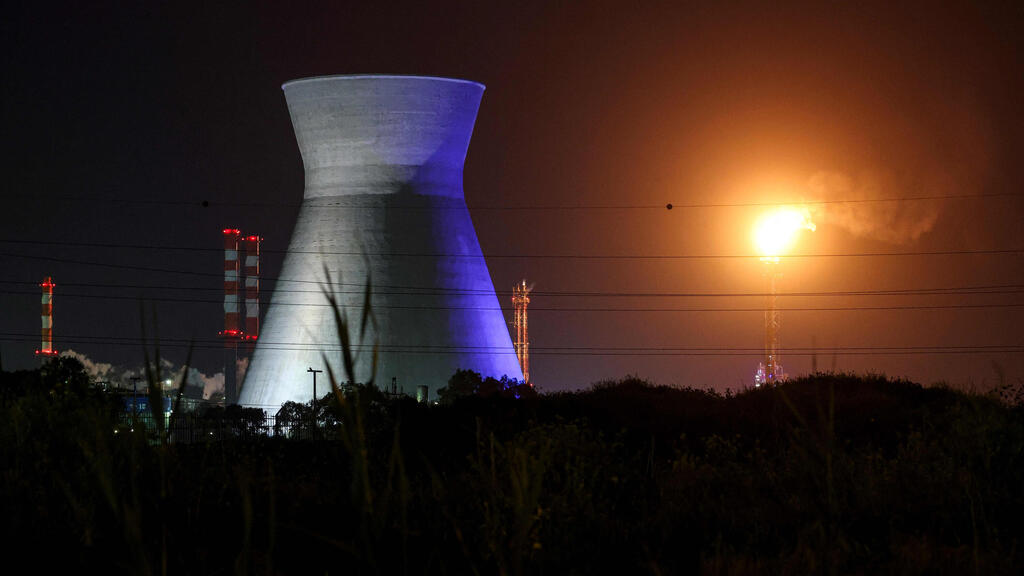
Haifa refineries
(Photo: Odd ANDERSEN / AFP)
Bazan said it is assessing the impact on its operations and financial results, as well as the timing and method for restoring full activity, which depends in part on repairing the external infrastructure. It noted that its assessment constitutes forward-looking information under Israeli securities law and is subject to uncertainty.
The company also emphasized that fully identifying all damage and restoring affected infrastructure and facilities is a complex process involving multiple uncertainties, including safety requirements, environmental regulations, the availability of parts and equipment and access to skilled personnel.
The company’s operations have long faced opposition, and following the strike, calls intensified to shut down the petrochemical facilities in the Haifa Bay area. Avihu Han, head of the Haifa Bay Area Association of Environmental Protection, who also serves as deputy mayor of Haifa, said: “We must not continue playing Russian roulette with the lives and safety of Haifa metropolitan residents and with Israel’s energy security. The incident and today’s announcement of disrupted operations are further proof that refineries in the heart of a civilian metropolitan area are a critical vulnerability. The government must act immediately to shift to import and decentralized, secure storage of fuel products, in line with government decision 1231. Any delay could cost lives and pose an ongoing threat to the entire energy sector.”